

1. When driving a vehicle on the road, the driver should drive safely at the prescribed speed.
A. Right
B. Wrong
Answer: A
2. Whats the meaning of this sign?
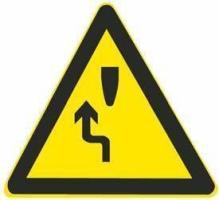
A. watch for danger
B. bypass from right side
C. bypass from left side
D. one-way pass
Answer: C
3. Driving this kind of vehicle on road is ____
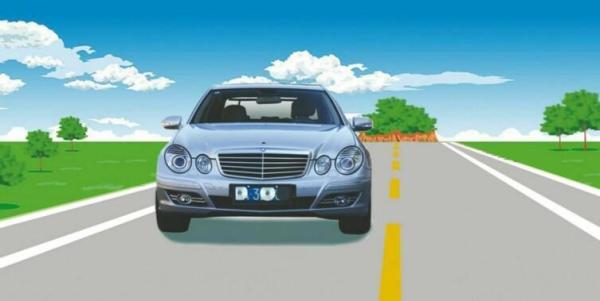
A. rule-breaking act
B. violation of regulations
C. violation of law
D. criminal act
Answer: C
4. A driver applies for the driving license for the first time and is during the period of probation, he can drive a motorized vehicle on expressway alone.
A. Right
B. Wrong
Answer: B
5. What device does the switch of this symbol control?

A. the windscreen defrosting or defogging
B. the rear window wiper and washer
C. the windscreen wiper and washer
D. the rear window defrosting or defogging
Answer: C
6. It lights to indicate that ______

A. the side fans work
B. air external circulation
C. the front fan works
D. air internal circulation
Answer: C
7. How to do in this situation?

A. stop and yield to the pedestrians
B. bypass from the front of the pedestrians
C. honk to remind the pedestrians
D. bypass from the rear of the pedestrians
Answer: A
8. As thick fog reduces visibility, turning on the high beam light can increase the visibility.
A. Right
B. Wrong
Answer: B
9. In this case, by the right side of the bus lane to overtake.
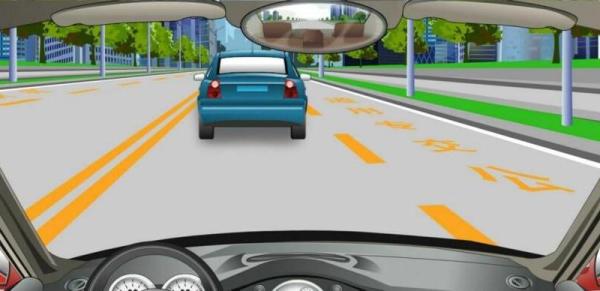
A. Right
B. Wrong
Answer: B
10. When a vehicle changes lane before an intersection, the driver should do so ______.
A. In the area marked by solid lines before the intersection
B. In the area marked by solid lines in the intersection
C. In the area marked by broken lines as indicated by the guide arrow
D. Before the stop line at the intersection
Answer: C
11. If the drivers accumulated penalty points reach the stipulated limit, he will be _______ by the traffic control department of the public security organ.
A. detained for less than 15 days
B. banned for lifetime from driving
C. educated on the law and regulations and take the exam again
D. held for criminal liabilities according to law
Answer: C
12. Whats the meaning of the yellow broken and solid lines in the middle of the road?
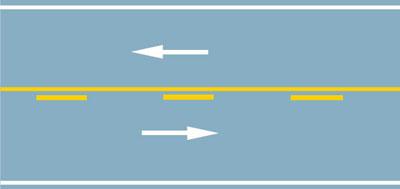
A. no crossing the lines on the side of the broken line
B. no crossing the lines on the side of the solid line
C. allowed to cross the lines on the side of the solid line
D. allowed to cross the lines on both sides
Answer: B
13. Whats the meaning of this sign?
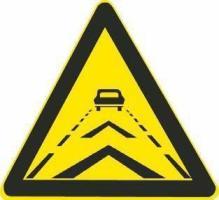
A. section narrows on both sides
B. section for speed test
C. section for ascertaining the distance between the vehicles
D. pay attentions to keeping distance
Answer: D
14. When a motorized vehicle makes a U turn, turns around or goes down a slope, the maximum speed should not exceed 40 kilometers per hour.
A. Right
B. Wrong
Answer: B
15. Which kind of vehicle can be driven if the authorized vehicle applied for is small motor vehicle with automatic transmission?
A. low-speed truck
B. small motor vehicle
C. motorcycle
D. light truck with automatic transmission
Answer: D
16. Whats the meaning of this sign?
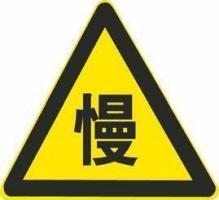
A. more vehicles section
B. passing slowly
C. jammed section
D. construction section
Answer: B
17. What is the role of ABS system when applying emergency braking?
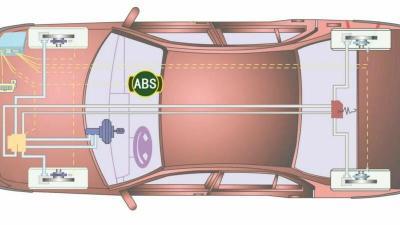
A. cut off the power output
B. control the direction automatically
C. reduce braking inertia
D. prevent wheel blocking
Answer: D
18. Whats the meaning of this sign?
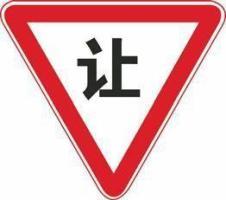
A. no yielding
B. yield while crossing each other
C. reduce speed and yield
D. stop to yield
Answer: C
19. Whats the meaning of the marking in the red circle?
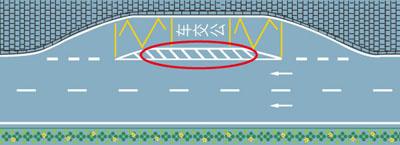
A. temporary stopping
B. large bus stopping
C. bus station
D. emergency stopping
Answer: C
20. What marking is the white solid lines in the circle?

A. guide lanes lines
B. variable guide lanes lines
C. direction guide lines
D. one-way driving lines
Answer: A