

1. Whats the meaning of this sign?
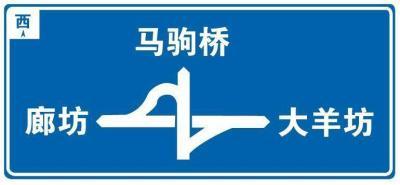
A. intersection ahead
B. interchange ahead
C. Y-shaped intersection ahead
D. ring intersection ahead
Answer: B
2. What device does the switch of this symbol control?
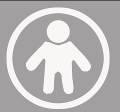
A. child safety lock
B. window glasses of both sides
C. electric door
D. door unlock
Answer: A
3. This set of the hand signals of the traffic police indicates that the vehicles should ___ .
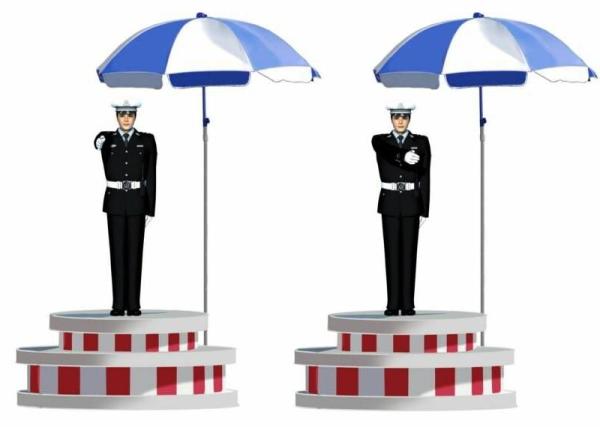
A. turn right
B. reduce speed and pass slowly
C. pull over
D. change lane
Answer: D
4. If a motorized vehicle driver has caused a major traffic accident in violation of the traffic regulations which has caused human death due to his escaping, the driver is subject to a prison term of 3 years ~ 7 years.
A. Right
B. Wrong
Answer: B
5. Whats the meaning of this sign?
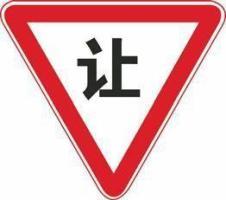
A. no yielding
B. yield while crossing each other
C. reduce speed and yield
D. stop to yield
Answer: C
6. What is the max speed on the expressway when the visibility is lower than 200m?
A. less than 100km/hr
B. less than 90km/hr
C. less than 60km/hr
D. less than 80km/hr
Answer: C
7. In which situation the traffic police may detain the vehicle?
A. no vehicle registration papers
B. no insurance contract
C. no lable of environmental protection
D. no label of insurance
Answer: D
8. What kind of sign is it?
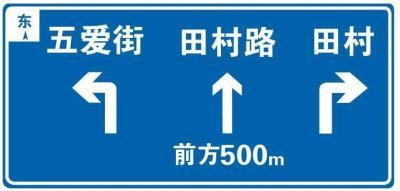
A. directional sign
B. indicative sign
C. prohibitive sign
D. warning sign
Answer: A
9. What marking are the white broken lines in the circles?
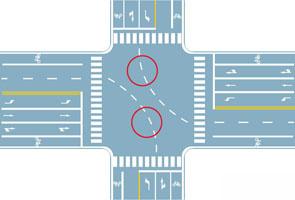
A. small vehicles turning lines
B. lane connection lines
C. non-motorized vehicles guide lines
D. intersection guide line
Answer: D
10. What marking is the triagle filled area in the circle?
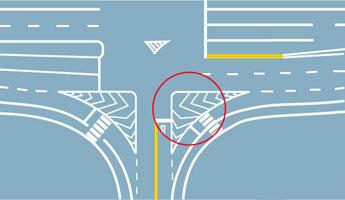
A. stop line
B. deceleration line
C. guide line
D. cross-hatched marking
Answer: C
11. This sign reminds an unmanned level crossing ahead.
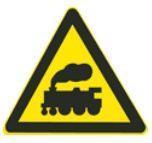
A. Right
B. Wrong
Answer: A
12. The cycle for recording the accumulated penalty points for violating road traffic regulations is ____________.
A. 14 months
B. 12 months
C. 6 months
D. 10 months
Answer: B
13. Driving a motorized vehicle on the highway which has no central line, the maximum speed can not exceed 70 kilometers per hour.
A. Right
B. Wrong
Answer: B
14. Whats the meaning of this sign?
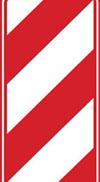
A. Passing on both sides
B. Passing by the right side
C. Passing by the left side
D. Passing is prohibited
Answer: C
15. Whats the meaning of this sign?
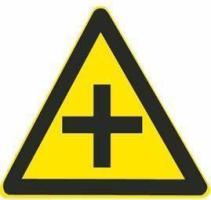
A. intersection
B. ring intersection
C. T-shaped intersection
D. Y-shaped intersection
Answer: A
16. How to pass this intersection?
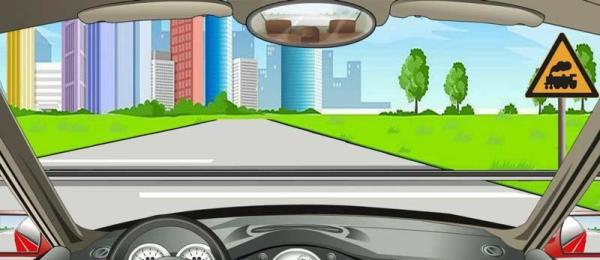
A. not reduce speed to pass
B. speed up to pass as soon as possible
C. slide over in the neutral gear
D. reduce speed or stop to observe
Answer: D
17. What is the max speed on this highway?

A. 70km/hr
B. 50km/hr
C. 40km/hr
D. 30km/hr
Answer: C
18. Stopping temporarily on the road should not obstruct the passing of other vehicles and pedestrians.
A. Right
B. Wrong
Answer: A
19. How to drive through the intersection without traffic lights?
A. reduce speed and go slowly
B. speed up and pass
C. let large vehicle go first
D. let the left vehicle go first
Answer: A
20. Emergency braking on a road covered by ice and snow can easily cause side skidding. The driver should use the engine braking to reduce speed.
A. Right
B. Wrong
Answer: A