

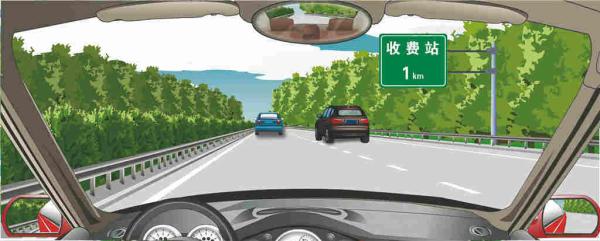
1. The sign on the right indicates a one-kilometer distance from ETC toll station ahead.
A. Right
B. Wrong
Answer: B
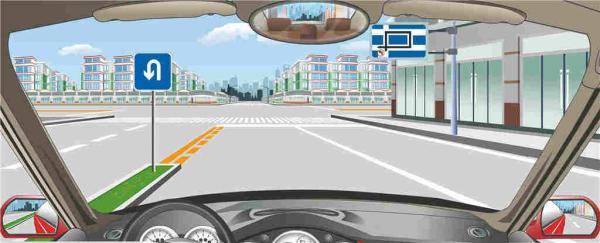
2. The sign on the right indicates a left-turn bypass route at the intersection ahead.
A. Right
B. Wrong
Answer: A
3. The drivers, loaders and supercargoes responsible for dangerous chemicals transportation should all full understand the chemical characteristics, potential risks, features of the packaging containers and emergency measures for any unexpected accidents.
A. Right
B. Wrong
Answer: A
4. Mr. Peng drove a heavy semi-trailer tractor with 37.7 tons of cargo (capacity 25 tons). When descending a slope on the Daguang Expressway, the tractor had a rear-end collision with Mr. Li?ˉs heavy dump truck (carrying 3.17 cubes of loess and 24 passengers in the container) occupying the emergency lane. As a result of this accident, 16 people were killed and 13 injured. What are the main illegal acts in this case?
A. Mr Peng exceeded the speed limit
B. Mr. Peng?ˉs tractor carried more cargo than limited
C. Mr Li illegally drove in the emergency lane
D. Mr. Li?ˉs truck illegally carried passengers in the container
Answer: BCD
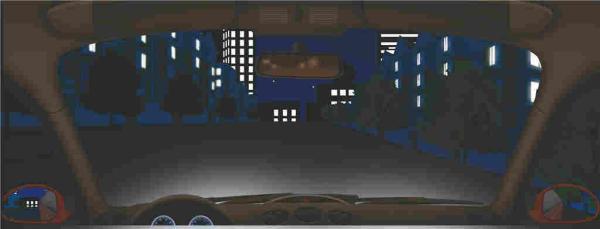
5. In this driving condition, drivers should turn on the high-beam when setting off.
A. Right
B. Wrong
Answer: B
6. When there is a braking failure on a downhill road the driver should change the gear to one position or two positions lower, and control the speed by taking advantage of the braking role of the engine.
A. Right
B. Wrong
Answer: A
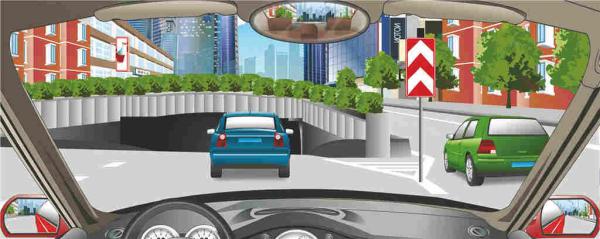
7. The sign on the right warns of no passing on either side of the road ahead.
A. Right
B. Wrong
Answer: B
8. How should motor vehicle drivers make a U-turn at the intersection ahead?
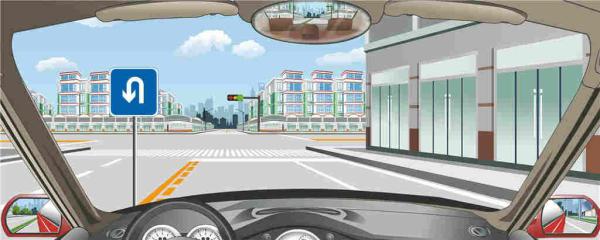
A. Make a U-turn in the waiting area for turning left
B. Make a U-turn at the broken line area of the Intersection
C. Wait until the left-turn indicator is on
D. Wait until the straight-going signal is on
Answer: B
9. When driving onto the left lane, motor vehicle drivers are allowed to make a U-turn.
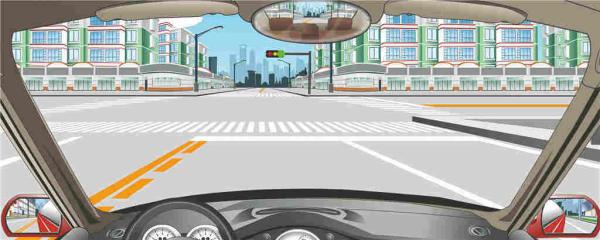
A. Right
B. Wrong
Answer: A
10. When driving in rain and encountering pedestrians with umbrellas or wearing raincoats, what should be done by motor vehicle drivers in order to yield?
A. Drive at a normal speed
B. Sound the horn to alert when approaching the pedestrians
C. Speed up and bypass on the left
D. Reduce speed and sound the horn in advance
Answer: D
11. Before a motor vehicle enters a tunnel, the driver should adjust the speed in accordance with the indication of the traffic sign at the entrance of the tunnel.

A. Right
B. Wrong
Answer: A
12. The sign in front is an advance announcement of famous places and distances en route.
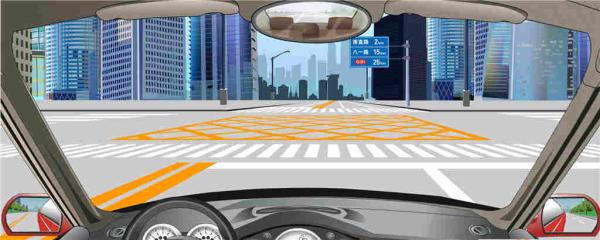
A. Right
B. Wrong
Answer: A
13. When driving in a residential area, the driver should not exceed the speed indicated by the speed limit sign.
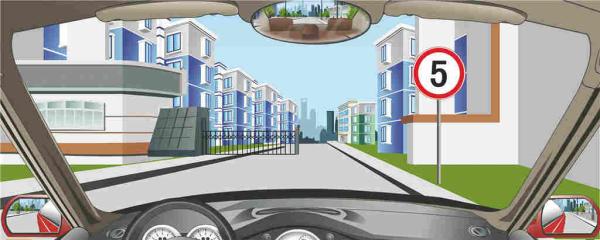
A. Right
B. Wrong
Answer: A
14. The sign on the left indicates that drivers should stop to take a pass card at the toll station ahead.
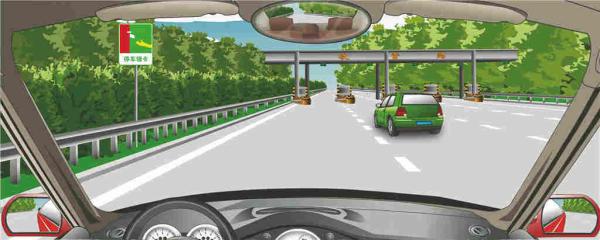
A. Right
B. Wrong
Answer: A
15. The white solid line on the right side of the road indicates the boundary of a driving lane and crosswalk.
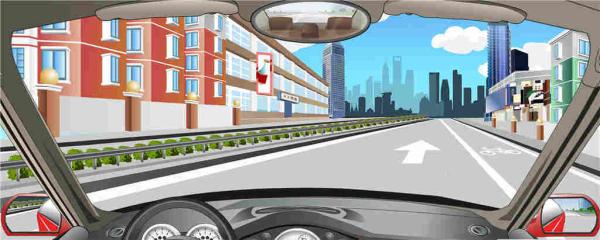
A. Right
B. Wrong
Answer: B
16. The sign on the right warns of a widened right-hand road ahead.
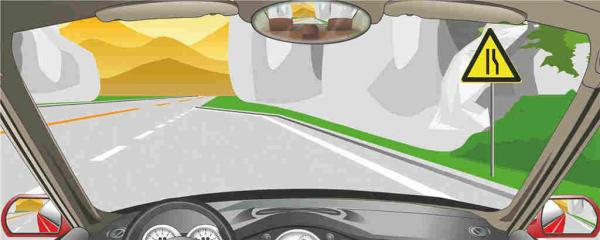
A. Right
B. Wrong
Answer: B
17. When there is bleeding at the bone fracture of a wounded person, the first thing to do is to keep it in position before stopping the bleeding and dress the wound.
A. Right
B. Wrong
Answer: B
18. The sign in the red circle indicates that vehicles except non-motor vehicles are not allowed to drive in this lane.
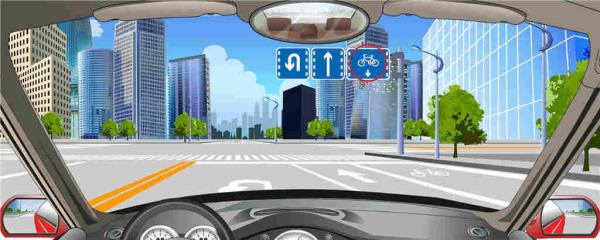
A. Right
B. Wrong
Answer: A
19. When encountering a school bus which stops at the right roadside and students are embarking or disembarking, and there are two motor vehicle lanes in each direction, motor vehicle drivers on the left lane behind the bus should stop and wait.
A. Right
B. Wrong
Answer: A
20. When finding a tire suddenly burst on the road, the driver should firmly hold the steering wheel with both hands to ensure the vehicle goes straight.
A. Right
B. Wrong
Answer: A