

1. When the driver discovers a tire is leaking and steers the vehicle off the main carriageway, he should refrain from applying emergency so as to avoid a vehicle turnover or a rear-end collision arising from the late braking of the following vehicle.
A. Right
B. Wrong
Answer: A
2. Whats the meaning of this sign?
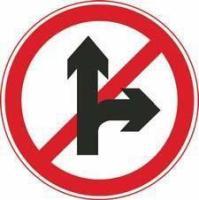
A. no going straight and no changing to left lane
B. no going straight and no left turn
C. allowed to go straight and change to left lane
D. no going straight and no right turn
Answer: D
3. Which kind of vehicle can be driven if the authorized vehicle applied for is small motor vehicle?
A. low-speed truck
B. midsize bus
C. motor tricycle
D. self-propelled wheeled machinery
Answer: A
4. If the applicant commits bribery or cheating in the course of a test, his eligibility for this test will be cancelled and the results of other tests he has passed will be invalid.
A. Right
B. Wrong
Answer: A
5. You have the priviledged passing right of way in this situation.

A. Right
B. Wrong
Answer: A
6. When braking on a muddy road, the tires can easily spin or drift and cause traffic accidents.
A. Right
B. Wrong
Answer: A
7. When driving in icy and snowy weather, ________.
A. The braking distance becomes longer
B. The resistance to slide becomes larger
C. The braking performance does not change
D. The road grip becomes stronger
Answer: A
8. Whats the meaning of this sign?

A. crosswalk lights
B. watch for pedestrians
C. attention to traffic lights
D. intersection
Answer: C
9. When driving in a snowy day, the driver should drive along the vehicle tracks if there are any.
A. Right
B. Wrong
Answer: A
10. A motorized vehicle driver who escapes after causing a traffic accident but his conduct does not constitute a crime, is subject to a ________.
A. 3-point penalty
B. 2-point penalty
C. 12-point penalty
D. 6-point penalty
Answer: C
11. At this position, the motorized vehicle can continue to go through if the front wheels have passed the stop line.
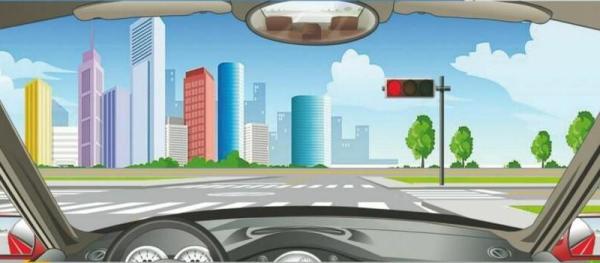
A. Right
B. Wrong
Answer: B
12. When the fire engine, ambulance and wrecker are executing an emergency task, other vehicles should yield.
A. Right
B. Wrong
Answer: A
13. Whats the meaning of this sign?
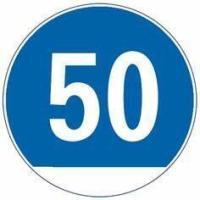
A. minimum speed limit is 50km/hr
B. maximum speed limit is 50km/hr
C. the height is 50m
D. the altitude is 50m
Answer: A
14. What marking is the white polylines in the circle?
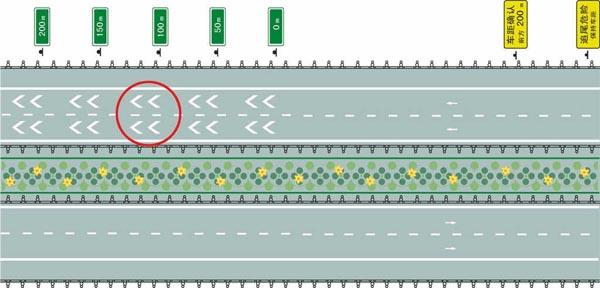
A. ascertaining the distance between the vehicles
B. driving at reduced speed
C. ascertaining the speed of the vehicles
D. reducing the speed at the intersection
Answer: A
15. When driving slowly in a congested road, the driver should ________ if another vehicle forcefully cuts in.
A. Honk to warn it against cutting in
B. Speed up to closely follow the vehicle in front and refuse to allow it to cut in
C. Squeeze the cutting-in vehicle to force it to leave
D. Voluntarily yield to ensure safe driving
Answer: D
16. This sign warns the driver there have traffic lights ahead.

A. Right
B. Wrong
Answer: A
17. Traffic Police can detain the driver according to law, if the driver drives a motorized vehicle which is suspected of reaching the write-off standard.
A. Right
B. Wrong
Answer: B
18. The main impact of the road conditions in icy and snowy weather is ______.
A. The electric equipment can easily get wet and cause short circuit
B. The visibility is lower and the field of vision is blurred
C. The resistance to the vehicle increases
D. Poor braking performance and Side pulling
Answer: D
19. Whats the meaning of this sign?
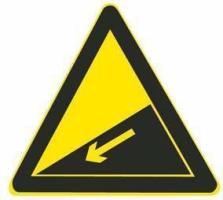
A. embankment road
B. steep uphill road
C. continuous up slopes
D. steep downhill road
Answer: D
20. You have the priviledged passing right of way at the intersection in this situation.
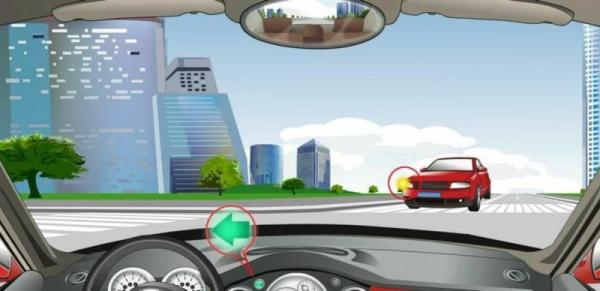
A. Right
B. Wrong
Answer: A