

1. What is the meaning of this sign?
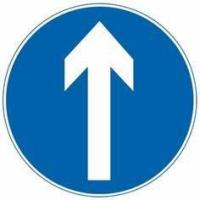
A. Straight-going lane
B. Going straight only
C. One-way road
D. No going straight
Answer: B
2. Which one of the following measures is correct when a motor vehicle intends to overtake but the vehicle infront refuses to yield?
A. Use a long-sounding horn
B. Follow the vehicle in front while turning high-beam
C. Wait for it to yield while keeping a safe distance
D. Use high-beam and low-beam alternatively
Answer: C
3. When driving a motor vehicle following anther vehicle, What should the driver pay attention to?
A. When following a taxi, it is necessary to prevent it from pulling over at any time to get on and off passengers.
B. For large trucks loaded with goods, we should increase the distance between cars and avoid long time follow ups to prevent the risk of cargo spilling and blind areas.
C. When the current side of the vehicle has an internship sign, it should increase the distance with the vehicle to prevent the front vehicle emergency braking.
D. Follow a vehicle in foggy weather, pay attention to the emergency braking of the front vehicle
Answer: ABCD
4. Motor vehicle drivers don?ˉt need to use any lamp at night when passing through a road section where the street light condition is good.
A. Right
B. Wrong
Answer: B
5. What is the meaning of this sign?
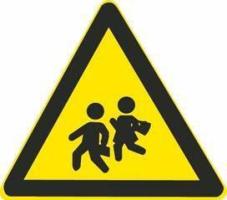
A. School area
B. Watch for children
C. Crosswalk
D. Watch for pedestrians
Answer: B
6. In emergencies, people?ˉs life safety should always be put in the first place.
A. Right
B. Wrong
Answer: A
7. When driving in thick or extremely thick fog, what should the driver do due to the low visibility in such weather?
A. Turn on the headlamp and drive slowly
B. Turn on the fog lamp and drive slowl
C. Park in a safe place
D. Drive slowly close to the roadside
Answer: C
8. When a wounded person suffering burns is thirsty, he may drink a small quantity of slightly salty water.
A. Right
B. Wrong
Answer: A
9. When driving, the driver should yield to _______.
A. Ambulance
B. Fire engine
C. School bus
D. Police car
Answer: ABCD
10. When a motor vehicle encounters pedestrian is passing at a crosswalk, the driver must slow down and pass slowly.
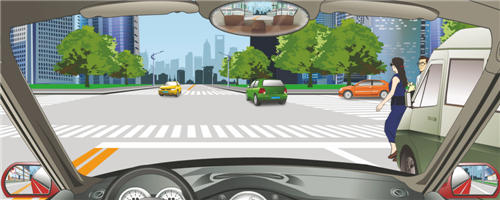
A. Right
B. Wrong
Answer: B
11. When the driver discovers a tire is leaking and steers the vehicle off the main driving lane, he/she should refrain from applying emergency braking so as to avoid a vehicle turnover or a rear-end collision arising from the late braking of the vehicle behind.
A. Right
B. Wrong
Answer: A
12. When a bicycle occupies the motor vehicle lane and obstructs the traffic, the driver should sound the horncontinuously and speed up to bypass on the left of the bicycle.
A. Right
B. Wrong
Answer: B
13. When carrying the wounded persons in coma or in danger of suffocation, they should lie face up.
A. Right
B. Wrong
Answer: B
14. What is the meaning of this sign?
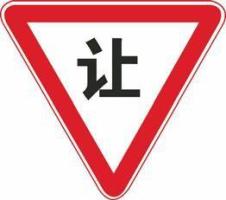
A. No yielding
B. Yield while crossing each other
C. Reduce speed and yield
D. Stop to yield
Answer: C
15. What should the driver do when he/she encounters an oncoming ambulance in the same lane?
A. Keep to the side and reduce speed or stop to yield
B. Drive ahead by occupying another lane
C. Yield by speeding up and changing lanes
D. Drive ahead in the original lane
Answer: A
16. When a fast-moving vehicle encounters an emergency the driver should turn to evade first and then brake to slow down so as to mitigate the damage.
A. Right
B. Wrong
Answer: B
17. The first-aid measure to rescue a poisoned person is to _______.
A. Take warming-up measures
B. Bring him to a place where air is fresh
C. Give him artificial respiration
D. Depress the heart over the chest
Answer: B
18. After a traffic accident, what is the most effective measure to prevent secondary accidents?
A. Evacuate all passengers
B. Turn on the hazard lamps
C. Mark the original place of the injured persons
D. Properly place the danger warning sign
Answer: ABD
19. When a motorcycle turns at an excessively high speed, it can easily dash out of a curve or skid sideways.
A. Right
B. Wrong
Answer: A
20. When encountering such pedestrians, motor vehicle drivers may continuously sound the horn to alert them to yield.
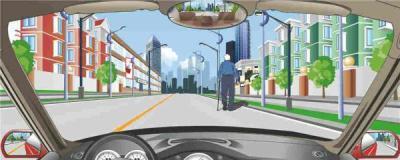
A. Right
B. Wrong
Answer: B