

1. What is this manipulation device?
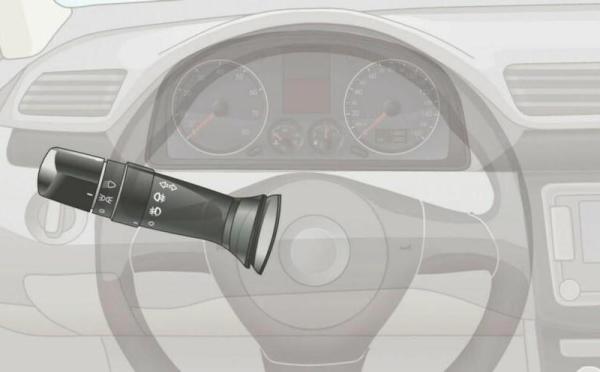
A. switch of reverse light
B. switch of wiper
C. switch of the hazard lights
D. combination switch of lights and signals
Answer: D
2. What does this symbol indicate?

A. switch of high beam lights
B. switch of the low beam lights
C. master switch of vehicle lights
D. the switch of tail fog light
Answer: C
3. Violating the law and regulations on road traffic safety is the act of violation of the law.
A. Right
B. Wrong
Answer: A
4. The light switch is in this position, front fog lights turn on

A. Right
B. Wrong
Answer: A
5. Whats the meaning of this sign?
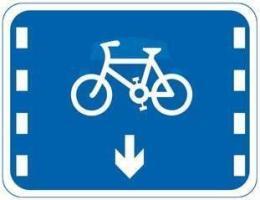
A. no entry for bicycles
B. lane for non-motorized vehicles
C. special lane for bicycles
D. bicycle stopping area
Answer: B
6. The main impact of mountain roads on safe driving is _______.
A. The traffic conditions are boring
B. The slopes are long, the curves are sharp and visibility range is shorter.
C. The traffic flow is heavy
D. The road signs are fewer
Answer: B
7. Which is subject to a 6-point penalty?
A. violate the traffic lights
B. drive school bus without qualification
C. drive the vehicle which permission is different
D. drive after drink
Answer: A
8. Whats the meaning of this sign?
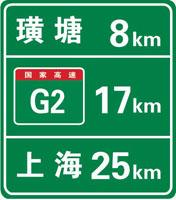
A. indication of the place name of the expressway ending
B. indication of the driving route of the expressway
C. indication of the driving direction of the expressway
D. indication of the location and distance of the expressway
Answer: D
9. When a traffic accident causing human injuries, preserve the scene and immediately report to the police.
A. Right
B. Wrong
Answer: A
10. Which should be carried onboard?
A. insurance policy
B. vehicle license
C. certificate of ex-factory inspection
D. vehicle registration papers
Answer: B
11. When a vehicle passes a level crossing, the driver should use the low gear to pass and should not change gear halfway in order to avoid engine kill.
A. Right
B. Wrong
Answer: A
12. Whats the meaning of this sign?
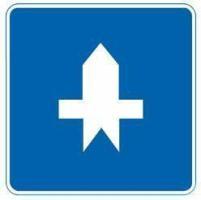
A. streets on both sides
B. main road go first
C. stop to yield
D. one-way road
Answer: B
13. Before a vehicle enters a curve of a mountain road, the driver ______ if there is no vehicle coming in the opposite direction.
A. Should reduce speed, honk and drive on the right side
B. Should drive along the outer side of the curve
C. May briefly borrow the opposite lane
D. May speed up and pass along the tangent line of the curve
Answer: A
14. Whats the meaning of this sign?
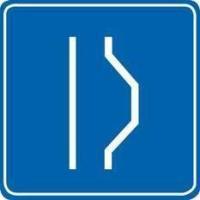
A. uncovered car park
B. emergency stopping
C. parking space
D. passing bay
Answer: D
15. When a vehicle passes a level crossing, it is prohibited from overtaking.
A. Right
B. Wrong
Answer: A
16. Whats the role of the prohibitive sign?
A. indicate the vehicles to go ahead
B. warn danger ahead
C. prohibit or restrict from doing
D. tell the direction information
Answer: C
17. It lights to indicate that engine oil may be insufficient.

A. Right
B. Wrong
Answer: A
18. Whats the meaning of this sign?
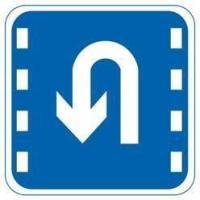
A. U turn lane
B. bypassing lane
C. lanes for going in different directions
D. left-turn lane
Answer: A
19. When a vehicle goes down a long slope, it should run at a lower gear and fully use the engine to brake.
A. Right
B. Wrong
Answer: A
20. What marking is the combination of the white broken lines and the triangle area?
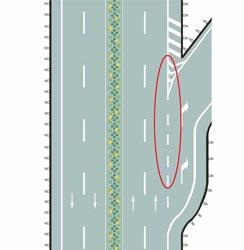
A. road entry marking
B. lane-dividing line that can be crossed
C. deceleration line at road exit
D. road exit marking
Answer: D