

1. To hold the steering wheel like this is correct.

A. Right
B. Wrong
Answer: B
2. What kind of marking are the double yellow solid lines in the middle of the road?
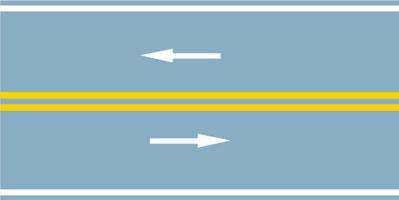
A. auxiliary marking
B. warning sign
C. prohibitive marking
D. indicative marking
Answer: C
3. Traffic Signs and traffic markings are not traffic signals.
A. Right
B. Wrong
Answer: B
4. Which of the following vehicle in front in the same lane is not allowed to be overtaken?
A. the vehicle is reducing speed to yield
B. the vehicle is running normally
C. the vehicle is overtaking
D. the vehicle is making a stop
Answer: C
5. Whats the meaning of this sign?
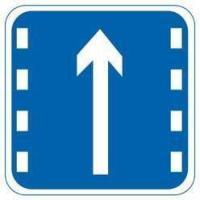
A. right-turn lane
B. U turn lane
C. left-turn lane
D. straight-going lane
Answer: D
6. Whats the meaning of this sign?
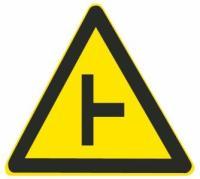
A. Y-shaped intersection
B. T-shaped intersection
C. intersection
D. ring intersection
Answer: B
7. When a vehicle changes lane, the driver should turn on the turn signal and rapidly enter the new lane.
A. Right
B. Wrong
Answer: B
8. If a motorized vehicle driver has caused a major accident in violation of the traffic regulations which has caused heavy loss to public or private property, the driver is subject to a prison term of less than 3 years or a criminal detention.
A. Right
B. Wrong
Answer: A
9. If a motorized vehicle driver allows his vehicle to be driven by a person whose driving license has been detained, the traffic police will serve an oral warning.
A. Right
B. Wrong
Answer: B
10. The vehicle is allowed to _______ at this intersection.

A. go straight
B. turn right
C. turn left
D. go straight or turn left
Answer: B
11. Whats the meaning of this sign?
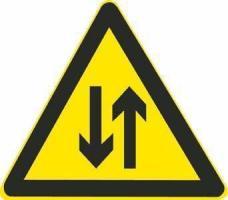
A. reduce speed and yield
B. variable lane
C. separated road
D. two-way traffic
Answer: D
12. Whats the meaning of this sign?
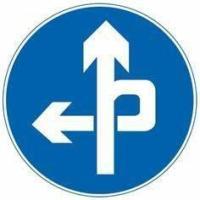
A. going straight and turning left at an interchange
B. going straight and turning right at an interchange
C. going straight and turning left
D. going straight and turning right
Answer: A
13. The main impact of mountain roads on safe driving is _______.
A. The traffic conditions are boring
B. The slopes are long, the curves are sharp and visibility range is shorter.
C. The traffic flow is heavy
D. The road signs are fewer
Answer: B
14. If one drives an illegally assembled motorized vehicle, he should not only pay the fine, but also ________ .
A. be temporarily detained the driving license
B. be revoked the driving license
C. be held for criminal liabilities
D. be detained for less than 10 days
Answer: B
15. Overtaking is allowed when passing a level crossing in city where no train passes.
A. Right
B. Wrong
Answer: B
16. What will be subject to if submitting false materials to apply for driving license?
A. a 20~200 yuan fine
B. disqualification for applying for
C. cannot re-apply for within 1 year
D. cannot re-apply for within 2 years
Answer: C
17. It flashes when breaking down.

A. Right
B. Wrong
Answer: B
18. Whats the meaning of this sign?
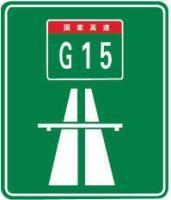
A. expressway exit
B. expressway beginning
C. expressway entry
D. expressway ending
Answer: B
19. Whats the meaning of this sign?
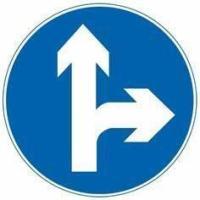
A. going straight and left turn
B. going straight and right turn
C. no going straight and no right turn
D. left turn and right turn only
Answer: B
20. If a driving license has been revoked as it is obtained by deception, bribery or other illegal means, the applicant is not allowed to re-apply for it within ______
A. 6 months
B. 1 year
C. 2 years
D. 3 years
Answer: D