

1. Whats the meaning of this sign?
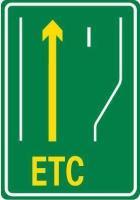
A. payment lane on the expressway
B. check lane on the expressway
C. card getting lane on the expressway
D. ETC lane on the expressway
Answer: D
2. Whats the meaning of this sign?
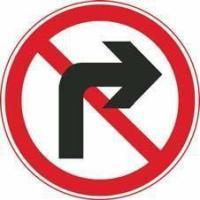
A. no entering the intersection
B. no right turn
C. no changing lane
D. no U turn
Answer: B
3. A motorized vehicle is not allowed to stop in the section 50 meters to the narrow road less than 4 meters width.
A. Right
B. Wrong
Answer: A
4. What device does the switch of this symbol control?
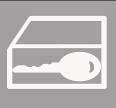
A. window glasses of both sides
B. electric door
C. door unlock
D. child safety lock
Answer: C
5. Whats the meaning of this sign?
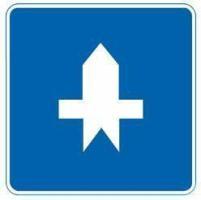
A. streets on both sides
B. main road go first
C. stop to yield
D. one-way road
Answer: B
6. When encountering a vehicle in the opposite direction forcing its way by using his lane, the driver should __________.
A. Force the other side to drive by the right side
B. Use the high beam light to warn the other side
C. Voluntarily yield to the other side
D. Go ahead by the center of the road
Answer: C
7. A motorized vehicle can make a U turn on this road as long as it does not interfere other vehicles.
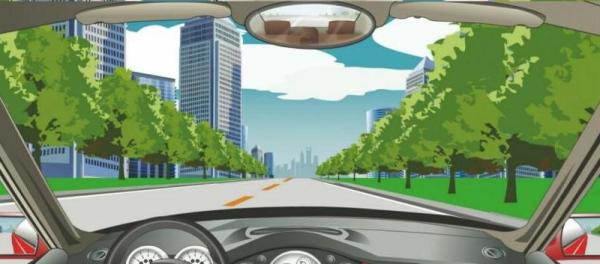
A. Right
B. Wrong
Answer: A
8. It lights to indicate that ______

A. the front fan works
B. air external circulation
C. windscreen defroster
D. air internal circulation
Answer: D
9. When a vehicle runs on an expressway at the speed of 100 kilometers per hour, its safe distance from the vehicle in front is not less than 100 meters.
A. Right
B. Wrong
Answer: A
10. When reversing on an ordinary road and discovering some vehicles are passing, the driver should _________.
A. Honk to indicate the intention
B. Voluntarily stop and yield
C. Speed up and reverse
D. Continue to reverse
Answer: B
11. What is the max speed on the expressway when the visibility is lower than 200m?
A. less than 100km/hr
B. less than 90km/hr
C. less than 60km/hr
D. less than 80km/hr
Answer: C
12. What device does the switch of this symbol control?

A. the windscreen wiper and washer
B. the rear window defrosting or defogging
C. the rear window wiper and washer
D. the windscreen defrosting or defogging
Answer: C
13. What is the max speed when in or out of the lane for non-motorized vehicles?
A. 40km/hr
B. 50km/hr
C. 60km/hr
D. 30km/hr
Answer: D
14. What kind of lane that the red car running in?
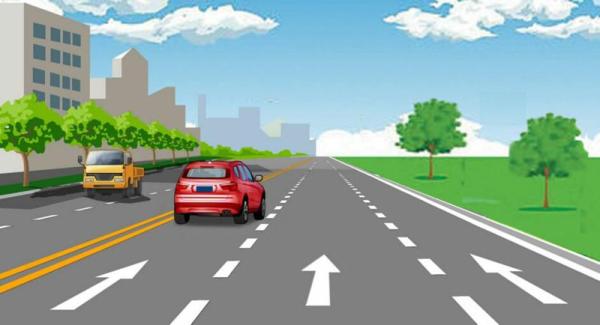
A. fast lane
B. slow lane
C. emergency lane
D. special lane
Answer: A
15. What kind of device the safety bags are?
A. ABS system
B. electronic brake force distribution system
C. assisted occupants protection system
D. drivers head and neck protection system
Answer: C
16. Whats the meaning of this sign?
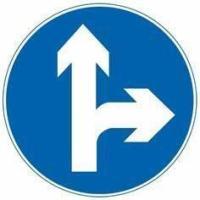
A. going straight and left turn
B. going straight and right turn
C. no going straight and no right turn
D. left turn and right turn only
Answer: B
17. How to run if this traffic light continuously flashes?
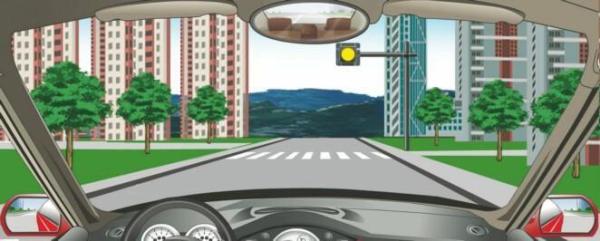
A. speed up and pass as soon as possible
B. stop by the side to wait
C. look and make sure it is safe to pass
D. apply emergency braking
Answer: C
18. In a vehicle that has safety belts, the driver should request the passengers to buckle up.
A. Right
B. Wrong
Answer: A
19. Whats the meaning of this sign?
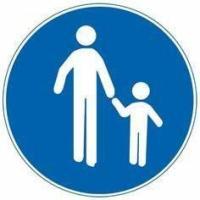
A. pass with low speed
B. watch for pedestrians
C. on foot
D. pedestrians go first
Answer: C
20. Before a vehicle enters a curve of a mountain road, the driver ______ if there is no vehicle coming in the opposite direction.
A. Should reduce speed, honk and drive on the right side
B. Should drive along the outer side of the curve
C. May briefly borrow the opposite lane
D. May speed up and pass along the tangent line of the curve
Answer: A