

1. When a driver needs to borrow a lane to bypass an obstacle in front and a vehicle in the opposite direction is approaching the obstacle, the driver should ___________.
A. Reduce speed or stop and yield to the vehicle coming in the opposite direction
B. Speed up and bypass the obstacle in advance
C. Honk to indicate the vehicle in the opposite direction to yield
D. Rapidly occupy the lane and force the vehicle coming in the opposite direction to stop and yield
Answer: A
2. You may not use the turn signal when you change to the right lane.
A. Right
B. Wrong
Answer: B
3. Before the motorized vehicle runs on the road, the driver should check the safety and technical performance of the vehicle.
A. Right
B. Wrong
Answer: A
4. A motorized vehicle can make a U turn on this road as long as it does not interfere other vehicles.
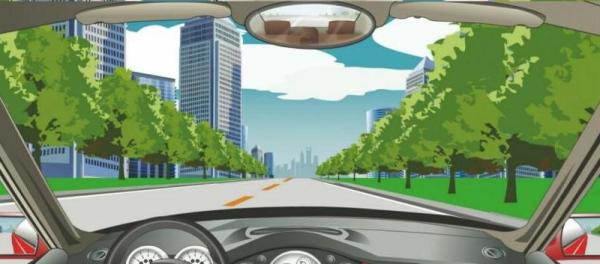
A. Right
B. Wrong
Answer: A
5. When driving at night, the driver should go at a lower speed because his field of vision is limited and he can hardly observe the traffic conditions beyond the area covered by his vehicle light.
A. Right
B. Wrong
Answer: A
6. Whats the meaning of this sign?
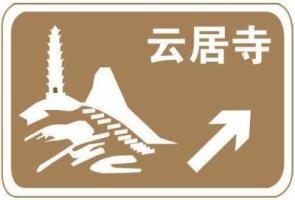
A. distance to a tourist area
B. category of a tourist area
C. direction of a tourist area
D. symbol of a tourist area
Answer: C
7. How far should be the distance from the vehicle in front at the speed of more than 100 km/hr when driving a small passenger vehicle on the expressway?
A. more than 50 meters
B. more than 60 meters
C. more than 100 meters
D. more than 80 meters
Answer: C
8. This set of the hand signals of the traffic police indicates that the vehicles should ____ .
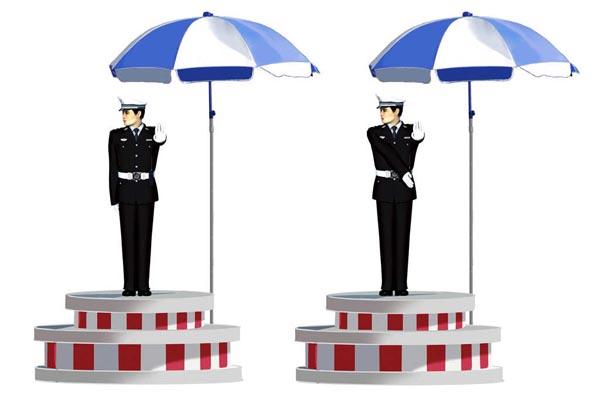
A. reduce speed and pass slowly
B. pull over
C. stop
D. turn right
Answer: D
9. How to run on this road?
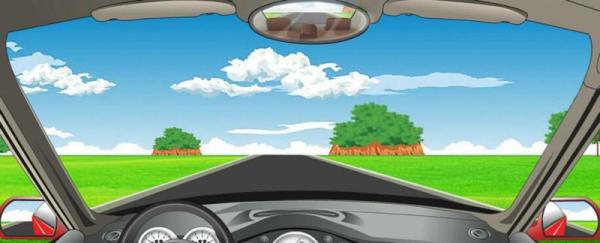
A. run in the middle of the road
B. run on both side of the road
C. run according to lanes
D. go forward at will
Answer: A
10. It lights to indicate that the handbrake may not loose in the end.

A. Right
B. Wrong
Answer: B
11. This sign reminds the lane or the road narrows on the left side ahead.
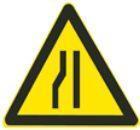
A. Right
B. Wrong
Answer: A
12. When passing through an inundated road, the driver should ________.
A. Reduce speed and go slowly
B. Maintain the normal speed and pass
C. slide over in the neutral gear
D. Speed up and pass
Answer: A
13. The vehicle is allowed to _______ at this intersection.
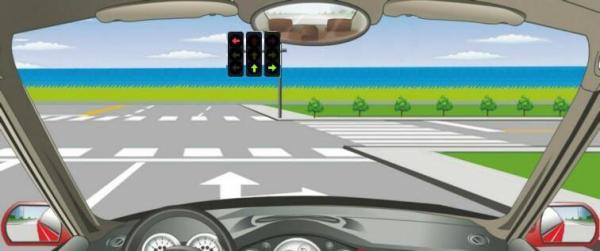
A. go straight or turn right
B. turn left
C. go straight or turn left
D. turn left or turn right
Answer: A
14. What is this manipulation device?
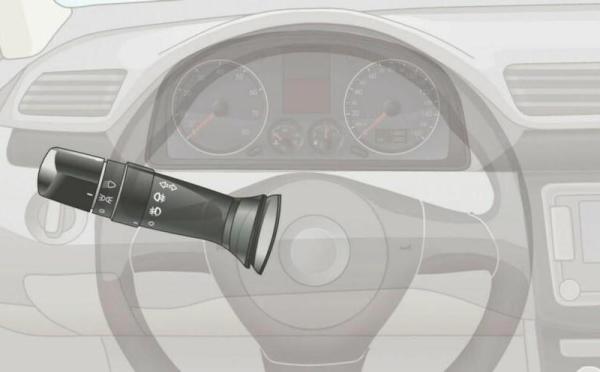
A. switch of reverse light
B. switch of wiper
C. switch of the hazard lights
D. combination switch of lights and signals
Answer: D
15. May turn right when encountering this traffic light at the intersection.
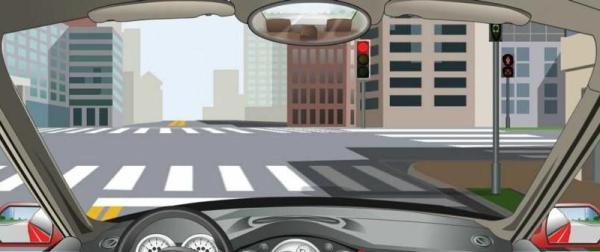
A. Right
B. Wrong
Answer: A
16. Traffic Police only imposes a fine if a vehicle is suspected of using the falsified or altered label of inspection.
A. Right
B. Wrong
Answer: B
17. This sign reminds the road ahead goes through the village or town.
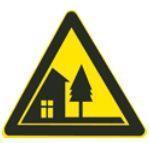
A. Right
B. Wrong
Answer: A
18. You should speed up through the section with this kind of traffic marking.
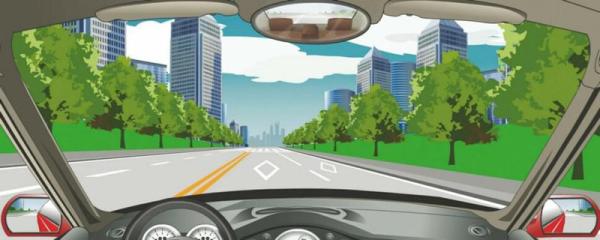
A. Right
B. Wrong
Answer: B
19. Speeding up to go though the intersection before the light turns to red in this case.
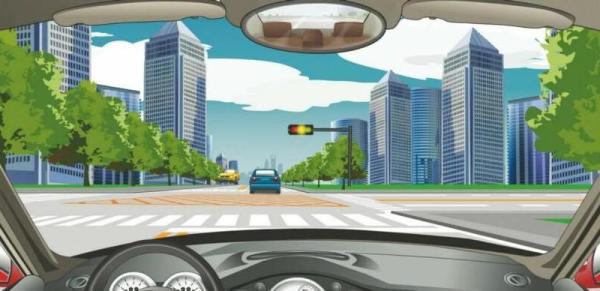
A. Right
B. Wrong
Answer: B
20. If a motorized vehicle driver has caused a major accident in violation of the traffic regulations which has caused heavy loss to public or private property, the driver is subject to a prison term of less than 3 years or a criminal detention.
A. Right
B. Wrong
Answer: A