

1. What is the meaning of this sign?
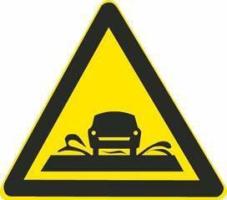
A. Muddy road
B. Low-lying road
C. Overflowing road
D. Ferry
Answer: C
2. Which will affect the stopping distance?
A. Pavement conditions
B. Driver?ˉs reaction time
C. The quantity of cargo and the structure of brake, etc.
D. The vehicle speed
Answer: ABCD
3. What is the meaning of this sign?
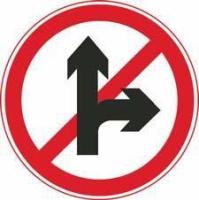
A. No going straight and no changing to left lane
B. No going straight and no left turn
C. Allowed to go straight and change to left lane
D. No going straight and no right turn
Answer: D
4. What is the meaning of this sign?
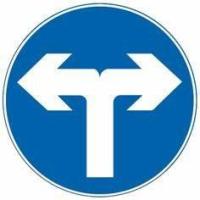
A. No left turn
B. Leftt and right turn
C. No leftt and right turn
D. No right turn
Answer: B
5. When rescuing a wounded person in coma, it is necessary to take warm-keeping measures to prevent heat loss.
A. Right
B. Wrong
Answer: A
6. After setting off from the roadside, motor vehicle drivers should speed up as soon as possible and make a sharp left-turn in order to drive into the normal lane.
A. Right
B. Wrong
Answer: B
7. What is the meaning of this sign?
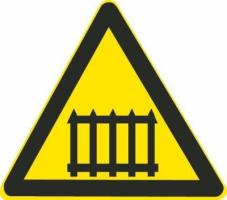
A. A manned level crossing
B. Multi-crossing of railway and road
C. Grade separation level crossing
D. An unmanned level crossing
Answer: A
8. When approaching another vehicle at night, why should the driver alternate between high-and-low-beam at a distance more than 150 meters?
A. Warn each other before passing
B. Driving habit
C. Easy to observe the situation ahead from either side
D. Courtesy
Answer: C
9. How to ensure safe driving at night?
A. Drive at speed limit
B. Cut speed and drive carefully
C. Maintain the current speed
D. Drive above the speed limit
Answer: B
10. When two vehicles approach each other on a foggy day, what is the best method of safe driving?
A. Turn on the high-beam
B. Slowdown and maintain a large safety distance
C. Turn on the low-beam
D. Turn on the fog lamp
Answer: B
11. What is the meaning of this sign?
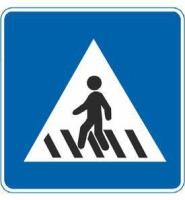
A. Crosswalk
B. Students?ˉ passage
C. Watch for pedestrians
D. Children?ˉs passage
Answer: A
12. What are the driving behaviors that cause accidents when a motor vehicle turns to a turning road?
A. Vehicles occupy opposite lanes
B. Turn the steering wheel sharply in the bend
C. Do not slow down before turning
D. Motor vehicles drive on the right side of the road
Answer: ABC
13. Drivers neednt yield to pedestrians who display such behavior.

A. Right
B. Wrong
Answer: B
14. When overtaking on a rainy day, drivers should turn on headlamps and sound a long horn.
A. Right
B. Wrong
Answer: B
15. Drivers who ride motorcycles are able to not wear safety helmets.
A. Right
B. Wrong
Answer: B
16. Keep enough safe distance When a motor vehicle follows another vehicle, because ______.
A. Avoke a rear-end collision
B. The closer you get to the vehicle, the less easy it is to grasp the situation ahead of the vehicle.
C. Enough distance to avoid emergencies
D. Prevent being unable to detect the front vehicle brake in time due to the damage rear lamp of the front vehicle
Answer: ABCD
17. Speeding up to go though the intersection before the light turns to red in this case.

A. Right
B. Wrong
Answer: B
18. What is the meaning of this sign?
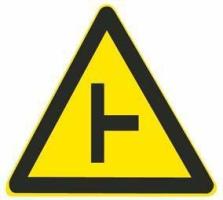
A. Y-shaped intersection
B. T-shaped intersection
C. Intersection
D. Ring intersection
Answer: B
19. When driving on a damp and slippery road, drivers should avoid using the emergency brake to his/her best ability.
A. Right
B. Wrong
Answer: A
20. The first-aid measure to rescue a poisoned person is to _______.
A. Take warming-up measures
B. Bring him to a place where air is fresh
C. Give him artificial respiration
D. Depress the heart over the chest
Answer: B