

1. What is the meaning of this sign?
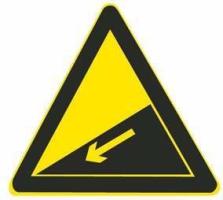
A. embankment road
B. steep uphill road
C. continuous up slopes
D. steep downhill road
Answer: D
2. Traffic Police can detain the vehicle according to law if it runs on the road failing to place a label of inspection.
A. Right
B. Wrong
Answer: A
3. Traffic Police can detain the vehicle according to law if it is suspected of using the label of insurance from other vehicle.
A. Right
B. Wrong
Answer: A
4. Traffic Police only imposes a fine if a vehicle is suspected of using the falsified or altered label of inspection.
A. Right
B. Wrong
Answer: B
5. When encountering dangerous and complicated circumstance, the driver should keep medium or low speed and keep the balance of the motorcycle to pass it cautiously.
A. Right
B. Wrong
Answer: A
6. In which situation that a driver cannot drive?
A. after drinking coffee
B. after drinking milk
C. after drinking
D. after drinking tea
Answer: C
7. When approaching another vehicle at night, why should the driver alternate between high-and-low-beam at a distance more than 150 meters?
A. Warn each other before passing
B. Driving habit
C. Easy to observe the situation ahead from either side
D. Courtesy
Answer: C
8. For a temporary stop on a foggy day, the driver should only turn on the fog lamp and the low-beam
A. Right
B. Wrong
Answer: B
9. What needs attention when a motor vehicle drives on a road covered with ice and snow?
A. Braking length is extended
B. Anti-skating resistance will be greater
C. The adhesive force of the road will be greater
D. The braking length will be shorter
Answer: A
10. What is the meaning of this sign?
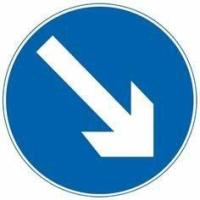
A. downhill section on right side
B. driving by the right side of the road
C. stopping by the right side of the road
D. right turn only
Answer: B
11. When a driver drives a motorized vehicle during the period of probation, the driver should paste or hang a uniform probation mark on the rear part of the vehicle.
A. Right
B. Wrong
Answer: A
12. When driving on a road covered with ice and snow, drivers tend to encounter glare caused by reflection of light rays from the road surface.
A. Right
B. Wrong
Answer: A
13. It is not safe for a female driver to wear high heels to drive a vehicle.
A. Right
B. Wrong
Answer: A
14. You can drive a motorized vehicle a short distance after drinking as long as it does not interfere the driving operation.
A. Right
B. Wrong
Answer: B
15. A motorized vehicle driver who violates of traffic lights is subject to a 6-point penalty.
A. Right
B. Wrong
Answer: A
16. When a motorcycle turns at an excessively high speed, it can easily dash out of a curve or skid sideways.
A. Right
B. Wrong
Answer: A
17. Use the high and low beam lights alternately when passing the crosswalk at night.
A. Right
B. Wrong
Answer: A
18. Which of the following vehicle in front in the same lane is not allowed to be overtaken?
A. the vehicle is making a stop
B. the vehicle is reducing speed to yield
C. the vehicle is taking a U turn
D. the vehicle is running normally
Answer: C
19. Traffic Police can detain the accident vehicle according to law if it needs to be collected evidence of the road accident.
A. Right
B. Wrong
Answer: A
20. Causing a traffic accident due to violating the law and regulations on road traffic safety is the rule-breaking act.
A. Right
B. Wrong
Answer: B