

1. Driving a motorized vehicle on the road in violation of road traffic regulations shall be subject to relevant punishment.
A. Right
B. Wrong
Answer: A
2. When a motorcycle goes downhill, it may fully use the neutral gear and slide.
A. Right
B. Wrong
Answer: B
3. When a motor vehicle moves through water, drivers should intermittently and gently depress the brake pedal in order to restore braking efficiency.
A. Right
B. Wrong
Answer: A
4. Turning on the high-beam is an effective way to improve visibility in fog weather.
A. Right
B. Wrong
Answer: B
5. What should be done by the driver who intends to overtake but finds that the vehicle in front is also overtaking?
A. Following the vehicle in front closely and finding a chance to overtake it
B. Accelerating to overtake forcefully
C. Continuously sounding the horn to urge the vehicle in front to yield
D. Refraining from overtaking and letting the vehicle in front overtake first
Answer: D
6. After setting off from a roadside, motor vehicle drivers should watch both sides of the road, turn left and drive into the normal lane slowly.
A. Right
B. Wrong
Answer: A
7. Nobody is allowed to drive a motorized vehicle that has safety hazards.
A. Right
B. Wrong
Answer: A
8. What is the meaning of this sign?
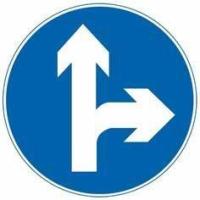
A. going straight and left turn
B. going straight and right turn
C. no going straight and no right turn
D. left turn and right turn only
Answer: B
9. What is the meaning of this sign?
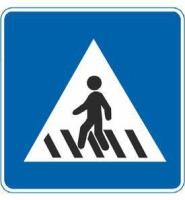
A. crosswalk
B. students’ passage
C. watch for pedestrians
D. children’s passage
Answer: A
10. What is the meaning of this sign?
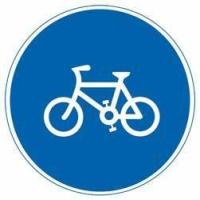
A. electric bicycles may go
B. parking space for non-motorized vehicles
C. parking area for non-motorized vehicles
D. non-motorized vehicles may go
Answer: D
11. The motorized vehicle driver is not allowed to drive a motorized vehicle when his driving license is detained.
A. Right
B. Wrong
Answer: A
12. The width of loaded goods should ______________ from a three-wheel motorcycle.
A. not exceed 0.15 meter
B. not exceed
C. not exceed 0.20 meter
D. not exceed 0.25 meter
Answer: B
13. A driver should drive the vehicles in accordance with the qualification listed on the driving license.
A. Right
B. Wrong
Answer: A
14. What is the meaning of this sign?
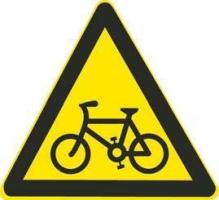
A. the lane for non-motorized vehicles
B. yield non-motorized vehicles
C. no passing for non-motorized vehicles
D. watch for non-motorized vehicles
Answer: D
15. Traffic Police only imposes a fine if a vehicle is suspected of using the falsified or altered label of inspection.
A. Right
B. Wrong
Answer: B
16. A motorized vehicle driver who uses other motorized vehicle’s license plate and vehicle license is subject to a 3-point penalty.
A. Right
B. Wrong
Answer: B
17. What is the meaning of this sign?
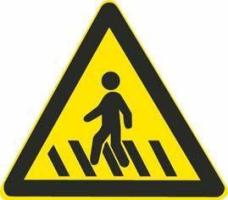
A. watch for pedestrians
B. watch for children
C. school area
D. crosswalk
Answer: A
18. A motorized vehicle driver who uses falsified or altered driving license is subject to a 12-point penalty.
A. Right
B. Wrong
Answer: A
19. What needs attention when a motor vehicle drives on a road covered with ice and snow?
A. Braking length is extended
B. Anti-skating resistance will be greater
C. The adhesive force of the road will be greater
D. The braking length will be shorter
Answer: A
20. How should lamps be used by the motor vehicle driver who follows a vehicle on a road section at night where he street light condition is good?
A. Turn off the headlamp
B. Use high-beam
C. Turn off all lamps
D. Use low-beam
Answer: D