

1. Motor vehicle drivers don?ˉt need to use any lamp at night when passing through a road section where the street light condition is good.
A. Right
B. Wrong
Answer: B
2. What is the meaning of this sign?

A. Reduce speed and go slowly
B. Watch for danger
C. Jammed section
D. Accident-prone section
Answer: B
3. What is the meaning of this sign?
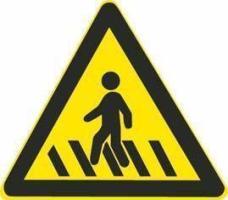
A. Speed up when the driver can not see the pedestrians
B. Speed up
C. There is a crosswalk ahead.
D. Keep driving at the same speed when you can not see the pedestrians
Answer: C
4. When passing an intersection, vehicle motor drivers are not allowed to overtake.
A. Right
B. Wrong
Answer: A
5. What is the meaning of this sign?
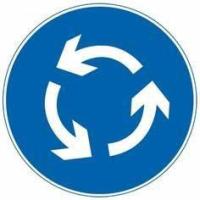
A. Passing by the right side
B. Passing by the left side
C. Running to right side
D. Running the roundabout
Answer: D
6. What is the meaning of this sign?

A. No changing lane
B. No left turn
C. No going straight
D. No U turn
Answer: D
7. Turning on the high-beam is an effective way to improve visibility in fog weather.
A. Right
B. Wrong
Answer: B
8. When a motor vehicle temporarily stops in fog, which lamp should be turned on?
A. Hazard lamp, clearance lamp and rear position lamp
B. Left-turn indicator, clearance lamp and rear position amp
C. Headlamp, clearance lamp and rear position lamp
D. Reverse lamp, clearance lamp and rear position lamp
Answer: A
9. When encountering a school bus which stops at the right roadside and students are embarking or disembarking, what should motor vehicle drivers do?
A. If there is only one motor vehicle lane in each direction, motor vehicle drivers behind the bus should stop and wait.
B. If there are two motor vehicle lanes in each direction, motor vehicle drivers in the left lane behind the bus may overtake the bus at a lower speed
C. If there are three motor vehicle lanes in each direction, motor vehicle drivers in the middle lane behind the bus should stop and wait
D. If there are three motor vehicle lanes in each direction, motor vehicle drivers in the left lane behind the bus may pass at a lower speed
Answer: ACD
10. When rescuing the persons who are losing blood, it is necessary to ______ first.
A. Observe
B. Dress the wounds
C. Stop bleeding
D. Inquire
Answer: C
11. A correct measure to avoid tire burst of motor vehicles is to lower the tire pressure.
A. Right
B. Wrong
Answer: B
12. What needs attention when a motor vehicle drives on a road covered with ice and snow?
A. Braking length is extended
B. Anti-skating resistance will be greater
C. The adhesive force of the road will be greater
D. The braking length will be shorter
Answer: A
13. When driving a motorcycle, the driver may wear slippers for the sake of safety.
A. Right
B. Wrong
Answer: B
14. Sounding the horn on a foggy daY can arouse the attention of the opposite side. After hearing the horn from the opposite side, the driver should also sound their own horn to respond.
A. Right
B. Wrong
Answer: A
15. When driving a motor vehicle into a traffic flow, drivers should not hold up other vehicles.
A. Right
B. Wrong
Answer: A
16. What should the motor vehicle driver do when the motor vehicle encounters the crosswalk in thissituation?
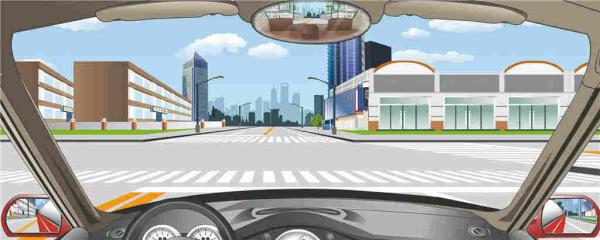
A. Slow down and pass
B. Speed up and pass
C. Sound the horn and pass
D. Stop immediately
Answer: A
17. After setting off from the roadside, motor vehicle drivers should speed up as soon as possible and make a sharp left-turn in order to drive into the normal lane.
A. Right
B. Wrong
Answer: B
18. While driving a motorcycle, nothing is permitted to hang on the handlebars.
A. Right
B. Wrong
Answer: A
19. Gun powder, explosives and detonating powder belong to which of the following dangerous chemicals?
A. Oxidizing materials
B. Inflammable solid materials
C. Explosives
D. Self-igniting articles
Answer: C
20. When encountering such pedestrians, motor vehicle drivers may continuously sound the horn to alert them to yield.
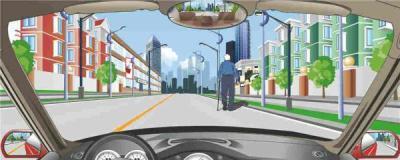
A. Right
B. Wrong
Answer: B