

1. Must reduce the frequency of honking in this section.

A. Right
B. Wrong
Answer: B
2. If the vehicle has no license plate, label of inspection or label of insurance, preserve the scene and immediately report to the police.
A. Right
B. Wrong
Answer: A
3. Whats the meaning of the white broken line by the carriage on the right side road?
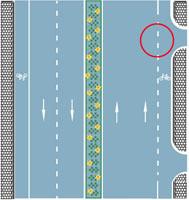
A. allowed to temporarily cross
B. prohibited from crossing
C. emergency lanes dividing line
D. crosswalk dividing line
Answer: A
4. This sign reminds there is a one-way and poor lighting culvert ahead.
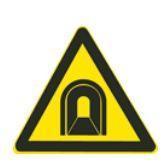
A. Right
B. Wrong
Answer: B
5. Whats the meaning of this sign?
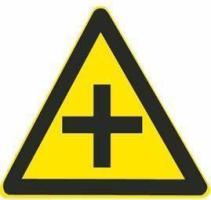
A. intersection
B. ring intersection
C. T-shaped intersection
D. Y-shaped intersection
Answer: A
6. Whats the meaning of this sign?
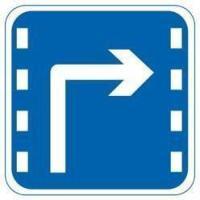
A. right-turn lane
B. U turn lane
C. left-turn lane
D. lanes for going in different directions
Answer: A
7. After the green light at an intersection is on, the vehicles may not yield if non-motorized vehicles cut in.
A. Right
B. Wrong
Answer: B
8. Whats the meaning of this sign?
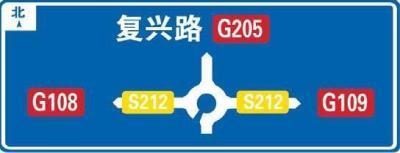
A. intersection ahead
B. interchange ahead
C. Y-shaped intersection ahead
D. ring intersection ahead
Answer: D
9. Whats the meaning of this mark on the road?
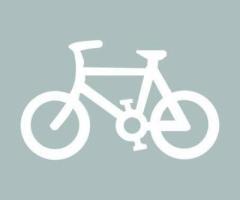
A. the lane for non-motorized vehicles
B. the special lane for motorcycles
C. the special lane for battery bicycles
D. the special lane for bicycles
Answer: A
10. A motorized vehicle is not allowed to stop in the section 50 meters to the narrow road less than 4 meters width.
A. Right
B. Wrong
Answer: A
11. Which kind of sign is it?
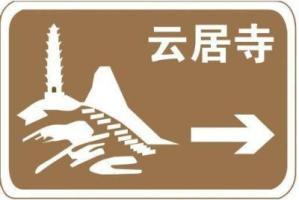
A. tourist zone sign
B. work area sign
C. notification signs
D. expressway sign
Answer: A
12. The braking system may malfunction if it lights.

A. Right
B. Wrong
Answer: A
13. Whats the meaning of this sign?

A. a manned level crossing 50m ahead
B. an unmanned level crossing 100m ahead
C. a manned level crossing 100m ahead
D. an unmanned level crossing 50m ahead
Answer: B
14. When a vehicle changes lane, the driver should turn on the turn signal in advance,observe traffic conditions, maintain a safe distance and move into the new lane.
A. Right
B. Wrong
Answer: A
15. When driving at night on a road with no or poor lighting, the driver should switch from the low beam light to the high beam light. But the vehicle following in the same direction is not allowed to use the high beam light.
A. Right
B. Wrong
Answer: A
16. What marking is the road mark?
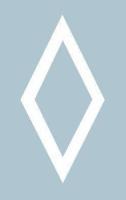
A. crosswalk ahead
B. intersection ahead
C. reduce speed and yield ahead
D. stop to yield ahead
Answer: A
17. The yellow lane-dividing line in the picture is used to separate the traffic flow in opposite directions, crossing the line to overtake or make a turn is allowed if it is safe.
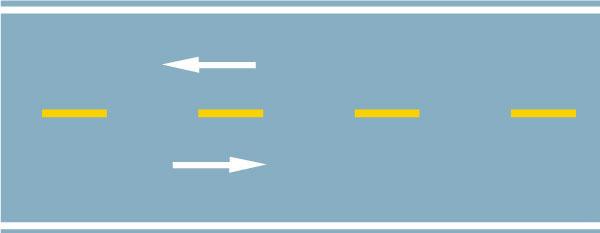
A. Right
B. Wrong
Answer: A
18. How to run when seeing this traffic light at level crossing?
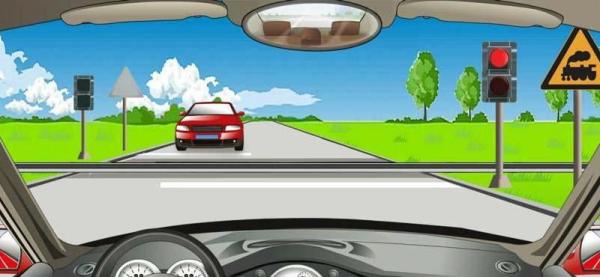
A. pass before the train comes
B. no exceeding the stop line
C. observe and pass slowly
D. speed up and pass without changing gear
Answer: B
19. Reducing the speed when driving in sand, hail, rain, fog, ice and other weather conditions.
A. Right
B. Wrong
Answer: A
20. It lights continuously to indicate that airbag is working.

A. Right
B. Wrong
Answer: B