

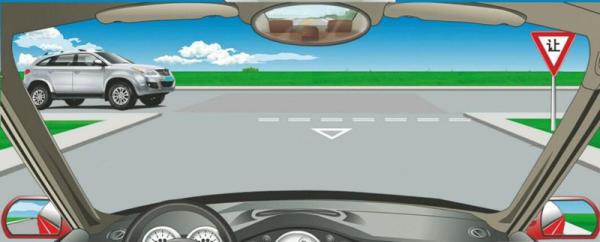
1. Reducing the speed to yield when encountering this situation in the intersection.
A. Right
B. Wrong
Answer: A
2. Whats the meaning of this sign?
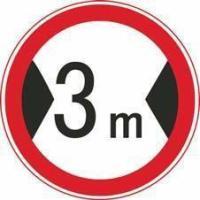
A. 3m width limit ahead
B. 3m width limit
C. the 3m width limit ban is lifted
D. 3m height limit
Answer: B
3. A motorized vehicle is not allowed to stop in the section 50 meters to the narrow road less than 4 meters width.
A. Right
B. Wrong
Answer: A
4. What does the traffic light mean?
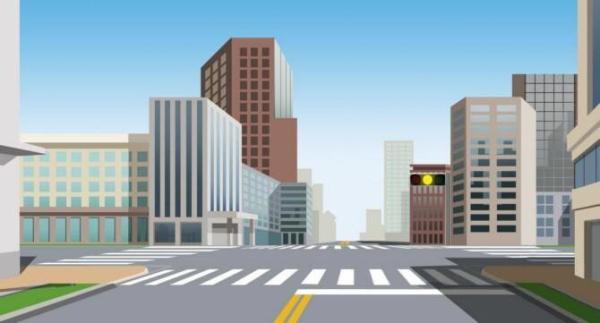
A. speed up and turn left
B. no right turn
C. intersection warning
D. speed and run straight
Answer: C
5. Driving on the expressway with full signs and marking, the driver should run in the lane and at the speed according to _________.
A. Signs and markings
B. Rules on road traffic safety
C. Vehicle manual
D. Local regulations
Answer: A
6. A motorized vehicle driver who drives after drinking is subject to a ________.
A. 3-point penalty
B. 2-point penalty
C. 6-point penalty
D. 12-point penalty
Answer: D
7. A qualified driver should not only be technically adept, but more importantly have good driving habits and ethical attainments.
A. Right
B. Wrong
Answer: A
8. What kind of device the safety bags are?
A. ABS system
B. electronic brake force distribution system
C. assisted occupants protection system
D. drivers head and neck protection system
Answer: C
9. What kind of marking are the double yellow solid lines in the middle of the road?
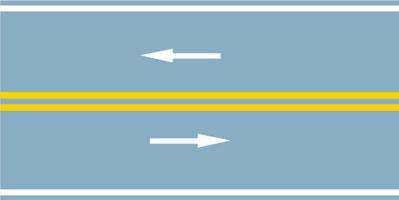
A. auxiliary marking
B. warning sign
C. prohibitive marking
D. indicative marking
Answer: C
10. How to drive through the intersection without traffic lights?
A. reduce speed and go slowly
B. speed up and pass
C. let large vehicle go first
D. let the left vehicle go first
Answer: A
11. When a vehicle running at night encounters a curve ahead, its lighting ____.
A. Leave the road surface
B. Moves from the center of the road to the roadside
C. Does not change its distance
D. Become lower
Answer: B
12. Reducing the speed when driving in sand, hail, rain, fog, ice and other weather conditions.
A. Right
B. Wrong
Answer: A
13. When a vehicle passes a school or a residential area, the driver should observe the signs and markings, go slowly and refrain from honking.
A. Right
B. Wrong
Answer: A
14. If a motorized vehicle driver has caused a major accident in violation of the traffic regulations which has caused heavy loss to public or private property, the driver is subject to a prison term of less than 3 years or a criminal detention.
A. Right
B. Wrong
Answer: A
15. This set of the hand signals of the traffic police indicates that the vehicles should ____ .
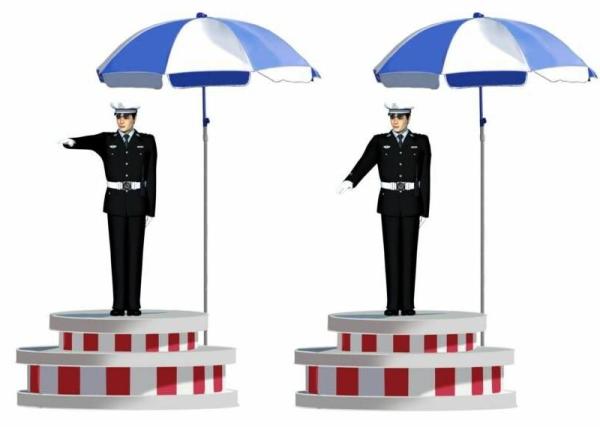
A. turn right
B. change lane
C. reduce speed and pass slowly
D. pull over
Answer: C
16. What does this sign mean?
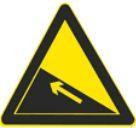
A. Reminding the side of a reservoir, lake or river ahead
B. Reminding the steep uphill road ahead
C. Reminding continuous two or more up slopes ahead
D. Reminding the steep downhill road ahead
Answer: B
17. Within the validity of the Admission Form, the times of test reservation for Driving Skills of subject 2 and subject 3 can not exceed ______
A. 3 times
B. 4 times
C. 5 times
D. 6 times
Answer: C
18. When driving a motor vehicle after drinking, a prison term of more than 3 years will be imposed.
A. Right
B. Wrong
Answer: B
19. The light switch is in this position, front fog lights turn on

A. Right
B. Wrong
Answer: A
20. This sign reminds an unmanned level crossing ahead.
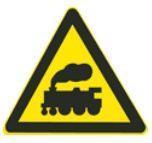
A. Right
B. Wrong
Answer: A