

1. Motorized vehicles should pass the intersections according to the traffic signals.
A. Right
B. Wrong
Answer: A
2. A motorized vehicle driver who uses falsified or altered driving license is subject to a 12-point penalty.
A. Right
B. Wrong
Answer: A
3. When discovering a road congestion ahead, the correct way to deal with this situation is to _______.
A. Continue to weave through
B. Find space and overtake one vehicle after another
C. Honk to indicate the vehicle in front to speed up
D. Stop and wait in line
Answer: D
4. When reaching a sharp curve, the driver should reduce speed and drive on the right side so as to avoid colliding with the vehicle crossing the central line of the curve in the opposite direction.
A. Right
B. Wrong
Answer: A
5. When encountering non-motorized vehicles cutting in on the road, the driver should ___.
A. Honk to warn
B. Speed up and pass
C. Reduce speed and yield
D. Suddenly speed up when approaching
Answer: C
6. If one drives an illegally assembled motorized vehicle, he should not only pay the fine, but also ________ .
A. be confiscated the driving license
B. be revoked the driving permission
C. be forced to recover the vehicle condition
D. be revoked the driving license
Answer: D
7. It lights to indicate that ______

A. the tail fog light is turned on
B. the low beam light is turned on
C. the high beam light is turned on
D. the head fog light is turned on
Answer: D
8. Whats the meaning of this sign?
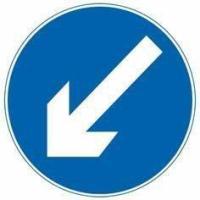
A. stop by the left side of the road
B. downhill section left
C. left turn only
D. run by the left side of the road
Answer: D
9. Must reduce the frequency of honking in this section.

A. Right
B. Wrong
Answer: B
10. When entering an expressway toll gate, the driver should select a gate where _______.
A. There are more vehicles
B. The red light is on
C. The green light is on
D. Service is temporarily suspended
Answer: C
11. How to do when encountering this situation of waiting in line?
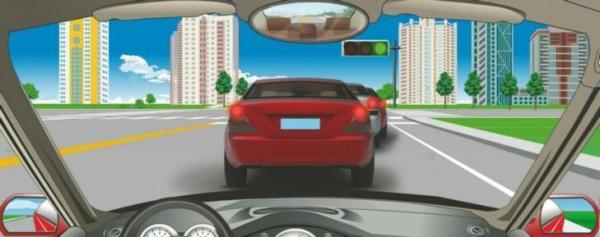
A. cross the solid line from left side to overtake
B. overtake from both sides as will
C. wait in line
D. borrow the lane from right side to overtake
Answer: C
12. When driving during the period of probation, the driver should paste or hang _____ on the rear part of the vehicle
A. a mark of avoiding with care
B. a mark of paying attention of beginner
C. a uniform probation mark
D. a mark of paying attention of vehicle distance
Answer: C
13. Whats the meaning of this guide arrow?

A. indicate changing to left lane
B. indicate changing to left lane
C. indicate making a U turn ahead
D. indicate turning right ahead
Answer: D
14. If the drivers household register has moved out of the original vehicle management station, the driver should apply to the vehicle management station _______ .
A. At the former place of his household register
B. At the residential place
C. At the new place of his household register
D. At the location of his household register
Answer: C
15. Whats the meaning of the yellow broken and solid lines in the middle of the road?
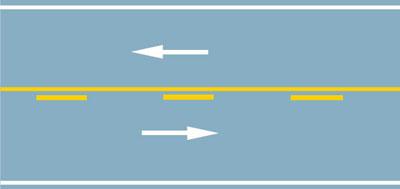
A. no crossing the lines on the side of the broken line
B. no crossing the lines on the side of the solid line
C. allowed to cross the lines on the side of the solid line
D. allowed to cross the lines on both sides
Answer: B
16. The three principles for careful driving are concentration, careful observation and early prevention.
A. Right
B. Wrong
Answer: A
17. How often should a driver who is more than 60 years old present the certificate of physical conditions?
A. every 3 years
B. every 2 years
C. every 6 months
D. every 1 year
Answer: D
18. The full mark of Driving Skills, Common Knowledge on Safe and Courteous Driving of the subject 3 test is 100, each of the passing mark is 80 and 90.
A. Right
B. Wrong
Answer: B
19. When a vehicle goes downhill, the driver should properly control the speed and fully use the engine to brake.
A. Right
B. Wrong
Answer: A
20. Before a vehicle enters an intersection, the driver should reduce speed, observe and make sure it is safe to do so.
A. Right
B. Wrong
Answer: A