

1. What is the meaning of this sign?
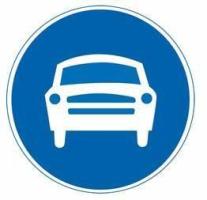
A. No passing for small vehicle
B. Passing for small vehicle only
C. Passing for motorized vehicle
D. No passing for small vehicle
Answer: C
2. At a road that has more than two vehicle lanes in the same direction, the motorcycles should use the very left one.
A. Right
B. Wrong
Answer: B
3. Whats the meaning of the double white broken lines in far front of the intersection?
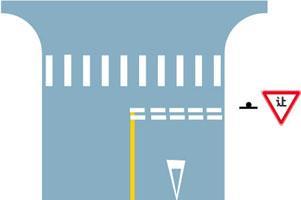
A. Waiting to run line
B. Stopping and yield line
C. Slowdown and yield line
D. Left-turn waiting line
Answer: C
4. When a bicycle borrows the motor vehicle lane, the motor vehicle may sound the horn hurriedly to warn the bicycle to yield.
A. Right
B. Wrong
Answer: B
5. The motor vehicle should speed up and pass rapidly under this situation.
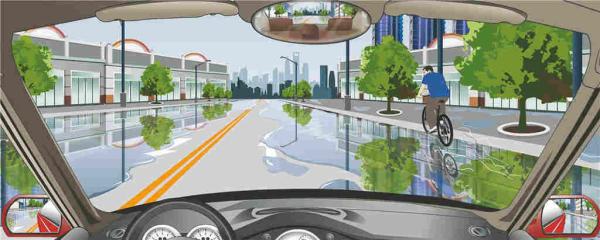
A. Right
B. Wrong
Answer: B
6. When an erosive material catches fire, it should not be put out with water cannon.
A. Right
B. Wrong
Answer: A
7. When running in a high speed, if only use the front brake, the driver can be easily thrown out due to the inertia.
A. Right
B. Wrong
Answer: A
8. Rescue personnel should check the breath of the unconscious person before applying any other emergency treatment.
A. Right
B. Wrong
Answer: A
9. When rescuing a wounded person suffering spinal fracture, it is necessary to ___________.
A. Take warm-keeping measure
B. Use soft stretcher to carry
C. Use sling to keep in position
D. Help the wounded person to move
Answer: C
10. Whats the meaning of this sign?
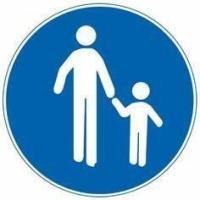
A. Pass with low speed
B. Watch for pedestrians
C. On foot
D. Pedestrians go first
Answer: C
11. What are the main reason for slow driving of motorized vehicles on rainy days?
A. Braking distance will increase
B. The driver?ˉs view islimited
C. Emergency braking can easily cause side skidding
D. Fast driving increases fuel consumption
Answer: ABC
12. When approaching a vehicle on a narrow slope, which one of the following ways is correct?
A. The descending vehicle yields to the ascending
B. The vehicle which is further from the slope crest should yield
C. The ascending vehicle yields to the descending
D. If the descending vehicle has reached the midpoint while the ascending vehicle has not yet set out, the descending vehicle must yield.
Answer: A
13. When a motorcycle goes downhill on a mountain road, it is not allowed to overtake.
A. Right
B. Wrong
Answer: A
14. What is the meaning of this sign?

A. Turn right
B. One-way road
C. Going straight only
D. Straight-going lane
Answer: A
15. When such circumstances happen suddenly, what should the driver do?
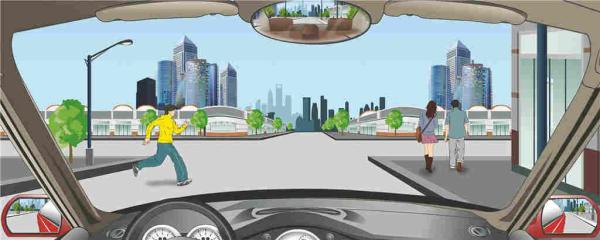
A. Reduce speed or stop to yield
B. Bypass in front of the pedestrians
C. Continuously sound the horn to alert the pedestrians
D. Bypass from behind the pedestrians
Answer: A
16. When a motor vehicle encounters a burning phenomenon, it should leave the vehicle quickly so as not to cause injury or asphyxia to the respiratory tract.
A. Right
B. Wrong
Answer: A
17. When driving on a muddy road, what should the driver do?
A. Try to avoid using the foot brake
B. Stop and observe the road ahead
C. Avoid shifting halfway as much as possible
D. Put in low gear ahead of time
Answer: ABCD
18. How to drive a car safely when the sight of rain, snow, fog is not clear or the road is slippery?
A. Increase the horizontal distance
B. Reduce speed and run
C. Speed up and run
D. Stop to yield when necessary
Answer: ABD
19. After a traffic accident, what is the most effective measure to prevent secondary accidents?
A. Evacuate all passengers
B. Turn on the hazard lamps
C. Mark the original place of the injured persons
D. Properly place the danger warning sign
Answer: ABD
20. when passing an intersection without traffic lights, the driver finds people are crossing the street, the wrong measure for the driver to take is to __________.
A. Reduce speed or stop and yield
B. Honk to urge the pedestrians
C. Bypass
D. Weave through the pedestrians
Answer: BCD