

1. When the green arrow for a lane is on and there are still pedestrians in the crosswalk before the vehicle, the driver should ___________.
A. Directly start up and pass
B. Start up and bypass the pedestrians from behind
C. Start up and bypass before the pedestrians
D. Start up after the pedestrians have passed
Answer: D
2. When a vehicle enters a two-way tunnel, the driver should turn on ________.
A. The hazard lights
B. The high beam light
C. The fog light
D. The width light or the low beam light
Answer: D
3. Whats the meaning of this guide arrow?

A. Y-shaped intersection ahead
B. separate road ahead
C. only left or right turn ahead
D. merging with both sides ahead
Answer: C
4. A front tire blowout is very dangerous. The vehicle will immediately turn to the side where the tire is blown out and have a direct impact on the drivers control of the steering wheel.
A. Right
B. Wrong
Answer: A
5. It is illegal for a driver to use a cell phone while driving.
A. Right
B. Wrong
Answer: A
6. Whats the meaning of this sign?
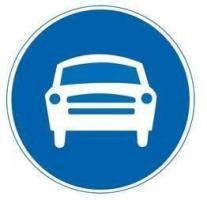
A. no passing for small vehicle
B. passing for small vehicle only
C. passing for motorized vehicle
D. no passing for small vehicle
Answer: C
7. If a motorized vehicle breaks down or causes a traffic accident on the expressway and cannot to run normally, the vehicle should be towed by ______.
A. a vehicle passing by
B. a large bus
C. a vehicle traveling together
D. a tow truck
Answer: D
8. Whats the meaning of this sign?
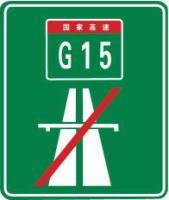
A. expressway exit ahead
B. expressway entry ahead
C. expressway ending ahead
D. expressway beginning ahead
Answer: C
9. Is there any effective auxiliary method to control the speed while driving on a long downhill road besides braking.
A. Shift to the neutral gear and slide
B. Use the engine to brake
C. Turn off the engine and slide
D. Depress the clutch and slide
Answer: B
10. The main feature of pedestrians participating in road traffic is that _________.
A. They move slowly
B. They like to get together and look on
C. They walk around at will and can easily change directions
D. All the above
Answer: C
11. When driving a vehicle through an inundated road with non-motorized vehicles on both sides, the driver should _________.
A. Reduce speed and go slowly
B. Go forward normally
C. Speed up and pass
D. Continuously honk
Answer: A
12. It lights to indicate that ______

A. the head and tail fog lights are turned on
B. front and rear width lights are turned on
C. the head lights are turned on
D. the hazard lights are turned on
Answer: B
13. If a motorized vehicle runs 50% faster than the specified speed limit, the driver is subject to a 3-point penalty.
A. Right
B. Wrong
Answer: B
14. Whats the meaning of this guide arrow?

A. indicate changing to left lane
B. indicate changing to left lane
C. indicate making a U turn ahead
D. indicate turning right ahead
Answer: D
15. If a front tire blowout has caused a turn in direction, the driver should not avoid excess adjustment. Instead, he should control the direction of the vehicle, ____, and slowly reduce the speed of the vehicle.
A. Apply emergency braking
B. Use the handbrake
C. Gently depress the brake pedal
D. Swiftly depress the brake pedal
Answer: C
16. Illegally assembled motorized vehicle can be drived on road as long as it is thought to be safe.
A. Right
B. Wrong
Answer: B
17. How to turn right in this intersection?
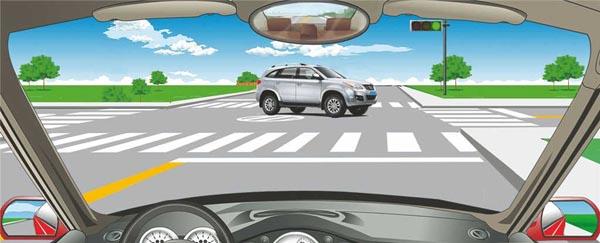
A. turn right directly
B. turn right at the front of the opposite car in advance
C. honk to urge
D. let the opposite car turn left first
Answer: D
18. When driving in thick or extremely thick fog, the driver should ____ due to low visibility.
A. Turn on the head light and keep driving
B. Turn on the contour light, fog light and drive along the right side
C. Turn on the hazard lights and keep driving
D. Turn on the hazard lights, fog light, and stop at a safe place
Answer: D
19. Traffic Police can detain the vehicle according to law if it runs on the road failing to place a label of inspection.
A. Right
B. Wrong
Answer: A
20. Which is correct when learning driving on road?
A. drive the corresponding coach car with coach sitting by to guide
B. drive the corresponding coach car alone
C. drive the corresponding coach car with other one who is not a coach sitting by to guide
D. drive the private car with coach sitting by to guide
Answer: A