

1. When a vehicle passes a bumped road, the driver should ________.
A. Speed up and dash over under inertia
B. Change to the neutral gear and slide over
C. Maintain the original speed and pass
D. Pass slowly and steadily
Answer: D
2. Whats the meaning of the yellow broken line on curbstone?
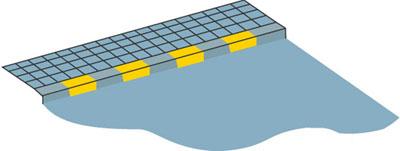
A. no temporary stopping
B. no taking and dropping people
C. no loading and unloading cargos
D. no long stopping
Answer: D
3. Driving this kind of vehicle on road is ____
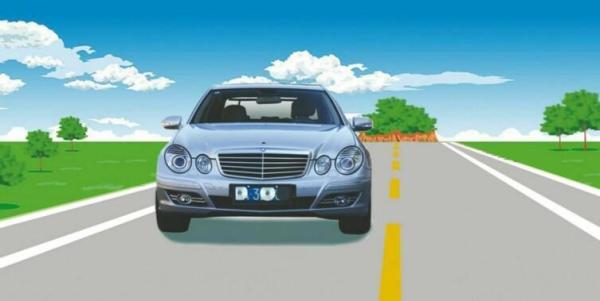
A. rule-breaking act
B. violation of regulations
C. violation of law
D. criminal act
Answer: C
4. A motorized vehicle runs on the road without a label of insurance, the traffic police can detain the vehicle license according to law.
A. Right
B. Wrong
Answer: B
5. Whats the meaning of this sign?

A. turn left
B. no going straight
C. straight-going lane
D. one-way road
Answer: A
6. When discovering a vehicle behind wanting to overtake while driving, the driver should _______.
A. Maintain the original speed
B. Reduce speed, observe and run by the right side to yield
C. Speed up and go ahead by the right side
D. Not yield
Answer: B
7. When passing a section of a mountain road which is prone to landside and mudflow, the driver should not stop.
A. Right
B. Wrong
Answer: A
8. Traffic Police can detain the accident vehicle according to law if it needs to be collected evidence of the road accident.
A. Right
B. Wrong
Answer: A
9. The act of this small passenger vehicle to enter the expressway lane is correct.
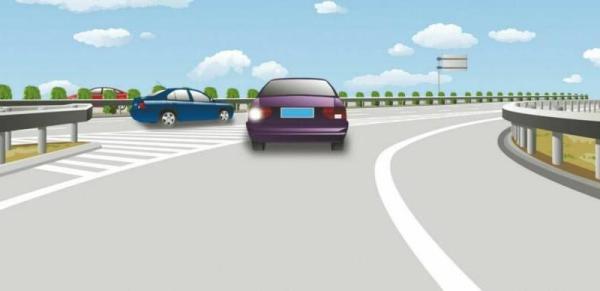
A. Right
B. Wrong
Answer: B
10. If a motorized vehicle driver has caused a major traffic accident in violation of the traffic regulations which has caused human death due to his escaping, the driver is subject to a prison term of 3 years ~ 7 years.
A. Right
B. Wrong
Answer: B
11. If a motorized vehicle causes a traffic accident on the expressway and cannot to run normally, the vehicle should be towed by a rescue vehicle or a tow truck.
A. Right
B. Wrong
Answer: A
12. If one drives an illegally assembled motorized vehicle, he should not only pay the fine, but also ________ .
A. be confiscated the driving license
B. be revoked the driving permission
C. be forced to recover the vehicle condition
D. be revoked the driving license
Answer: D
13. What kind of violation does this car have while stopping temporarily by the roadside?
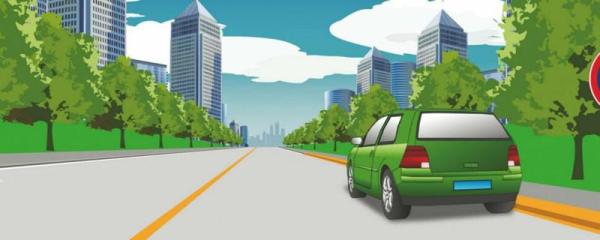
A. stop occupying the lane for motorized vehicles
B. stop more than 30cm from the roadside
C. stop in the section with no stopping marking
D. stop occupying the lane for non-motorized vehicles
Answer: C
14. Traffic Signs and traffic markings are not traffic signals.
A. Right
B. Wrong
Answer: B
15. Stop the vehicle and observe when reaching the level crossing in this situation.
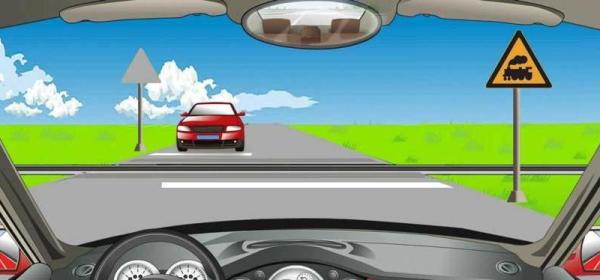
A. Right
B. Wrong
Answer: A
16. This sign means a Y-shaped intersection ahead.
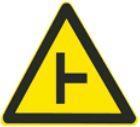
A. Right
B. Wrong
Answer: B
17. Stopping the vehicle temporarily in the crosswalk is the act of violation of the law.
A. Right
B. Wrong
Answer: A
18. A person whose driving license has been destroyed cannot drive a motorized vehicle.
A. Right
B. Wrong
Answer: A
19. Whats the meaning of this guide arrow?
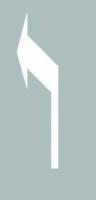
A. changing to left lane
B. going straight ahead
C. left turn ahead
D. right turn ahead
Answer: C
20. Fine will be 200~2000 yuan and driving license will be revoked if _____
A. violating traffic regulations
B. running 50% faster than the specified speed limit
C. escaped after causing traffic accident
D. driving without driver license
Answer: B