

1. When driving a motor vehicle not equipped with the anti-lock braking system (ABS), what should the driver do if he brakes on a road covered by ice and snow?
A. Gently or intermittently depress the brake pedal
B. Depress the brake pedal as on other roads
C. Violently depress the brake pedal
D. Suddenly depress the pedal with force
Answer: A
2. Which of the following is a basic requirement for rescuing the injured at the scene of a traffic accident?
A. Treat wounds first and safe life later
B. Save life first and treat wounds later
C. Help lightly wounded persons first
D. Help seriously wounded persons later
Answer: B
3. When a motor vehicle temporarily stops in fog, which lamp should be turned on?
A. Hazard lamp, clearance lamp and rear position lamp
B. Left-turn indicator, clearance lamp and rear position amp
C. Headlamp, clearance lamp and rear position lamp
D. Reverse lamp, clearance lamp and rear position lamp
Answer: A
4. The sign on the right warns of three or more winding roads ahead.
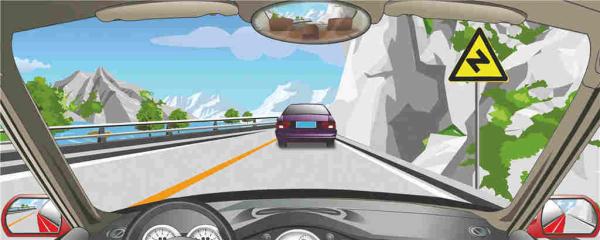
A. Right
B. Wrong
Answer: B
5. In which ones of the following ways can motor vehicle drivers effectively prevent braking failure?
A. Maintaining the braking system periodically
B. Checking the free brake pedal travel before driving
C. Using the braking system correctly to avoid brake-fade
D. For vehicles with hydraulic braking system, checking if the brake fluid leaks before driving
Answer: ABCD
6. When there is a braking failure, the driver should first control the direction and then try to control the speed.
A. Right
B. Wrong
Answer: A
7. At 13: 10 pm, Mr. Luo set out in his medium bus from 0 km mark on the highway, and by 14: 10 had passed the 125km mark by 200 meters, he caused a rear-end collision with a motor vehicle that ran into the side slope on the southwest side, killing 11 people and injuring 2. Which of the following law-breaking acts did Mr. Luo commit?
A. Speeding
B. Driving not in accordance with traffic markings
C. Exceeding carrying capacity
D. Fatigued driving
Answer: A
8. When a motor vehicle passes over an inundated road the driver should change to a low gear and pass at a constant speed.
A. Right
B. Wrong
Answer: A
9. The sign on the right indicates a one-kilometer distance from ETC toll station ahead.
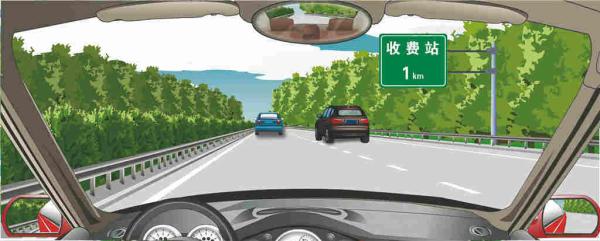
A. Right
B. Wrong
Answer: B
10. When a motor vehicle catches fire, the driver should manage to park the vehicle in an open place far away from urban areas, buildings, trees, other motor vehicles and flammable materials.
A. Right
B. Wrong
Answer: A
11. The sign on the right side warns of an emergency lane 500 meters ahead.
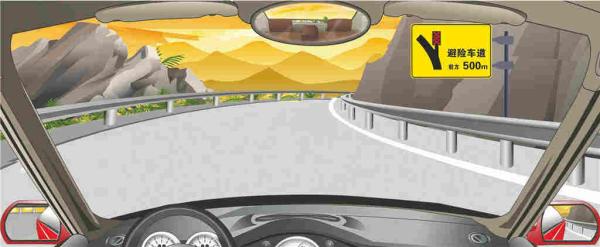
A. Right
B. Wrong
Answer: A
12. Mr. Zhao (with an A2 driving license) drove a large sleeper coach on the No. 219 National Road in Yecheng County. When passing a curve at the spot of 226 kilometers mark by 215 meters on the road, the coach fell into the ravine on one side, killing16 people and injuring 26. What is the main illegal act committed by Mr. Zhao?
A. Carrying more passengers than permitted
B. Driving a motor vehicle having failed to accept inspection in time
C. Driving an unpermitted vehicle type
D. Fatigued driving
Answer: C
13. When approaching each other at night in this situation, drivers should watch for the danger where the two motor vehicles headlamps meet (the sight dead zone).
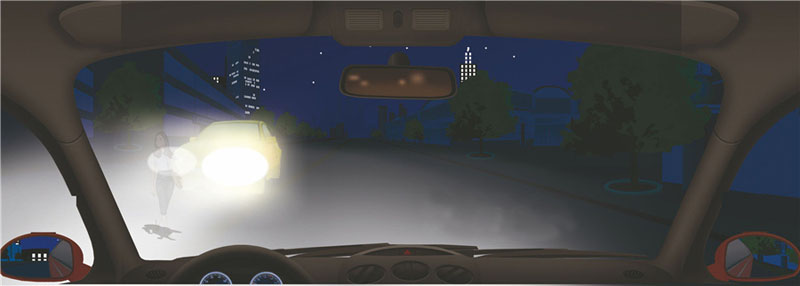
A. Right
B. Wrong
Answer: A
14. When a motor vehicle breaks down and cannot be moved away from the emergency lane or the road shoulder, the driver and all passengers should get off the vehicle and wait on the road side instead of leaving the expressway.
A. Right
B. Wrong
Answer: B
15. When the engine suddenly stalls on the road and cannot be restarted, the driver should apply emergency braking to force the vehicle to stop as fast as possible.
A. Right
B. Wrong
Answer: B
16. Under such circumstances, what should be done by the motor vehicle driver who has been overtaken?
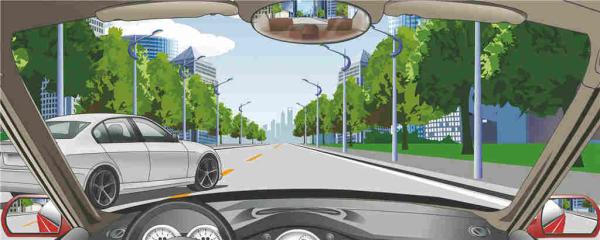
A. Sounding the horn to warn the vehicle that overtook
B. Reducing speed or pulling over by the right side
C. Protesting by turning on the high-beam
D. Catching up with and overtaking the vehicle that overtook, and offering admonitions
Answer: B
17. The sign on the right indicates the location of the highway emergency phone.
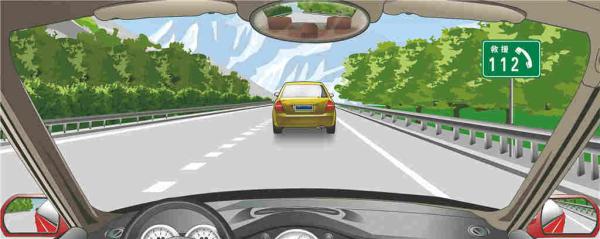
A. Right
B. Wrong
Answer: B
18. It is safest for a motor vehicle driver to overtake the vehicle in front from its righthand on this kind of road.
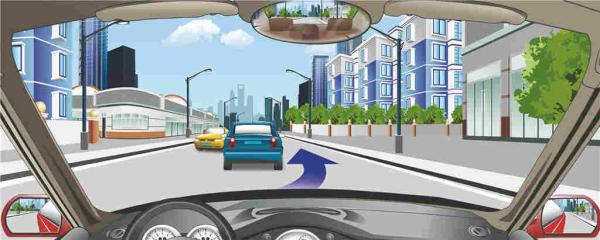
A. Right
B. Wrong
Answer: B
19. When encountering a road like this, motor vehicle drivers may make good use of neutral gear to coast.
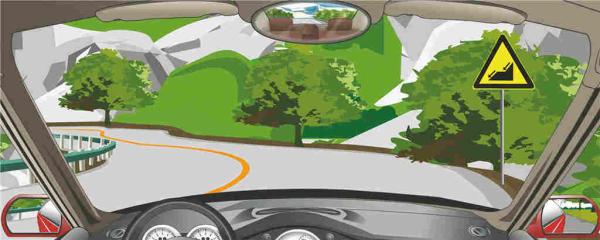
A. Right
B. Wrong
Answer: B
20. When a motor vehicle stops in snow, which lamp should be turned on?
A. Front and rear fog lamps, clearance lamp and rear position lamp
B. Reverse lamp, clearance lamp and rear position lamp
C. Headlamp, clearance lamp and rear position lamp
D. Hazard lamps, clearance lamp and rear position lamp
Answer: D