

1. When driving in a rainy day, the driver should _____ when a pedestrian holding umbrella or in raincoat is walking on the highway.
A. Continuously honk to indicate him to yield
B. Speed up and bypass
C. Honk in advance and properly reduce speed
D. Drive at the normal speed
Answer: C
2. One can drive the low-speed truck if the authorized vehicle applied for is small motor vehicle with automatic transmission.
A. Right
B. Wrong
Answer: B
3. The doors of both sides are not closed if it lights.

A. Right
B. Wrong
Answer: A
4. How to use lights at this position?
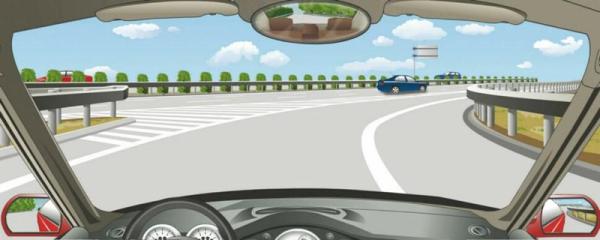
A. turn on the right-turn signal
B. turn on the left-turn signal
C. turn on the hazard lights
D. turn on the head lights
Answer: B
5. Which part of the driver can be protected by the safety pillow when there is a rear-end collision?
A. waist
B. chest
C. head
D. neck
Answer: D
6. When a vehicle changes lane before an intersection, the driver should do so ______.
A. In the area marked by solid lines before the intersection
B. In the area marked by solid lines in the intersection
C. In the area marked by broken lines as indicated by the guide arrow
D. Before the stop line at the intersection
Answer: C
7. This set of the hand signals of the traffic police indicates that the vehicles should ___ .
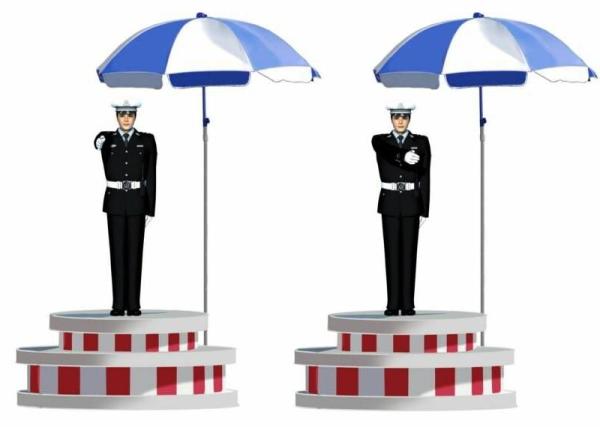
A. turn right
B. reduce speed and pass slowly
C. pull over
D. change lane
Answer: D
8. When a vehicle goes down a long slope, it should run at a lower gear and fully use the engine to brake.
A. Right
B. Wrong
Answer: A
9. This sign warns a sharp left curve ahead.
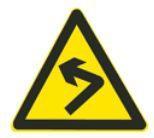
A. Right
B. Wrong
Answer: A
10. Whats the meaning of this yellow sign on the road?
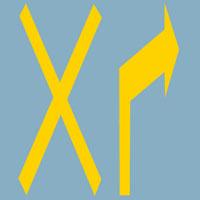
A. no U turn
B. no left turn
C. no right turn
D. no going straight
Answer: C
11. After a vehicle enters a mountain road, it should pay special attention to the continuous curves sign. In addition, it should voluntarily evade vehicles and pedestrians, reduce speed in a time manner and honk in advance.
A. Right
B. Wrong
Answer: A
12. What kind of violation does this car have while stopping temporarily by the roadside?
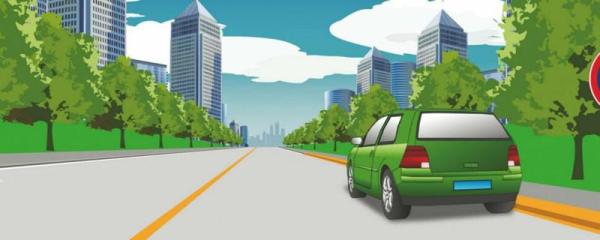
A. stop occupying the lane for motorized vehicles
B. stop more than 30cm from the roadside
C. stop in the section with no stopping marking
D. stop occupying the lane for non-motorized vehicles
Answer: C
13. When overtaking on a mountain road, the vehicle should overtake ______.
A. By taking every possible chance
B. By selecting a wide gentle uphill section
C. By selecting a fairly long downhill section
D. By selecting a relatively gentle downhill section
Answer: B
14. When a vehicle leaves an expressway, it should reduce speed in the deceleration lane before entering the ramp.
A. Right
B. Wrong
Answer: A
15. When running on an expressway, the driver should ____ if he has missed the exit.
A. Reverse to the original place
B. Continue to go ahead and find the next exit
C. Immediately stop
D. Make a U turn from where he is
Answer: B
16. How to do in this situation?

A. stop and yield to the pedestrians
B. bypass from the front of the pedestrians
C. honk to remind the pedestrians
D. bypass from the rear of the pedestrians
Answer: A
17. It lights to remind that engine needs to add oil.

A. Right
B. Wrong
Answer: B
18. When the driver discovers a tire is leaking and steers the vehicle off the main carriageway, he should refrain from applying emergency so as to avoid a vehicle turnover or a rear-end collision arising from the late braking of the following vehicle.
A. Right
B. Wrong
Answer: A
19. It lights when turning on the left-turn signal.

A. Right
B. Wrong
Answer: B
20. How to use lights in this weather condition?
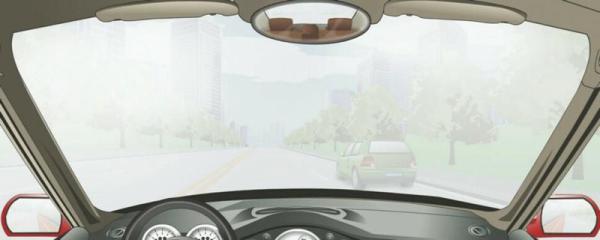
A. use high beam lights
B. use fog lights
C. not use any light
D. turn on the right-turn signal
Answer: B