

1. When driving on a road covered by ice and snow, the driver must reduce speed and increase the safe distance.
A. Right
B. Wrong
Answer: A
2. What marking is the combination of the white broken lines and the triangle area?
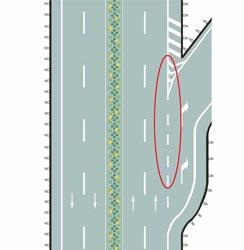
A. road entry marking
B. lane-dividing line that can be crossed
C. deceleration line at road exit
D. road exit marking
Answer: D
3. When a vehicle is being overtaken by another vehicle, and there is a vehicle following behind, the driver should _____.
A. continue to speed up and run
B. turn slightly to the right side, keep a safe horizontal distance
C. run by road center
D. speed up to the right side to yield
Answer: B
4. What is the max speed on this highway?
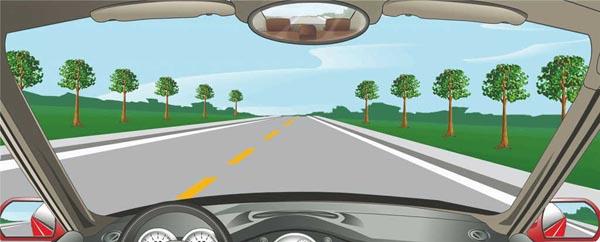
A. 30km/hr
B. 40km/hr
C. 50km/hr
D. 70km/hr
Answer: D
5. What marking is the white broken line on the road?
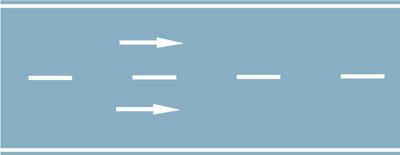
A. central line of opposite lanes which is prohibited from crossing
B. central line of opposite lanes which is restricted from crossing
C. central dividing line of the one-way road lanes
D. central line of same direction lanes which is allowed to cross
Answer: D
6. When a motorized vehicle breaks down on the road and is difficult to move, the driver should place a warning sign within 50 meters behind the vehicle.
A. Right
B. Wrong
Answer: B
7. Whats the meaning of this sign?
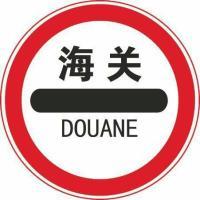
A. national boundaries
B. border defense
C. boundaries
D. customs
Answer: D
8. Whats the meaning of this sign?
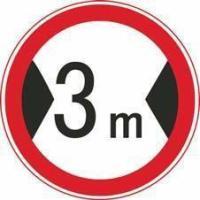
A. 3m width limit ahead
B. 3m width limit
C. the 3m width limit ban is lifted
D. 3m height limit
Answer: B
9. Do not start up a vehicle when the door or compartment is not properly closed.
A. Right
B. Wrong
Answer: A
10. Traffic Police can detain the accident vehicle according to law if it needs to be collected evidence of the road accident.
A. Right
B. Wrong
Answer: A
11. When driving at night, the driver should reduce speed and go forward if the vehicle coming in the opposite direction fails to turn off the high beam light. This is designed to prevent an accident from happening when there are pedestrians crossing the place where the lights of the two vehicles meet.
A. Right
B. Wrong
Answer: A
12. Which of the following vehicle in front in the same lane is not allowed to be overtaken?
A. the vehicle is reducing speed to yield
B. the vehicle is running normally
C. the vehicle is overtaking
D. the vehicle is making a stop
Answer: C
13. Driving a motorized vehicle in the city road which has no central line, the maximum speed can not exceed 50 kilometers per hour.
A. Right
B. Wrong
Answer: B
14. Whats the meaning of this sign?
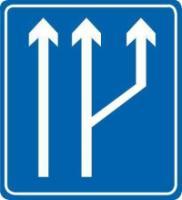
A. change to right lane
B. branching point
C. road surface becomes wider
D. the number of lanes increases
Answer: D
15. Whats the meaning of this sign?

A. a manned level crossing 50m ahead
B. an unmanned level crossing 100m ahead
C. a manned level crossing 100m ahead
D. an unmanned level crossing 50m ahead
Answer: B
16. If a motorized vehicle hits a building or a public facility, the vehicle may leave the scene right away.
A. Right
B. Wrong
Answer: B
17. When a vehicle changes to the right lane, the driver should turn on the right-turn signal in advance, observe and enter the new lane if it is safe to do so.
A. Right
B. Wrong
Answer: A
18. When discovering the persons injured in a traffic accident need rescue while driving, the driver should _________.
A. Send the injured persons to hospital in a timely manner or make emergency calls
B. Dodge as much as possible
C. Go ahead by bypassing the scene
D. Find an excuse to dodge the scene
Answer: A
19. If the license plate of a motorized vehicle has been destroyed, the owner of the vehicle should apply for reissuing or changing to the vehicle management station at the registration place.
A. Right
B. Wrong
Answer: A
20. Whats the meaning of this sign?
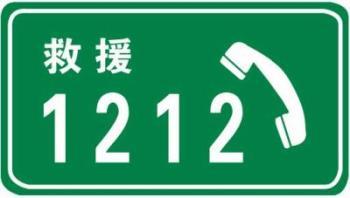
A. police call number on expressway
B. public phone on expressway
C. emergency call number on expressway
D. rescue call number on expressway
Answer: D