

1. Whats the meaning of this sign?
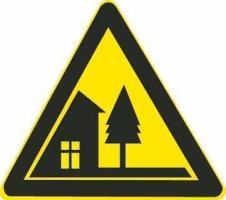
A. watch for pedestrians
B. crosswalk
C. village or town
D. primary school
Answer: C
2. When the tire pressure is too low, the fast-running tire can change its shape like waves and increase its temperature, which in turn can cause ________.
A. Even lower tire pressure
B. Increases resistance to the vehicle
C. Tire blowout
D. Unstable tire pressure
Answer: C
3. When the motor vehicle installed ABS system brakes, the braking distance will be greatly shortened, so you do not have to keep a safe distance between vehicles.
A. Right
B. Wrong
Answer: B
4. What is the max speed when down slope, turning around and U turn?
A. 50km/hr
B. 60km/hr
C. 30km/hr
D. 40km/hr
Answer: C
5. This sign indicates obstacle ahead and bypassing from left side.
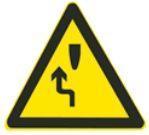
A. Right
B. Wrong
Answer: A
6. What is the Minimum speed on this expressway?
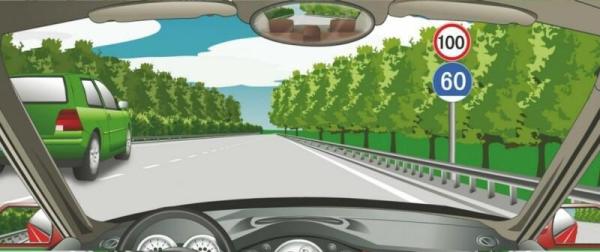
A. 100km/hr
B. 80km/hr
C. 60km/hr
D. 50km/hr
Answer: C
7. Whats the meaning of this sign?

A. No passing
B. driving at reduced speed
C. time limit for entering
D. no entering
Answer: A
8. Whats the meaning of this sign?
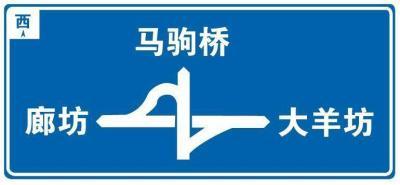
A. intersection ahead
B. interchange ahead
C. Y-shaped intersection ahead
D. ring intersection ahead
Answer: B
9. It lights to indicate that the generator is charging to the batteries.

A. Right
B. Wrong
Answer: B
10. When the vehicle has changed its direction due to a front tire blowout on the road, the driver should firmly hold the steering wheel with both hands to ensure the vehicle goes straight.
A. Right
B. Wrong
Answer: A
11. What is the max speed on this highway?
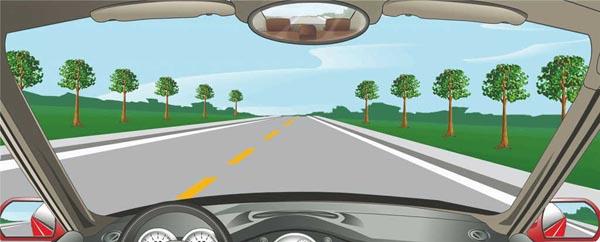
A. 30km/hr
B. 40km/hr
C. 50km/hr
D. 70km/hr
Answer: D
12. Whats the meaning of this sign?
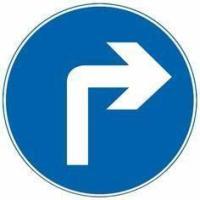
A. turn right
B. one-way road
C. going straight only
D. straight-going lane
Answer: A
13. A vehicle running on an expressway may frequently change lanes.
A. Right
B. Wrong
Answer: B
14. Traffic lights are divided into red, green and yellow light.
A. Right
B. Wrong
Answer: A
15. The yellow lane-dividing line on the road is used to _____

A. allow to drive in left lane
B. separate the traffic flow in opposite directions
C. separate the traffic flow in the same direction
D. prohibit to cross the opposite lane
Answer: B
16. When a vehicle stops temporarily in a rainy day, the driver should turn on ______.
A. The head and tail fog lights
B. The hazard lights
C. The high beam light
D. The reverse light
Answer: B
17. Whats the meaning of the double white solid lines in far front of the intersection?
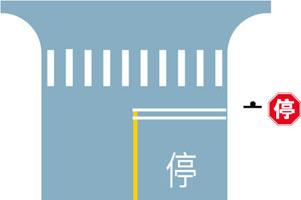
A. stopping and yield line
B. slowdown and yield line
C. left-turn waiting line
D. waiting to run line
Answer: A
18. If a driver has driven a motorized vehicle for more than four hours running, he should stop the vehicle and rest for at least ____________.
A. 10 minutes
B. 15 minutes
C. 20 minutes
D. 5 minutes
Answer: C
19. Whats the meaning of this sign?
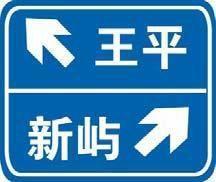
A. ring intersection ahead
B. intersection ahead
C. Y-shaped intersection ahead
D. T-shaped intersection ahead
Answer: C
20. Whats the meaning of this sign?
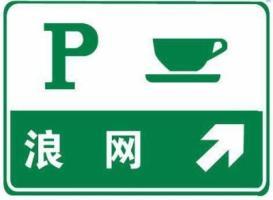
A. expressway parking area ahead
B. expressway shelter ahead
C. expressway car park ahead
D. expressway service area ahead
Answer: A