

1. When driving a motor vehicle into a traffic flow, drivers should not hold up other vehicles.
A. Right
B. Wrong
Answer: A
2. Under such circumstances, what should motor vehicle drivers do?
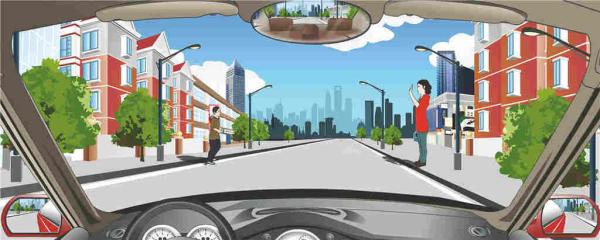
A. Guard against the sideslip of motor vehicles
B. Guard against the crossing of pedestrians
C. Speed up and pass through as quickly as possible
D. Continuously sound the horn
Answer: B
3. When driving in a heavy rain, drivers should contro their speed to prevent their vehicles from sliding.
A. Right
B. Wrong
Answer: A
4. The sign in front indicates a one-way lane after turning right.
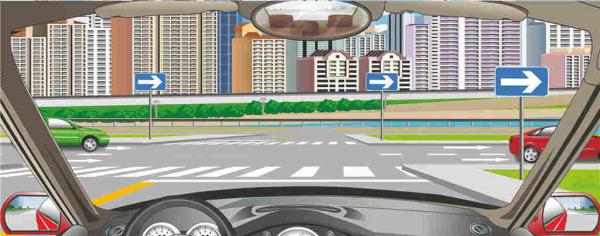
A. Right
B. Wrong
Answer: A
5. Motor vehicles are prohibited from turning left in this situation.
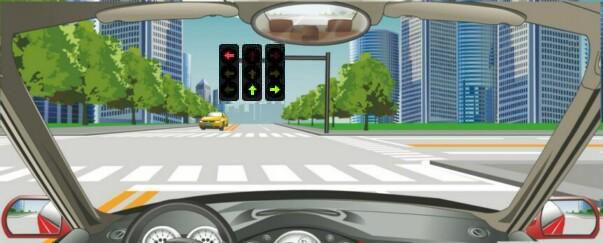
A. Right
B. Wrong
Answer: A
6. When there is a braking failure on a downhill road, if there is no other alternative, the driver may rub the vehicle body against the rocks and trees on roadside to force the vehicle to slow down and stop.
A. Right
B. Wrong
Answer: A
7. Rescue personnel should check the breath of the unconscious person before applying any other emergency treatment.
A. Right
B. Wrong
Answer: A
8. When driving on a road covered with ice and snow, drivers tend to encounter glare caused by reflection of light rays from the road surface.
A. Right
B. Wrong
Answer: A
9. Mr. Wu drove a large bus with 33 passengers (capacity 22 people). At the spot of 7 kilometers mark by 300 meters on the No 163 County Road, the bus lost control and fell into a ravine. As a result of the accident, 10 people were killed and 21 injured. In accordance with the alcohol test after the accident the blood alcohol content of Mr. Wu was 26 milligram per milliliter. What is the main illegal act committed by Mr. Wu?
A. Speeding
B. Carrying more passengers than permitted
C. Fatigued driving
D. Driving after drinking
Answer: BD
10. When passing a sharp curve, motor vehicle drivers may overtake if there are few other vehicles on the road.
A. Right
B. Wrong
Answer: B
11. When driving on an expressway, which of the following statements is not correct?
A. Drivers are not allowed to drive by riding or rolling on the lane dividing line
B. Drivers are prohibited from driving on road shoulders
C. Drivers may overtake on the ramp, the acceleration lane or the deceleration lane
D. Drivers are prohibited from learning to drive
Answer: C
12. Which of the following is a safe way for motor vehicles to pass the intersection marked with this sign?
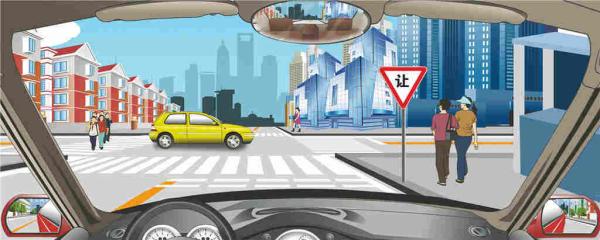
A. Stop and observe the traffic situation around the intersection
B. Approach the intersection by speeding up
C. Observe the traffic situation on the left rear side
D. Approach the intersection at a reduced speed
Answer: D
13. Mr. Hao drove a heavy dump truck with 84.84 tons of cargo (truck allowing for 15.58 tons). When he drove on the No 262 provincial highway in Luanxian County, at the spot of 34 kilometers mark by 623 meters, his truck overturned onto the sideway after a rear-end collision with another truck in front carrying 45.85 tons of cargo(a truck allowing for 1.71 tons). As a result of this accident, 19 people were killed and 17 injured. What is the common illegal act of the two drivers?
A. Speeding
B. Overloaded
C. Fatigued driving
D. Driving after drinking
Answer: B
14. When a motor vehicle breaks down and cannot be moved away from the expressway, the driver and all passengers should stay in the vehicle and wait for the rescue personnel.
A. Right
B. Wrong
Answer: B
15. The sign on the right warns of a guarded railway intersection ahead.
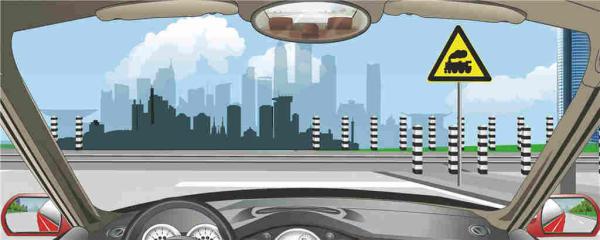
A. Right
B. Wrong
Answer: B
16. When a gas tanker is leaking heavily, which of the following measures is wrong?
A. Cut off the power
B. Wear gas mask and protect gloves
C. Turn off the valve to stop leaking
D. Evacuate people to the leeward side
Answer: D
17. On which of the following roads may the wheels be most easily locked when braking?
A. Concrete road
B. Dirt road
C. Road covered by ice and snow
D. Sand road
Answer: C
18. What should motor vehicle drivers do under the circumstances shown in the flash?
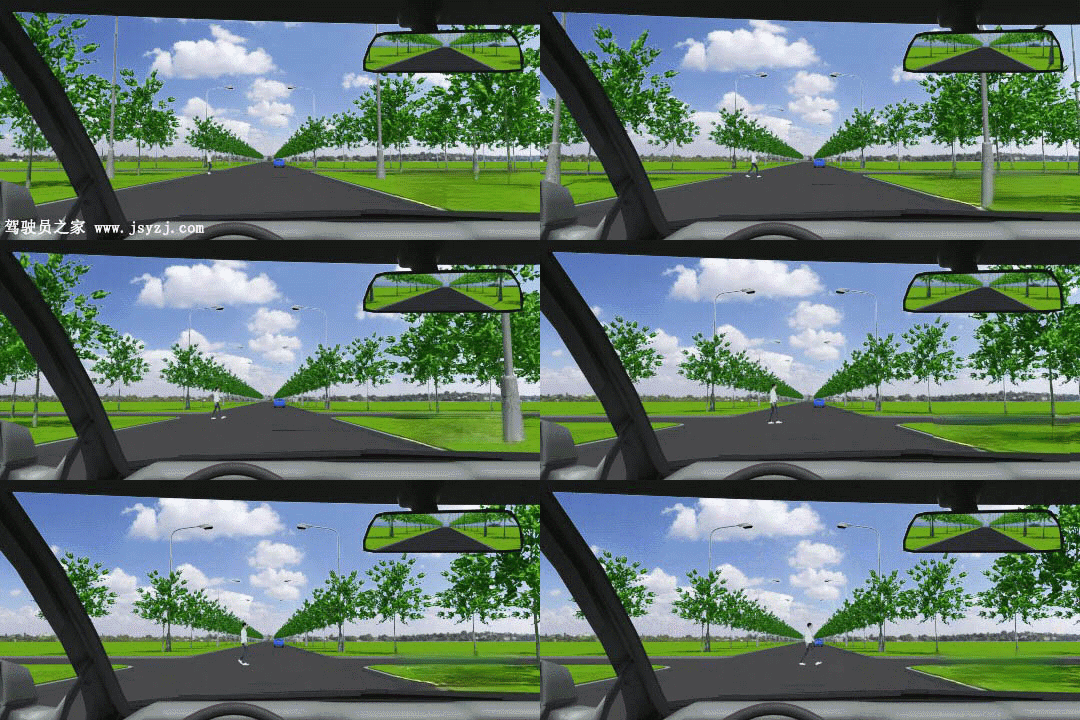
A. Reduce speed or stop to yield
B. Sound the horn to warn the pedestrians to yield
C. Pass before the pedestrians
D. Immediately change to another lane to bypass the pedestrians
Answer: A
19. What kind of harmful effect will be brought about by continuously using the foot brake on a long downhill road?
A. Shorten the engine?ˉs service life
B. Make the driver feel tired
C. Easily cause the vehicle to overturn
D. Reduce the braking efficiency
Answer: D
20. For evading an emergency on an expressway, which of the following principles should drivers stick to?
A. Evading vehicles first and objects later
B. Evading people first and objects later
C. Evading vehicles first and people later
D. Evading objects first and people later
Answer: B