

1. Whats the role of directional sign?
A. restrict the vehicles from passing
B. indicate speed limited information
C. provide direction information
D. warn danger ahead
Answer: C
2. When causing a road accident involving property damage, the party should leave the scene on his own but he does not leave, the traffic police can not order him to leave.
A. Right
B. Wrong
Answer: B
3. After entering the acceleration lane of an expressway, the driver should increase the speed to more than _________ per hour.
A. 50
B. 60
C. 30
D. 40
Answer: B
4. When a motorized vehicle breaks down on the expressway, the persons on board should swiftly move to the right side road shoulder or emergency lane, and report to the police rapidly.
A. Right
B. Wrong
Answer: A
5. Whats the role of indicative sign?
A. tell the direction information
B. warn danger ahead
C. restrict the vehicles and pedestrians from passing
D. indicate the vehicles and pedestrians to go ahead
Answer: D
6. Whats the meaning of this sign?
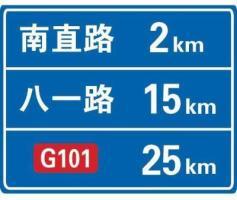
A. location and distance
B. driving route
C. destination name
D. driving direction
Answer: A
7. It lights to indicate that ______

A. air internal circulation
B. air external circulation
C. the front fan works
D. windscreen defroster
Answer: B
8. This sign indicates landslide section ahead and bypassing.
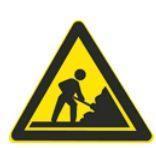
A. Right
B. Wrong
Answer: B
9. This sign reminds strong side wind ahead.

A. Right
B. Wrong
Answer: A
10. At night, the drivers observation is markedly poorer than in the daytime and the range of visibility range is _______.
A. Unchanged
B. Irregular
C. Longer
D. Shorter
Answer: D
11. If a motorized vehicle driver has caused a major accident in violation of the traffic regulations which has caused human death, the driver is subject to a prison term of more than 3 years.
A. Right
B. Wrong
Answer: B
12. A driver may drive on the road a motorized vehicle overhauled which has reached the scraped standard.
A. Right
B. Wrong
Answer: B
13. Traffic Police can detain the vehicle according to law if it is suspected of using the label of insurance from other vehicle.
A. Right
B. Wrong
Answer: A
14. Pass the crossing as fast as possible if there is a red light at the intersection of a road or a level crossing.
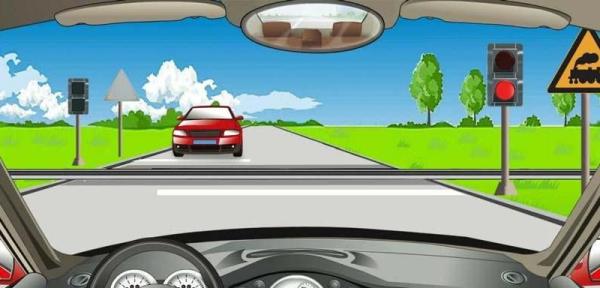
A. Right
B. Wrong
Answer: B
15. A driver who drives an illegally assembled motorized vehicle is subject to ______ .
A. being held for criminal liabilities according to law
B. a fine of 200 yuan ~ 2,000 yuan
C. being revoked the vehicle license
D. being detained for less than 15 days
Answer: B
16. How to use lights when overtaking at night?
A. turn off the high beam light
B. turn on high beam lights
C. use fog lights
D. using the high and low beam lights alternately
Answer: D
17. When encountering children on the road, the driver should _________.
A. Reduce speed and go slowly, or stop to yield when necessary
B. Continuously honk to urge
C. Swiftly bypass from one side
D. Speed up and bypass
Answer: A
18. Driving and smoking has no harm on safe driving.
A. Right
B. Wrong
Answer: B
19. Whats the meaning of this sign?
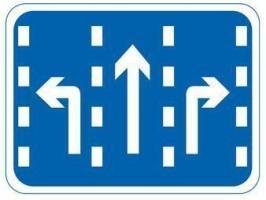
A. left-turn lane
B. straight-going lane
C. right-turn lane
D. lanes for going in different directions
Answer: D
20. It is not safe for a woman driver to wear high heels to drive a vehicle.
A. Right
B. Wrong
Answer: A