

1. If a motorized vehicle driver causes a traffic accident and runs away but his conduct does not constitute a crime, he is subject to a 12-point penalty.
A. Right
B. Wrong
Answer: A
2. Whats the meaning of this sign?
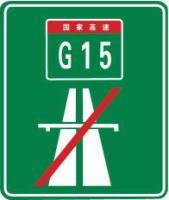
A. expressway exit ahead
B. expressway entry ahead
C. expressway ending ahead
D. expressway beginning ahead
Answer: C
3. As the road is wet and slippery after rain, brake application when driving can easily ___.
A. Cause sideways slide and traffic accident
B. Cause collision due to poor visibility
C. Be ignored by the drivers of other vehicles
D. Cause engine kill
Answer: A
4. What kind of behavior of this driver violates the law?

A. not hold the steering wheel according to regulation
B. angle of the seat is not correct
C. not buckled up
D. the driving posture is incorrect
Answer: C
5. Which is subject to a 12-point penalty?
A. driving a motorized vehicle when driving license is temporarily detained
B. applying for reissuing the driving license by concealment or deception
C. not yielding to the school bus according to regulations
D. running with the license plate deliberately stained
Answer: D
6. The vehicle is allowed to _______ at this intersection.
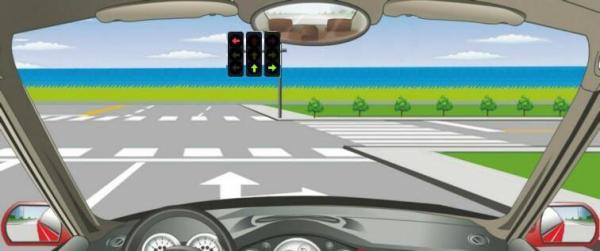
A. go straight or turn right
B. turn left
C. go straight or turn left
D. turn left or turn right
Answer: A
7. When a vehicle passes a tunnel, it is prohibited from overtaking.
A. Right
B. Wrong
Answer: A
8. What is this traffic sign?
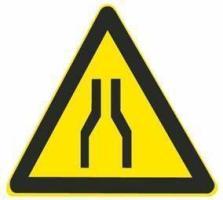
A. Road narrows on both sides
B. Road narrows on the right side
C. Road narrows on the left side
D. Bridge narrows
Answer: A
9. The vehicles should run by the right shoulder of an expressway.
A. Right
B. Wrong
Answer: B
10. Which is correct if a vehicle breaks down and is difficult to move?
A. turn on the hazard lights
B. turn on all the lights of the vehicle
C. forbid the passengers to get off
D. place a warning sign in front of the vehicle
Answer: A
11. What is the max speed at sharp curve?
A. 20km/hr
B. 30km/hr
C. 40km/hr
D. 50km/hr
Answer: B
12. You may speed up to go through the intersection in this case.Answer£o
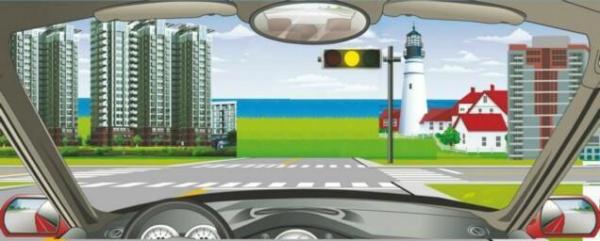
A. Right
B. Wrong
Answer: B
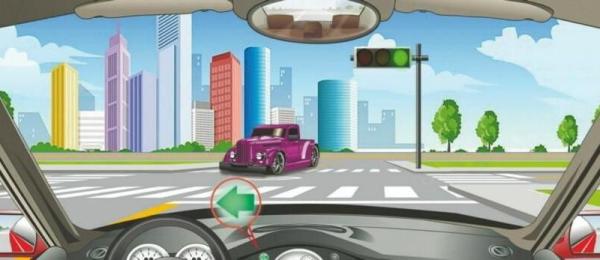
13. May directly turn left in front of the vehicle coming opposite when encountering this traffic light.
A. Right
B. Wrong
Answer: B
14. Traffic Police can detain the vehicle according to law if it is suspected of using the label of insurance from other vehicle.
A. Right
B. Wrong
Answer: A
15. When a vehicle goes down a long slope, it should run at a lower gear and fully use the engine to brake.
A. Right
B. Wrong
Answer: A
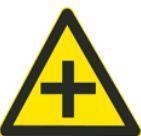
16. This sign warns the driver to run slowly with care and beware of the vehicles from horizontal road.
A. Right
B. Wrong
Answer: A
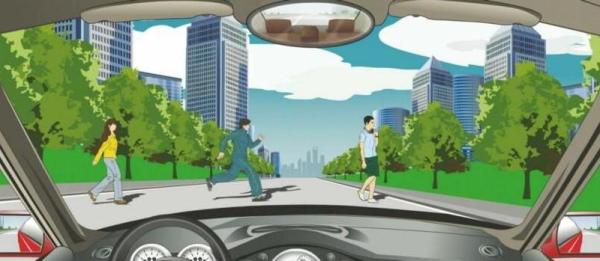
17. Stop and yield to the pedestrians under this situation.
A. Right
B. Wrong
Answer: A
18. It is a bad habit for a driver to put his left arm on the window of the vehicle or hold the gear lever in his right hand for a long time.
A. Right
B. Wrong
Answer: A
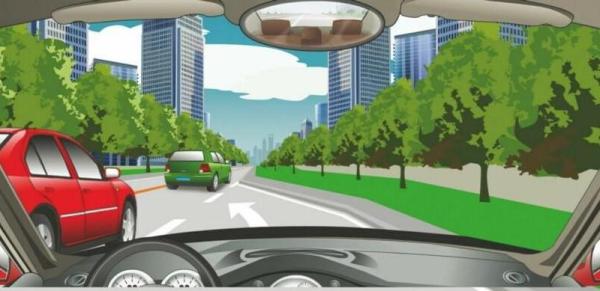
19. You should speed up to change lane in front of the red car.
A. Right
B. Wrong
Answer: B
20. What is the max speed on the expressway when the visibility is lower than 200m?
A. less than 100km/hr
B. less than 90km/hr
C. less than 60km/hr
D. less than 80km/hr
Answer: C