

1. When a wounded person is unable to get off the vehicle by himself, he should be removed from the vehicle so as to avoid a secondary injury.
A. Right
B. Wrong
Answer: A
2. A driver should accelerate in advance to overtake then it is likely to meet with oncoming vehicles.
A. Right
B. Wrong
Answer: B
3. As shown in the flash, what should the driver do when the motor vehicle encounters this situation?
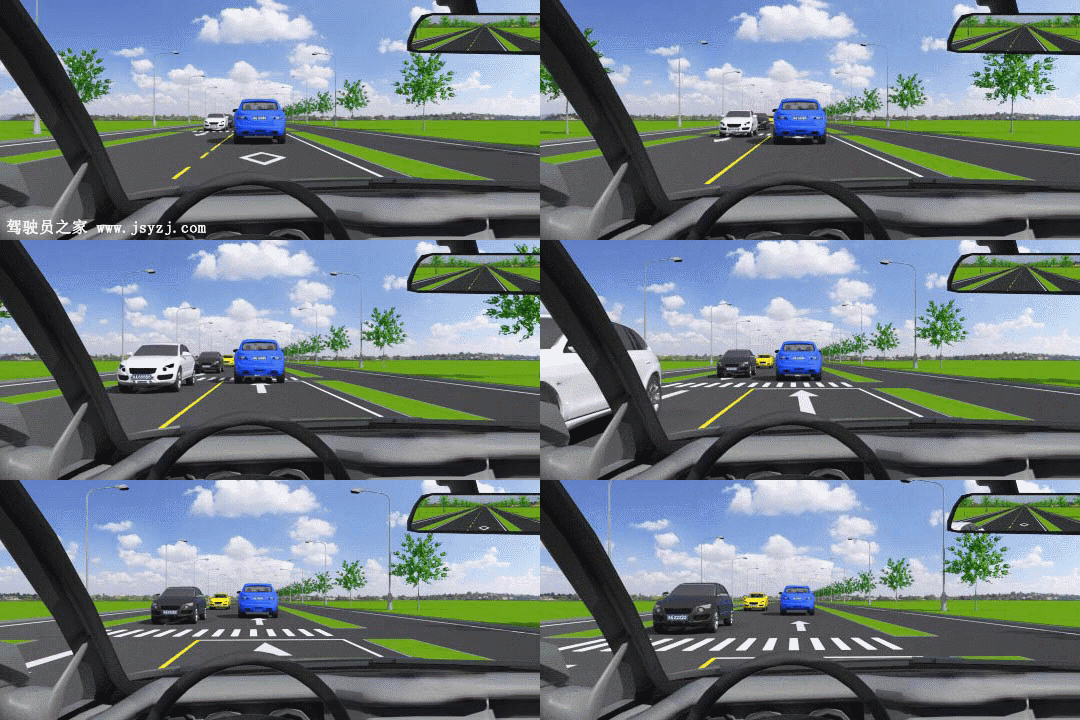
A. Speed up and pass rapidly
B. Stop immediately
C. Sound the horn to indicate the pedestrians to yield
D. Observe the movement of pedestrians and non-motor vehicles before passing
Answer: D
4. The driver should turn left by the left side of the intersection central point.
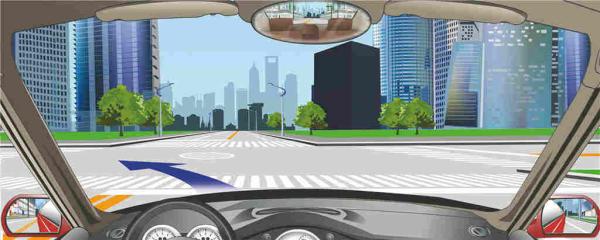
A. Right
B. Wrong
Answer: A
5. When driving on a muddy road, what should drivers do to pass at an even speed without stopping?
A. Use the handbrake
B. Press the clutch pedal
C. Press the brake pedal
D. Use the accelerator pedal
Answer: D
6. The sign indicates no overtaking on the section ahead.
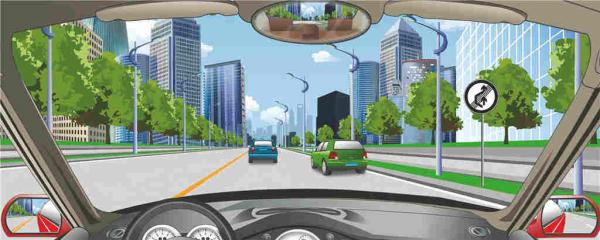
A. Right
B. Wrong
Answer: B
7. When encountering this situation, which of the following is the correct way to overtake other vehicles?
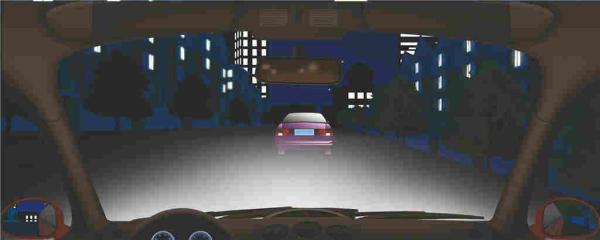
A. Turn on high-beam
B. Use high-beam and low-beam alternatively
C. Turn on low-beam
D. Turning on hazard lamp
Answer: B
8. The driver may not change lanes when the motor vehicle turns right at this intersection.
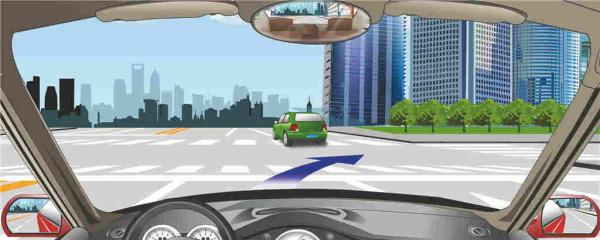
A. Right
B. Wrong
Answer: B
9. When making a turn on a mountainous road, drivers should cut speed, sound the horn and drive along the right side.
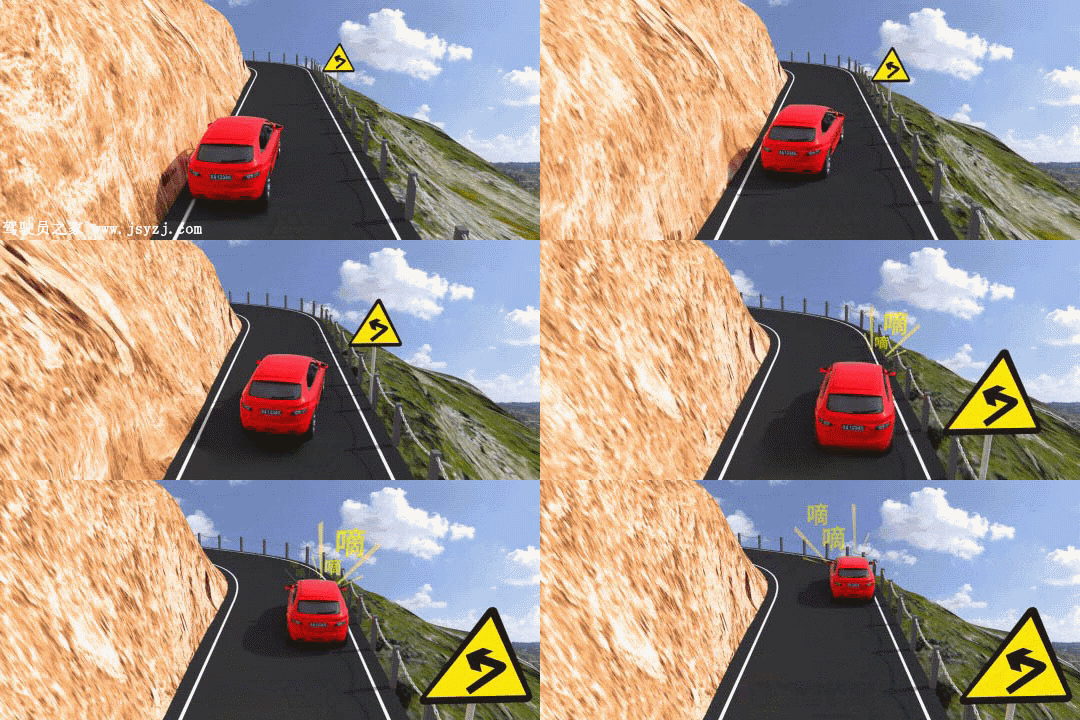
A. Right
B. Wrong
Answer: A
10. When there is a sudden braking failure on the road, what should be done by the driver?
A. Firmly holding the steering wheel and controlling the direction
B. Immediately changing to a low gear to reduce speed
C. Using the stopping brake to reduce speed
D. Turning on the hazard lamps
Answer: ABCD
11. When the fuel of a motor vehicle catches fire, which of the following things cannot be used to put out the fire?
A. Sandy soil on the roadside
B. Cotton-padded clothes
C. Overalls
D. Water
Answer: D
12. Under such circumstances, what should be done by the motor vehicle driver?
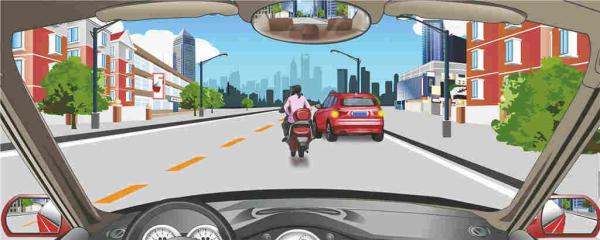
A. Reducing speed to give the right of way to the non-motor vehicle
B. Continuously sounding the horn to warn the vehicle in front to yield
C. Bypassing on the left of the non-motor vehicle
D. Accelerating to overtake by occupying the opposite lane
Answer: A
13. The sign above the tunnel indicates a height limit of 3.5 meters on the road ahead.
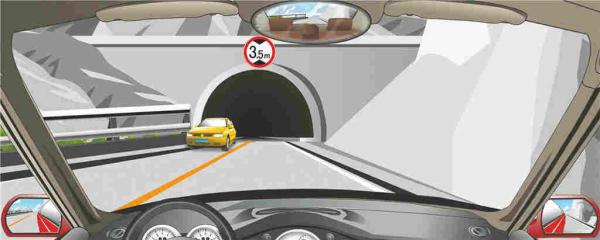
A. Right
B. Wrong
Answer: A
14. When a motor vehicle moves through water, the driver should try to maintain a constant speed and sufficient power and pass through without stopping.
A. Right
B. Wrong
Answer: A
15. Which of the following is an inflammable solid material?
A. Matches
B. Gun powder
C. Calcium carbide
D. Explosives
Answer: A
16. Under the circumstances shown in the flash, what should the driver do?
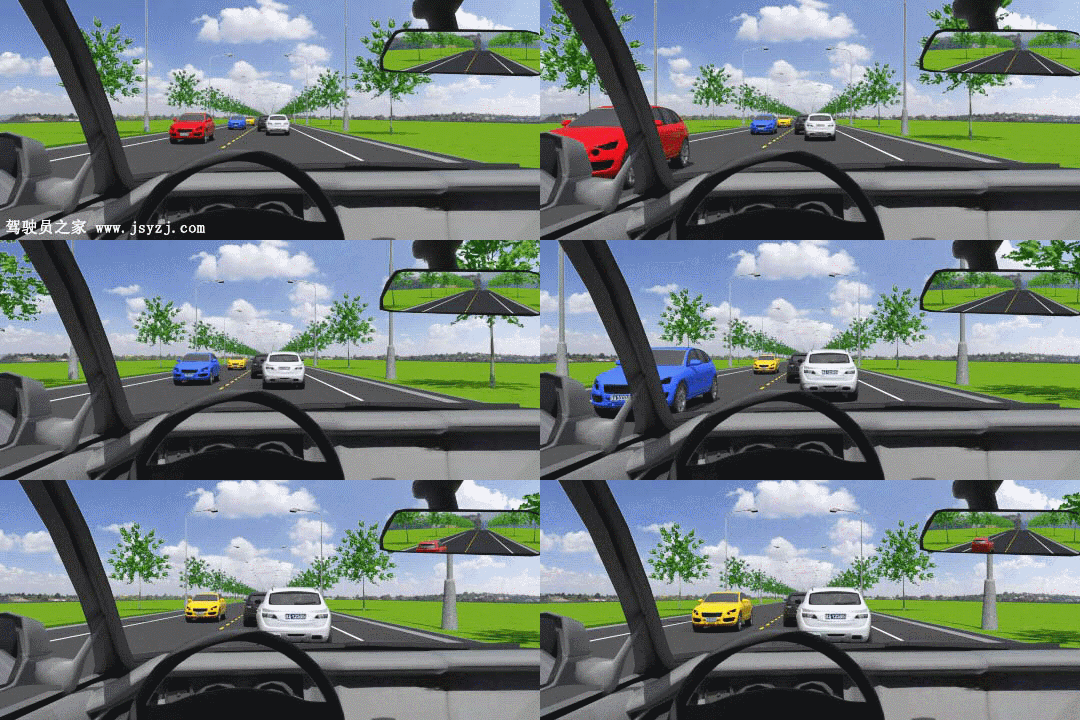
A. Find a chance to overtake the vehicle in front
B. Weave through motor vehicles ahead and pass
C. Reduce speed, stop, and wait in line
D. Sound the horn to urge vehicles in front
Answer: C
17. The sign on the right indicates an emergency shield 100 meters ahead.
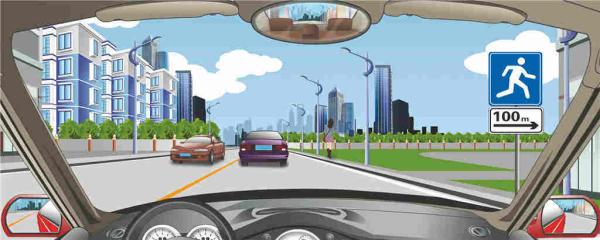
A. Right
B. Wrong
Answer: A
18. Mr. He drove his large bus with 53 passengers (permitted carrying capacity 47) to 454 km mark by 100m along the Yining-hefei Expressway in Nanjing jurisdiction, where he was tailgated by a heavy-type semitrailer tractor. The bus left the road, breaking through the guardrail and catching fire. 17 people were killed and 27 injured. Which of the following law-breaking acts did Mr. He commit?
A. Speeding
B. Exceeding the carrying capacity of the motor bus
C. Driving a motor vehicle overdue for annual inspection
D. Improper operation
Answer: B
19. Under such circumstances, what should be done by a motor vehicle driver in order to yield out of courtesy?
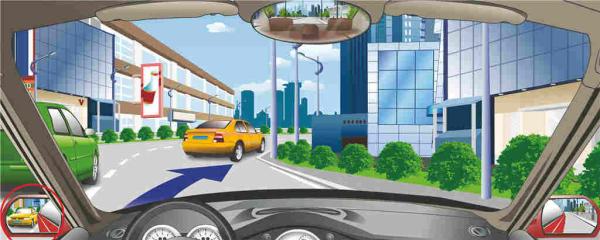
A. Driving at a higher speed
B. Closely following the vehicle in front
C. Driving at a higher speed by the right side
D. Driving at a lower speed by the right side
Answer: D
20. The white solid line on the right side of the road indicates the boundary of a driving lane and crosswalk.
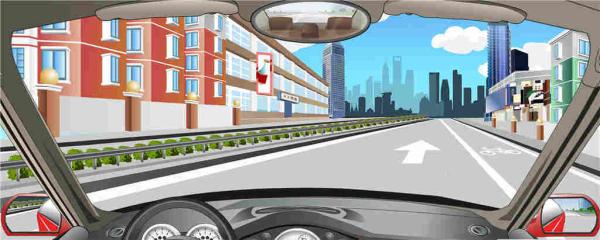
A. Right
B. Wrong
Answer: B