

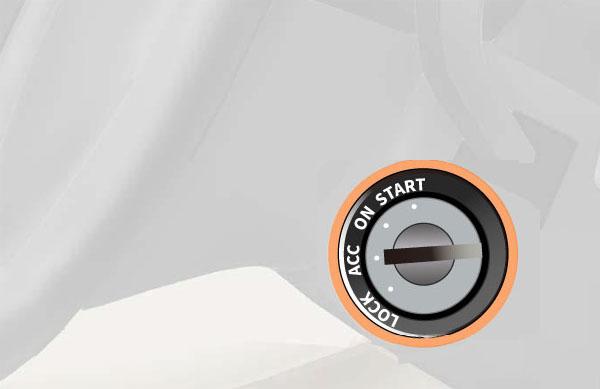
1. The starter works when turning the ignition switch to the ACC position.
A. Right
B. Wrong
Answer: B
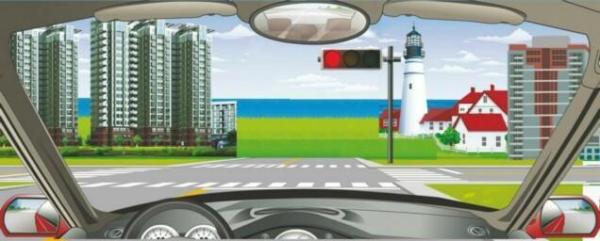
2. At this position, you may speed up to pass through the section.
A. Right
B. Wrong
Answer: B
3. A motorized vehicle driver who reverses, drives in the opposite direction or make a U turn by crossing the central dividing strip on the expressway is subject to a 6-point penalty.
A. Right
B. Wrong
Answer: B
4. A motorized vehicle driver who escapes or commits other extremely serious acts after causing a major accident in violation of the traffic regulations is subject to a prison term of more than 7 years.
A. Right
B. Wrong
Answer: B
5. When running on an expressway that has four lanes in the same direction, the vehicles whose speed is higher than 110 kilometers per hour should run ______.
A. The far left lane
B. The second left lane
C. The far right lane
D. The third left lane
Answer: A
6. Whats the meaning of this sign?
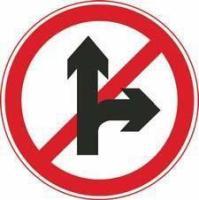
A. no going straight and no changing to left lane
B. no going straight and no left turn
C. allowed to go straight and change to left lane
D. no going straight and no right turn
Answer: D
7. Whats the meaning of this sign?
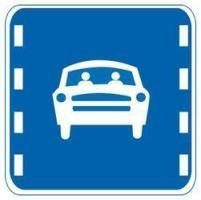
A. special lane for small vehicles
B. special lane for motorized vehicles
C. special lane for taxis
D. special lane for multi-passenger vehicles
Answer: D
8. In which section when a vehicle runs is prohibited from overtaking.
A. elevated road
B. intersection
C. central streets
D. ring express
Answer: B
9. You have the priviledged passing right of way at the intersection in this situation.
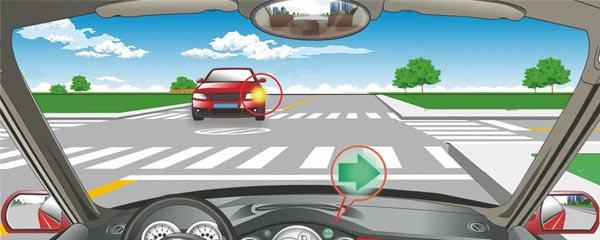
A. Right
B. Wrong
Answer: B
10. Which of the following vehicle in front in the same lane is not allowed to be overtaken?
A. large bus or large truck
B. fire engine on duty
C. public bus
D. taxis
Answer: B
11. When encountering slow-moving vehicles at an intersection that has no traffic signals, the motorized vehicle should pass alternately.
A. Right
B. Wrong
Answer: A
12. This sign reminds an unmanned level crossing ahead.
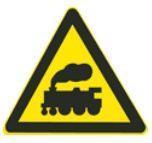
A. Right
B. Wrong
Answer: A
13. Which kind of vehicle can be driven if the authorized vehicle applied for is small motor vehicle with automatic transmission?
A. low-speed truck
B. small motor vehicle
C. motorcycle
D. light truck with automatic transmission
Answer: D
14. Reducing the speed when driving in sand, hail, rain, fog, ice and other weather conditions.
A. Right
B. Wrong
Answer: A
15. Whats the meaning of this sign?

A. distance to a tourist area
B. direction of a tourist area
C. symbol of a tourist area
D. category of a tourist area
Answer: A
16. Whats the meaning of the yellow broken and solid lines in the middle of the road?
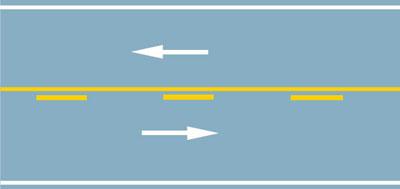
A. no crossing the lines on the side of the broken line
B. no crossing the lines on the side of the solid line
C. allowed to cross the lines on the side of the solid line
D. allowed to cross the lines on both sides
Answer: B
17. When causing a road accident involving human casualties, the driver should immediately rescue the injured people and report to the traffic police as soon as possible.
A. Right
B. Wrong
Answer: A
18. May throw items to the road while driving.
A. Right
B. Wrong
Answer: B
19. The light switch is in this position, front fog lights turn on

A. Right
B. Wrong
Answer: A
20. What is the max speed on this highway?

A. 70km/hr
B. 50km/hr
C. 40km/hr
D. 30km/hr
Answer: C