

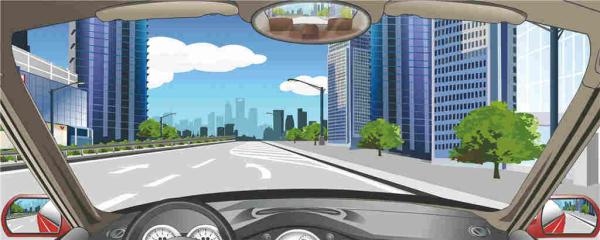
1. The guide arrow on the road surface of this lane indicates that the lanes ahead will merge to the left side.
A. Right
B. Wrong
Answer: A
2. Mr. Ran drove his car from 6am until 11 am without rest, falling down a steep 8.5-meter ridge at one side of a highway 1 km from Xunan Road in Xuahan County, killing 13 people and injuring 9. Which of the following law-breaking acts did Mr Ran commit?
A. Speeding
B. Driving not in accordance with the traffic markings
C. Exceeding carrying capacity
D. Fatigued driving
Answer: D
3. When a front tire bursts, after controlling the driving direction, what should be done by the driver in order to slow down and stop?
A. Immediately change to a high gear
B. Immediately change to a low gear
C. Immediately change to the neutral gear
D. Apply emergency braking
Answer: B
4. How to reduce speed or stop when driving on a road covered with snow and ice?
A. Take full advantage of driving brake
B. Take full advantage of the control power from engine
C. Take full advantage of parking brake
D. Take full advantage of speed retarder
Answer: B
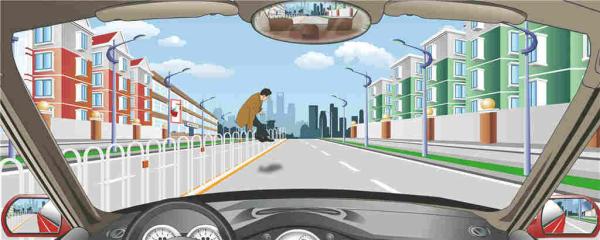
5. Drivers needn?ˉt yield to pedestrians who display such behavior.
A. Right
B. Wrong
Answer: B
6. How to pass the intersection when running straight
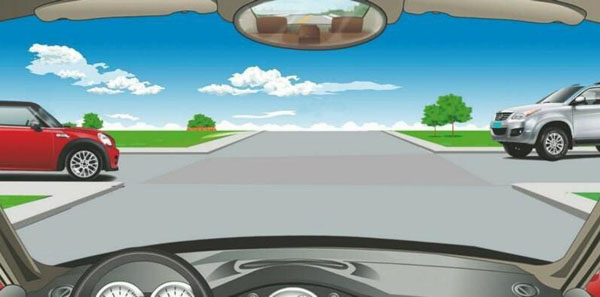
A. turn on the hazard lights and pass
B. directly speed up and pass straight
C. yield to the vehicle from the right road
D. yield to the vehicle from the left road
Answer: C
7. Before setting off, it is necessary to check the driving cabin, engine cabin, external and tires of the motor vehicle.
A. Right
B. Wrong
Answer: A
8. Which of the following is a bad driving habit?
A. Using lights in accordance with relevant rules
B. Carrying both vehicle and driving license
C. Discarding rubbish from the side window
D. Follow the guidance of the traffic signals
Answer: C
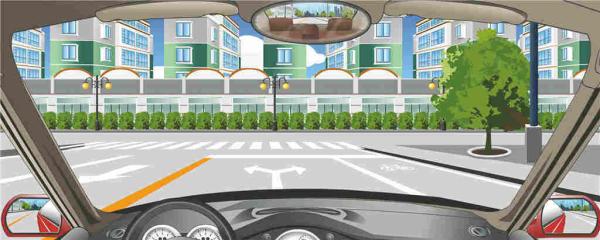
9. The guide arrow on the road surface of this lane indicates that only left and right turns are permitted on the lanes ahead.
A. Right
B. Wrong
Answer: A
10. When driving in a strong wind, drivers should abruptly turn the steering wheel to return to the original direction if they feel the vehicle deviates horizontally due to a strong gale.
A. Right
B. Wrong
Answer: B
11. On a mountain road, what should the driver do in this situation?
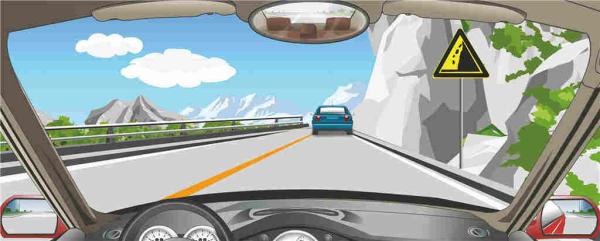
A. Drive on the left and speed up to bypass
B. Stop to observe and pass slowly
C. Observe closely and pass as soon as possible
D. Sound the horn several times and pass slowly
Answer: C
12. What should motor vehicle drivers do under the circumstances shown in the flash?
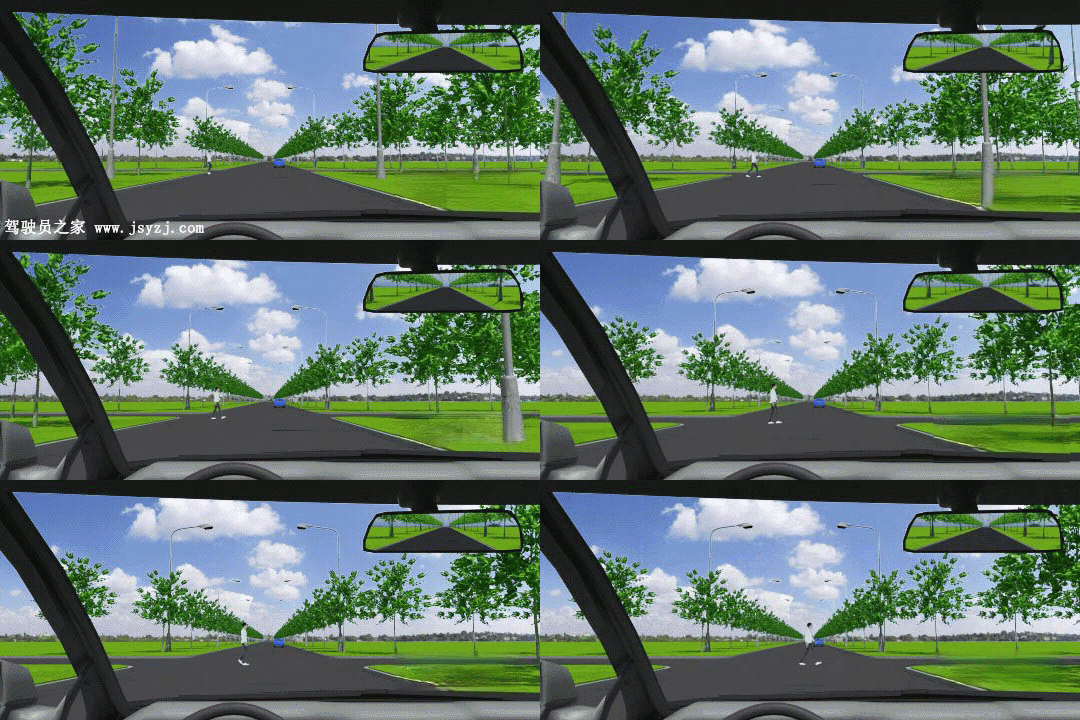
A. Reduce speed or stop to yield
B. Sound the horn to warn the pedestrians to yield
C. Pass before the pedestrians
D. Immediately change to another lane to bypass the pedestrians
Answer: A
13. When encountering an emergency on a highway, the driver should not drastically turn to evade.
A. Right
B. Wrong
Answer: A
14. If a motor vehicle enters a driving lane under this situation, what should the driver do?
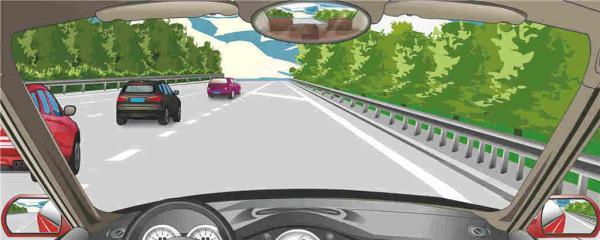
A. Control the driving speed and follow the last vehicle
B. Speed up and cut in front of the second vehicle
C. Speed up and cut in front of the first vehicle
D. Cut in between two vehicles at will
Answer: A
15. Which of the following measures is incorrect when a motor vehicle stops?
A. Stop at a stipulated place
B. Avoid stopping on pedestrian streets
C. Avoid obstructing the passing of other motor vehicles and pedestrians when temporarily stops on the road
D. Stop on the non-motor vehicle lane
Answer: D
16. If a motor vehicle has an accident on a foggy day and stops on an expressway, which of the following acts is dangerous?
A. Leaving the motor vehicle as soon as possible
B. Standing outside the guardrail as much as possible
C. Turning on the hazard lamp and fog lamp
D. Placing a warning sign behind the vehicle in the oncoming direction
Answer: D
17. When driving in a heavy rain, drivers should contro their speed to prevent their vehicles from sliding.
A. Right
B. Wrong
Answer: A
18. What is the best way to make turns on this kind of curving mountain road?
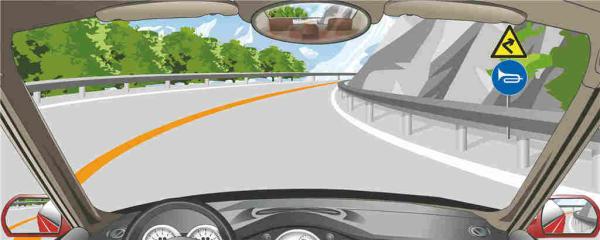
A. Drive along the outer side of the curve
B. Slow down, sound the horn and drive on the right
C. Borrow the opposite lane
D. Drive along the central line of the road
Answer: B
19. What should the driver do if he encounters pedestrians in this situation at an intersection?
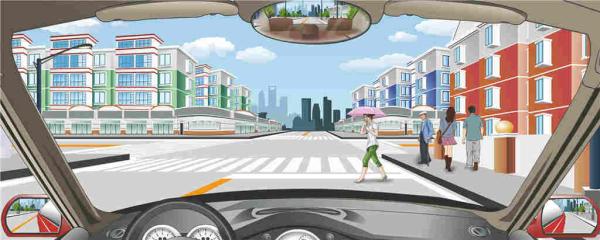
A. Slow down promptly and stop to yield
B. Sound the horn to warn the pedestrians to yield
C. Speed up and pass in front of the pedestrians
D. Turn on the headlamps to warn the pedestrians to yield
Answer: A
20. Which of the following is a safe way for motor vehicles to pass the intersection marked with this sign?
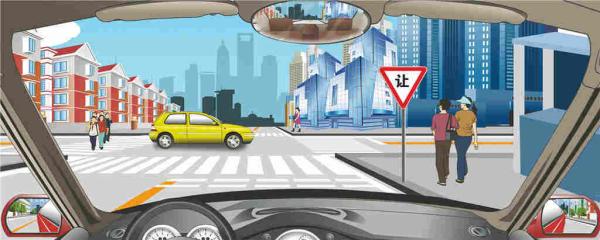
A. Stop and observe the traffic situation around the intersection
B. Approach the intersection by speeding up
C. Observe the traffic situation on the left rear side
D. Approach the intersection at a reduced speed
Answer: D