

1. During normal driving, the driver should do his/her best to run close to or on the central line so as not to allow oncoming vehicles any opportunity to occupy his own route.
A. Right
B. Wrong
Answer: B
2. Traffic Police can detain the vehicle according to law if it is without the mandatory traffic accident insurance in accordance with state regulations.
A. Right
B. Wrong
Answer: A
3. Before riding a motorcycle, the driver should wear a safety helmet and adjust the angle of the rearview mirror till he can clearly watch the left side and the right side of the back.
A. Right
B. Wrong
Answer: A
4. A motorized vehicle driver who drives more than 50% faster than the prescribed speed limit is subject to a 12-point penalty.
A. Right
B. Wrong
Answer: A
5. Which illegal conduct is subject to a 12-point penalty?
A. violate traffic lights
B. use falsified license plate
C. call or answer the mobile phone
D. violate prohibitive signs
Answer: B
6. What is the meaning of this sign?
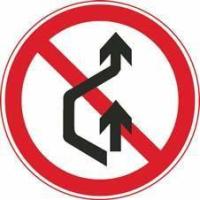
A. no borrowing lane
B. no changing lane
C. no overtaking
D. no U turn
Answer: C
7. What is the meaning of this sign?
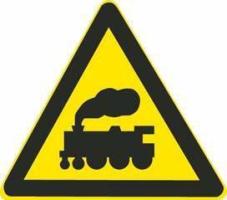
A. watch for long time honking
B. an unmanned level crossing
C. a manned level crossing
D. multi-crossing of railway and road
Answer: B
8. Which of the following vehicle in front in the same lane is not allowed to be overtaken?
A. large bus or large truck
B. taxis
C. ambulance on duty
D. public bus
Answer: C
9. A motorized vehicle driver who deliberately covered or stained the license plate and placed the license plate unproperly, is subject to a ________.
A. 2-point penalty
B. 3-point penalty
C. 6-point penalty
D. 12-point penalty
Answer: D
10. What is the meaning of this sign?
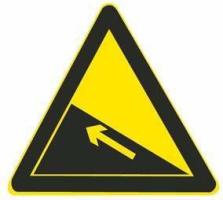
A. steep downhill road
B. continuous up slopes
C. steep uphill road
D. embankment road
Answer: C
11. When a motor vehicle temporarily stops at night, which lamp should be turned on?
A. Front and rear fog lamp, clearance lamp and rear position lamp
B. Head lamp, clearance lamp and rear position lamp
C. Hazard lamp, clearance lamp and rear position lamp
D. Reverse lamp, clearance lamp and rear position lamp
Answer: C
12. A motorcycle driver should wear long-sleeve and long-trouser-leg clothes with brilliant color so that he can be easy found by other transports participants when he is riding.
A. Right
B. Wrong
Answer: A
13. What is the meaning of this sign?

A. U turn
B. reversing
C. left turn
D. bypassing
Answer: A
14. The wrong measure to use the brake of a motorcycle is to __________.
A. Simultaneously use the front and back brakes
B. Use the front brake first
C. Use the back brake first
D. Avoid using the front brake too early
Answer: B
15. What is the meaning of this sign?
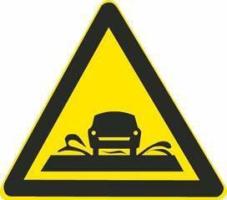
A. muddy road
B. low-lying road
C. overflowing road
D. ferry
Answer: C
16. What is the meaning of this sign?

A. going straight and right turn
B. going straight and left turn
C. no going straight and no left turn
D. right turn and left turn only
Answer: B
17. What is the meaning of this sign?
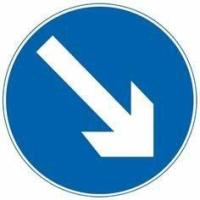
A. downhill section on right side
B. driving by the right side of the road
C. stopping by the right side of the road
D. right turn only
Answer: B
18. A motorcycle is not permitted to tow other vehicles or to be towed by other vehicles.
A. Right
B. Wrong
Answer: A
19. What should the driver do when encountering a vehicle from the opposite direction on a road without a central line?
A. driving closly by the roadside
B. driving by the central of the road
C. reducing speed and driving by right side
D. run by using the lane for non-motorized vehicles
Answer: C
20. If a motorized vehicle driver has caused a major accident in violation of the traffic regulations which has caused human death, the driver is subject to a prison term of more than 3 years.
A. Right
B. Wrong
Answer: B