

1. The sign on the right indicates an ETC lane at toll station ahead.
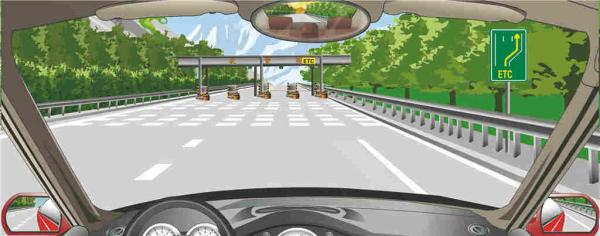
A. Right
B. Wrong
Answer: A
2. Motor vehicles can turn right when driving into an intersection with this traffic signal.
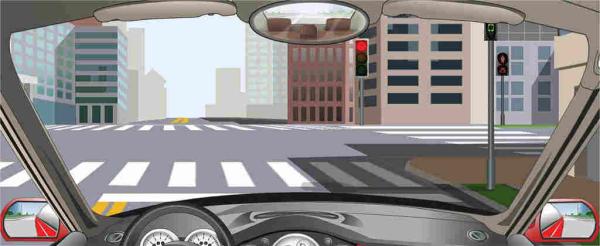
A. Right
B. Wrong
Answer: A
3. When the tire pressure is too low, what will happen if the tire changes its shape in waves and increases in temperature due to fast movement?
A. Unstable tire pressure
B. Even lower tire pressure
C. Driving resistance increases
D. Tire burst
Answer: D
4. When steering failure happens to a fast moving motor vehicle, what should the driver do?
A. Apply emergency braking
B. Immediately change to a low gear
C. Reasonably use the driving brake and the stopping brake and refrain from applying emergency braking
D. Turn on the hazard lamps
Answer: BCD
5. After a motor vehicle falls into water, the driver won?ˉt be able to open the side doors or windows to escape until water nearly fills up the compartment.
A. Right
B. Wrong
Answer: A
6. If a motor vehicle has an accident on a foggy day and stops on an expressway, which of the following acts is dangerous?
A. Leaving the motor vehicle as soon as possible
B. Standing outside the guardrail as much as possible
C. Turning on the hazard lamp and fog lamp
D. Placing a warning sign behind the vehicle in the oncoming direction
Answer: D
7. When there is a braking failure on a downhill road, if there is no other alternative, the driver may rub the vehicle body against the rocks and trees on roadside to force the vehicle to slow down and stop.
A. Right
B. Wrong
Answer: A
8. When a tire suddenly bursts on the road, in which of the following ways can motor vehicle drivers keep safe?
A. Applying emergency braking and pulling over
B. Firmly holding the steering wheel and keeping the vehicle going straight
C. Immediately releasing the accelerator pedal
D. Gently depressing the brake pedal
Answer: BCD
9. The broken white line rectangle area on the right side of the road indicates that long stopping is permitted here.
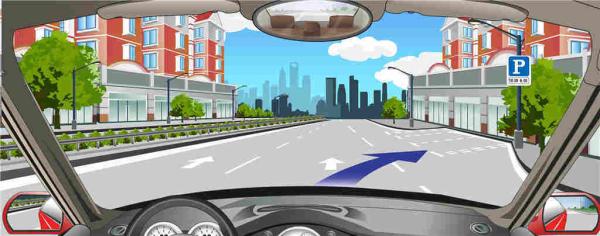
A. Right
B. Wrong
Answer: B
10. The sign on the right indicates a bypass flow intersection ahead.
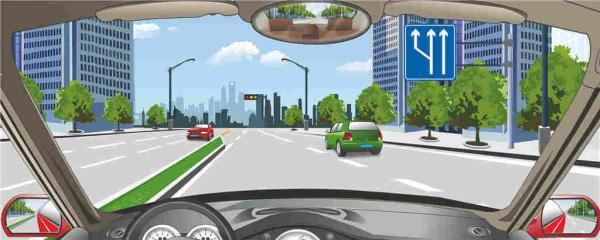
A. Right
B. Wrong
Answer: B
11. Unless stopping due to obstacles or vehicle breakdown on an expressway, motor vehicles are not allowed to stop to pick up or drop off people or load and unload cargo.
A. Right
B. Wrong
Answer: A
12. How to reduce speed or stop when driving on a road covered with snow and ice?
A. Take full advantage of driving brake
B. Take full advantage of the control power from engine
C. Take full advantage of parking brake
D. Take full advantage of speed retarder
Answer: B
13. The area in the yellow rectangle markings on the right side of the road indicates that temporary stopping is permitted here.
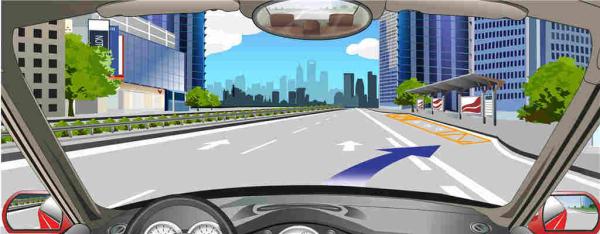
A. Right
B. Wrong
Answer: B
14. Which of the following measures is correct for rescuing a person sustaining full-body burns?
A. Cover the fire with sandy soil
B. Spray cool water to his body
C. Put out the fire by extinguisher
D. Help to remove the burning clothes
Answer: B
15. Under such circumstances, the motor vehicle is allowed to overtake.
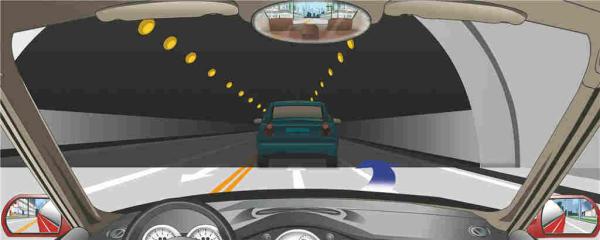
A. Right
B. Wrong
Answer: B
16. The sign on the right warns of a continuous downhill section ahead.
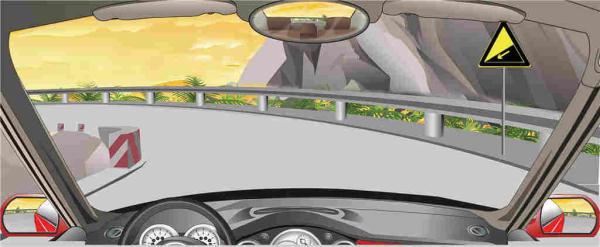
A. Right
B. Wrong
Answer: B
17. How many kinds of law-breaking acts are displayed in flash 7?
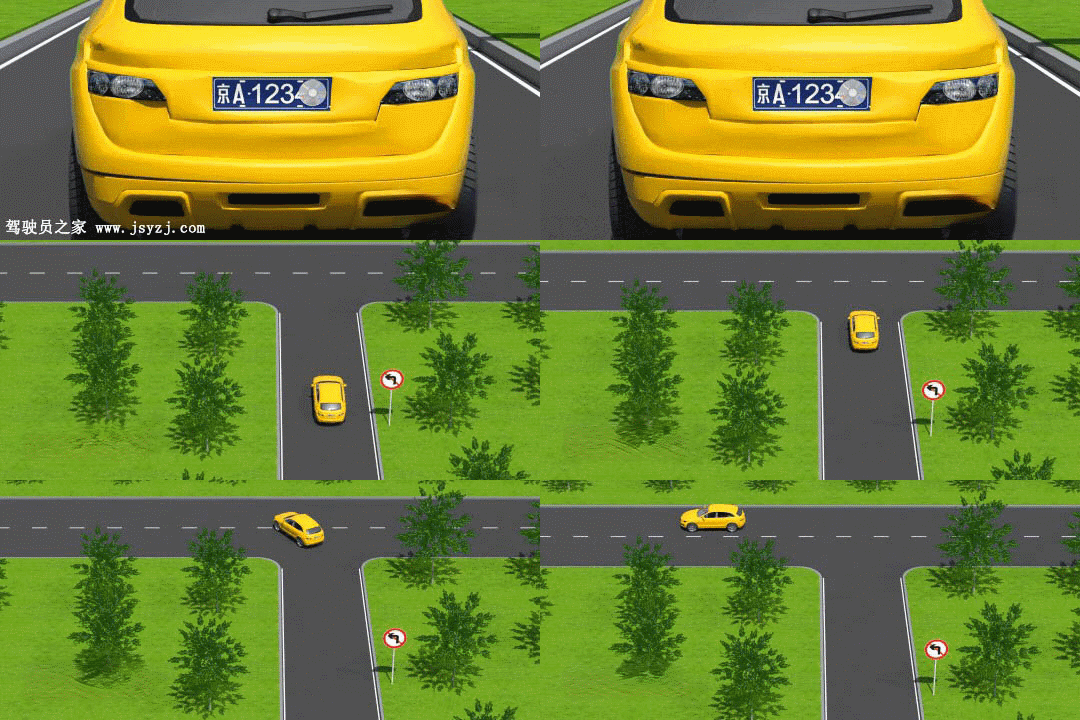
A. One
B. Two
C. Three
D. Four
Answer: B
18. Which one of the following is the safest way when driving a motor vehicle on this road?
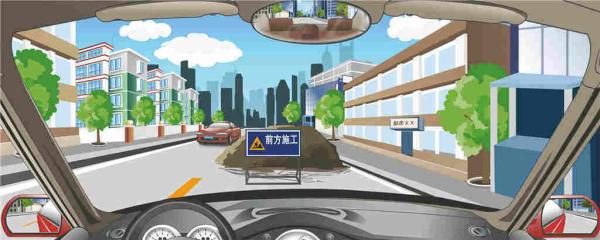
A. Speed up and bypass the obstacle
B. Take the opposite lane and compel the other vehicle to yield
C. Stop and yield to the oncoming vehicle
D. Sound the horn or turn on the headlamp
Answer: C
19. The sign on the right warns of a narrowed road on both sides ahead.
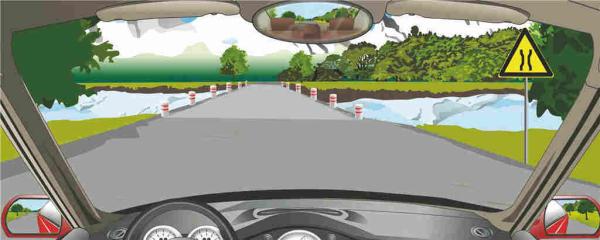
A. Right
B. Wrong
Answer: B
20. Before driving, it is necessary to check whether the cooling liquid, engine oil and fuel oil, are leaking.
A. Right
B. Wrong
Answer: A