

1. Under such circumstances, what should motor vehicle drivers do?
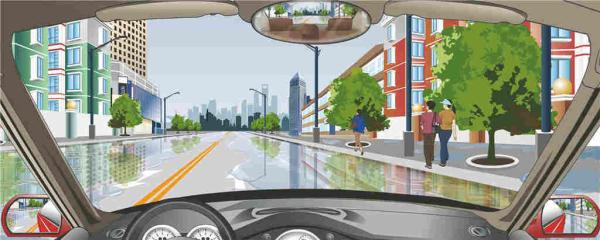
A. Pass slowly at a lower speed
B. Speed up and pass
C. Continuously sound the horn and pass
D. Pass at a normal speed
Answer: A
2. What are the main reasons why driving a motor vehicle should not overtake on rainy days?
A. It is not easy for drivers around to see the overtaking signal.
B. Can not accurately judge the distance of vehicles around
C. Road is wet and slippery, and vehicles are prone to sideslip
D. The driver can not detect dangerous in time
Answer: ABCD
3. When the engine suddenly stalls on the road, what should the driver do?
A. Stop the vehicle and overhaul it immediately
B. Immediately turn on the hazard lamps
C. Move the vehicle to a place where it will not obstruct the traffic flow
D. Set up a breakdown warning sign
Answer: BCD
4. A correct measure to avoid tire burst of motor vehicles is to lower the tire pressure.
A. Right
B. Wrong
Answer: B
5. When a tire blowout on the road, the driver should swiftly depress the brake pedal to reduce speed and stop the vehicle.
A. Right
B. Wrong
Answer: B
6. Keep enough safe distance When a motor vehicle follows another vehicle, because ______.
A. Avoke a rear-end collision
B. The closer you get to the vehicle, the less easy it is to grasp the situation ahead of the vehicle.
C. Enough distance to avoid emergencies
D. Prevent being unable to detect the front vehicle brake in time due to the damage rear lamp of the front vehicle
Answer: ABCD
7. The traffic police may detain the motorcycle if its driver has falsified the license plate and vehicle license.
A. Right
B. Wrong
Answer: A
8. What is the meaning of this sign?
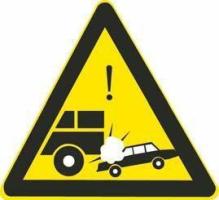
A. Accident-prone section
B. Construction section
C. Reducing speed and going slowly section
D. Jammed section
Answer: A
9. Under such circumstance at an intersection. motor vehicle drivers should be prepared to stop and yieldat any time.
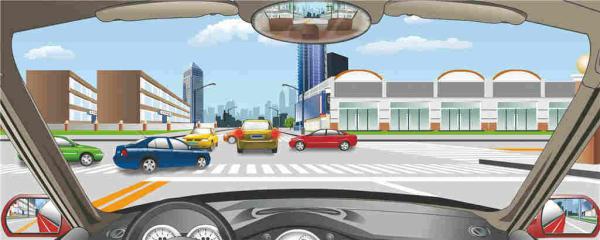
A. Right
B. Wrong
Answer: A
10. When a motor vehicle moves through water, drivers should intermittently and gently depress the brake pedal in order to restore braking efficiency.
A. Right
B. Wrong
Answer: A
11. When a motor vehicle encounters a group of youngsters bypassing the motor vehicles parking beside the road, the driver should slow down voluntarily and yield.
A. Right
B. Wrong
Answer: A
12. When rescuers enter the scene to rescue the wounded after harmful gas leakage caused by traffic accidents, they must wear air respirators or cover their mouth and nose with wet towels.
A. Right
B. Wrong
Answer: A
13. It is illegal to change lanes without turning on indicators.
A. Right
B. Wrong
Answer: A
14. Which of the following method is correct to rescue an unconscious person?
A. Apply cardio-pulmonaryresuscitation immediately
B. Press the philtrum of the wounded person with force
C. Continuously slap the face of the wounded person
D. Check the breath of the wounded person before other emergency treatments
Answer: D
15. What should the driver do when the motor vehicle encounters this situation in front of a school?

A. Bypass before the queue
B. Slow down and pass slowl
C. Stop promptly and yield
D. Go through in the spaces between the queues
Answer: C
16. When passing an intersection, vehicle motor drivers are not allowed to overtake.
A. Right
B. Wrong
Answer: A
17. When a rear tire of a motorcycle blows out, the driver should ________.
A. Swiftly turn the steering handlebar to adjust
B. Firmly hold the steering handlebar with both hands
C. Swiftly turn the steering handlebar to the opposite direction
D. Swiftly take braking measures
Answer: B
18. When following other vehicles on a foggy day, what should the driver do?
A. Maintain a large safety distance
B. Turn on the high-beam
C. Turn on the low-bea
D. Sound the horn in due time
Answer: A
19. What is the meaning of this sign?
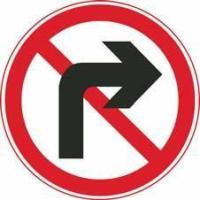
A. No entering the intersection
B. No right turn
C. No changing lane
D. No U turn
Answer: B
20. Which of the following is a basic requirement for rescuing the injured at the scene of a traffic accident?
A. Treat wounds first and safe life later
B. Save life first and treat wounds later
C. Help lightly wounded persons first
D. Help seriously wounded persons later
Answer: B