

1. When the vehicles cross each other at night, the driver may continuous change lights to remind the vehicle coming in the opposite direction and at the same should reduce speed and go forward or stop on the right side.
A. Right
B. Wrong
Answer: A
2. Whats the meaning of the yellow broken and solid lines in the middle of the road?
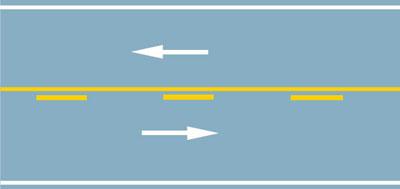
A. no crossing the lines on the side of the broken line
B. no crossing the lines on the side of the solid line
C. allowed to cross the lines on the side of the solid line
D. allowed to cross the lines on both sides
Answer: B
3. Whats the meaning of this sign?
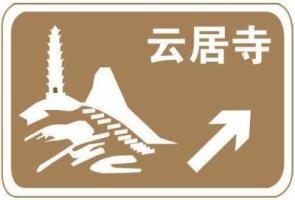
A. distance to a tourist area
B. category of a tourist area
C. direction of a tourist area
D. symbol of a tourist area
Answer: C
4. It lights to indicate that the handbrake may not loose in the end.

A. Right
B. Wrong
Answer: B
5. The vehicle is allowed to _______ at this intersection.
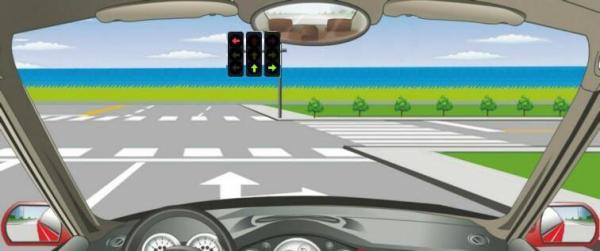
A. go straight or turn right
B. turn left
C. go straight or turn left
D. turn left or turn right
Answer: A
6. This sign warns two neighboring inverse curves ahead.
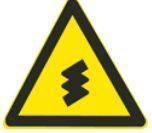
A. Right
B. Wrong
Answer: B
7. These signs warn the driver danger ahead and passing with care.
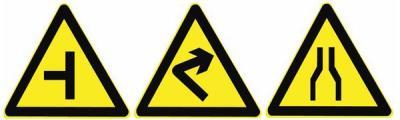
A. Right
B. Wrong
Answer: A
8. The police can detain the vehicle if one drives a vehicle without ______
A. driving license
B. ID card
C. pass paper
D. qualification certificate
Answer: A
9. When a motorized vehicle breaks down on the road and is difficult to move, the driver should place a warning sign within 50 meters behind the vehicle.
A. Right
B. Wrong
Answer: B
10. When driving in a rainstorm and the windscreen wiper cannot totally wipe off the rain water, the driver should ________.
A. Concentrate his attention and drive with care
B. Immediately reduce speed and stop at the road side
C. Maintain the normal speed
D. Drive at a reduced speed
Answer: B
11. Whats the meaning of this sign?
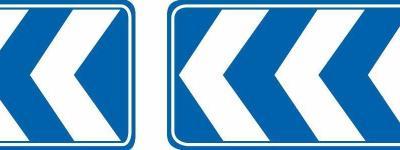
A. line guide signs
B. lane merging guide signs
C. lane branching guide signs
D. turning guide signs
Answer: A
12. The method and direction of changing lanes by the red car is correct.
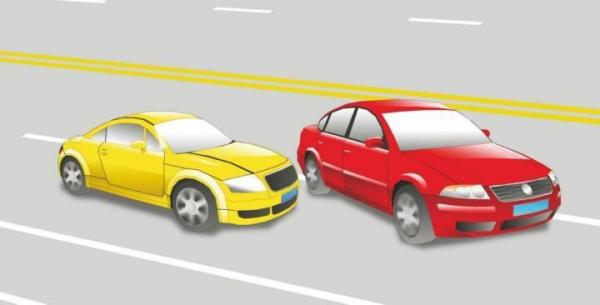
A. Right
B. Wrong
Answer: B
13. When a driver suddenly encounters a vehicle in the opposite direction that forces its way by overtaking and occupying his lane, the driver may refuse to avoid it and force it to yieldto you.
A. Right
B. Wrong
Answer: B
14. Within how long should a driver whose information has changed apply for new license?
A. 30 days
B. 40 days
C. 50 days
D. 60 days
Answer: A
15. It displays that the current temperature of the coolant is 90 degrees.
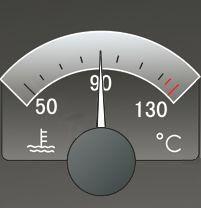
A. Right
B. Wrong
Answer: A
16. Whats the meaning of this sign?
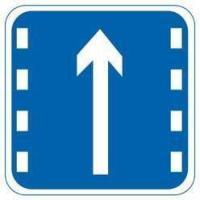
A. right-turn lane
B. U turn lane
C. left-turn lane
D. straight-going lane
Answer: D
17. Driving a motorized vehicle in the city road which has no central line, the maximum speed can not exceed 50 kilometers per hour.
A. Right
B. Wrong
Answer: B
18. This sign warns a sharp left curve ahead.
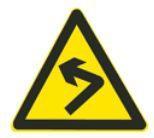
A. Right
B. Wrong
Answer: A
19. A driver may drive on the road a motorized vehicle overhauled which has reached the scraped standard.
A. Right
B. Wrong
Answer: B
20. Which part does it control when pulling this switch?
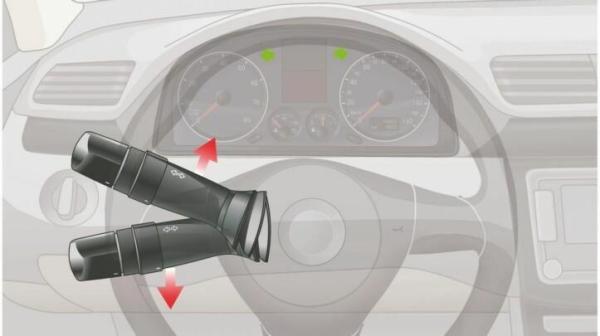
A. turn signals
B. reverse light
C. contour light
D. hazard light
Answer: A