

1. Whats the meaning of the yellow slash filled area in the middle of the road?
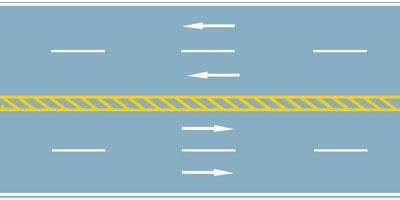
A. one-way lanes dividing line
B. opposite direction lanes dividing line that can not be crossed
C. bilateral same direction lanes dividing line that can be crossed
D. opposite direction lanes dividing line that can be crossed
Answer: B
2. You may not use the turn signal when you change to the right lane.
A. Right
B. Wrong
Answer: B
3. When a motorized vehicle encounters the cut in by another vehicle in a roundabout, the driver may not evade as long as he has the right of way.
A. Right
B. Wrong
Answer: B
4. Stop and yield to the pedestrians under this situation.
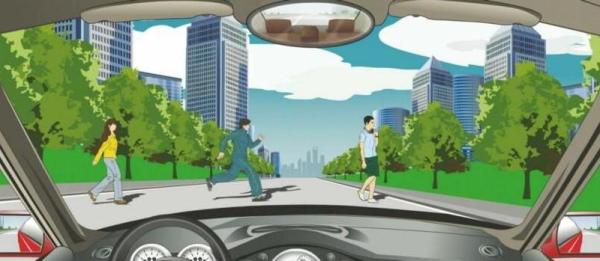
A. Right
B. Wrong
Answer: A
5. When a vehicle changes lane, the driver should turn on the turn signal in advance,observe traffic conditions, maintain a safe distance and move into the new lane.
A. Right
B. Wrong
Answer: A
6. What kind of violation does the red car have while temporarily stopping here?
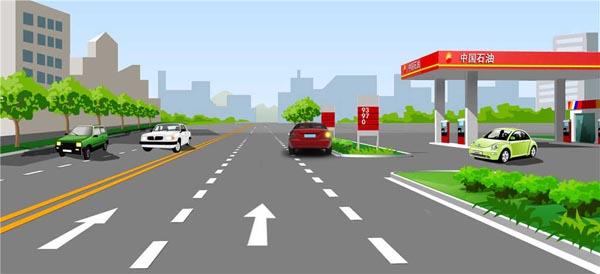
A. more than 30cm from roadside
B. stop in the section with no stopping marking
C. less than 30m from gas station
D. stop occupying the lane for non-motorized vehicles
Answer: C
7. Which part does it control when rotating this part of the switch?
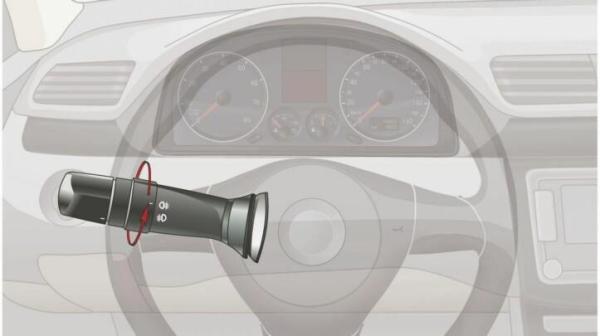
A. the low beam lights
B. the head and tail fog lights
C. high beam lights
D. turn signals
Answer: B
8. When ignition switch is in the START position, the starter starts.
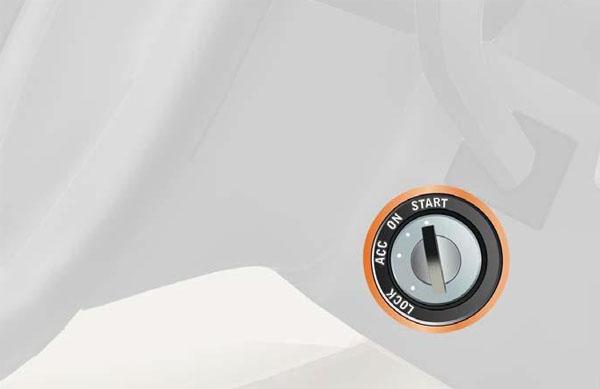
A. Right
B. Wrong
Answer: A
9. In which situation the traffic police can detain the vehicle according to law?
A. exceeding 10% of the prescribed speed limits
B. driving when he is exhausted
C. not buckled up while driving
D. driving after drinking
Answer: D
10. After causing a road accident, the vehicle driver needs to change the scene for rescuing the wounded, the driver should mark the location.
A. Right
B. Wrong
Answer: A
11. This sign indicates construction section ahead and bypassing from left or right side.
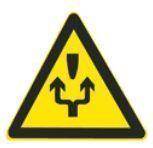
A. Right
B. Wrong
Answer: B
12. Whats the meaning of this sign?
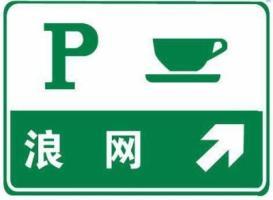
A. expressway parking area ahead
B. expressway shelter ahead
C. expressway car park ahead
D. expressway service area ahead
Answer: A
13. As thick fog reduces visibility, turning on the high beam light can increase the visibility.
A. Right
B. Wrong
Answer: B
14. What is the role of ABS system when applying emergency braking?

A. cut off the power output
B. control the direction automatically
C. reduce braking inertia
D. prevent wheel blocking
Answer: D
15. It displays that oil in tank has less than the warning line

A. Right
B. Wrong
Answer: A
16. It is not safe for a woman driver to wear high heels to drive a vehicle.
A. Right
B. Wrong
Answer: A
17. Whats the meaning of this sign?
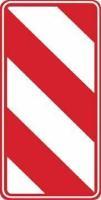
A. Passing on both sides
B. Passing by the right side
C. Passing by the left side
D. Passing is prohibited
Answer: B
18. When a vehicle follows another vehicle on a mountain road, it should ____.
A. Properly increase the safe distance
B. Closely follow the vehicle in front
C. Properly reduce the safe distance
D. Try to find a chance to overtake
Answer: A
19. Which kind of vehicle can be applied for when initially applying for the driving license?
A. midsize bus
B. large bus
C. ordinary motor tricycle
D. trailer
Answer: C
20. Fine will be 200~2000 yuan and driving license will be revoked if _____
A. violating traffic regulations
B. running 50% faster than the specified speed limit
C. escaped after causing traffic accident
D. driving without driver license
Answer: B