

1. Which should be carried onboard?
A. insurance policy
B. vehicle license
C. certificate of ex-factory inspection
D. vehicle registration papers
Answer: B
2. When encountering an overflowing bridge, the driver should look at the situation, and passes through slowly before he makes sure that it is safe to do so.
A. Right
B. Wrong
Answer: A
3. When a motorcycle turns at an excessively high speed, it can easily dash out of a curve or skid sideways.
A. Right
B. Wrong
Answer: A
4. Traffic Police can detain the vehicle which is suspected of using the falsified or altered license plate and vehicle license.
A. Right
B. Wrong
Answer: A
5. A motorized vehicle driver who violates of traffic lights is subject to a 6-point penalty.
A. Right
B. Wrong
Answer: A
6. What is the meaning of this sign?
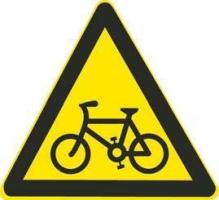
A. the lane for non-motorized vehicles
B. yield non-motorized vehicles
C. no passing for non-motorized vehicles
D. watch for non-motorized vehicles
Answer: D
7. When a motorized vehicle causes a minor traffic accident and obstructs traffic flow, it does not need to move.
A. Right
B. Wrong
Answer: B
8. If a driver has not received full penalty points, and the fine has not been paid, the penalty points will be transferred into the next scoring cycle.
A. Right
B. Wrong
Answer: A
9. It is not a bad habit for a driver to frequently change lanes.
A. Right
B. Wrong
Answer: B
10. The cycle for recording the accumulated penalty points for violating road traffic safty regulations is ____________.
A. 12 months
B. 24 months
C. 3 months
D. 6 months
Answer: A
11. When a rear tire of a motorcycle blows out, the driver should ________.
A. Swiftly turn the steering handlebar to adjust
B. Firmly hold the steering handlebar with both hands
C. Swiftly turn the steering handlebar to the opposite direction
D. Swiftly take braking measures
Answer: B
12. A motorized vehicle runs on the road without a label of inspection, the traffic police can detain the vehicle.
A. Right
B. Wrong
Answer: A
13. Driving a motorized vehicle on the road in violation of road traffic regulations shall be subject to relevant punishment.
A. Right
B. Wrong
Answer: A
14. How should a motor vehicle follow the other vehicle In front when driving on a road covered with ice and snow?
A. Keep a long safe distance
B. Turn on hazard lamp
C. Change between high-and-low beam alternatively
D. Sound the horn in due time to give a notice to the vehicle in front
Answer: A
15. What is the meaning of this sign?
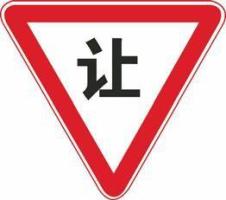
A. no yielding
B. yield while crossing each other
C. reduce speed and yield
D. stop to yield
Answer: C
16. During normal driving, the driver should do his/her best to run close to or on the central line so as not to allow oncoming vehicles any opportunity to occupy his own route.
A. Right
B. Wrong
Answer: B
17. When driving on a damp and slippery road, drivers should avoid using the emergency brake to his/her best ability.
A. Right
B. Wrong
Answer: A
18. When evading an emergency, except for being calm what principle should be held by drivers?
A. Evading people first and then objects
B. Evading objects first and then vehicles
C. Evading vehicles first and then people
D. Evading objects first and then people
Answer: A
19. If a person escapes after causing a traffic accident and constitutes a crime, his driving license should be revoked and he is banned _____ from re-obtaining a driving license.
A. within 5 years
B. within 10 years
C. within 20 years
D. for lifetime
Answer: D
20. Before riding a motorcycle, the driver should wear a safety helmet and adjust the angle of the rearview mirror till he can clearly watch the left side and the right side of the back.
A. Right
B. Wrong
Answer: A