

1. This sign means a Y-shaped intersection ahead.
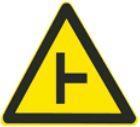
A. Right
B. Wrong
Answer: B
2. What is this instrument?
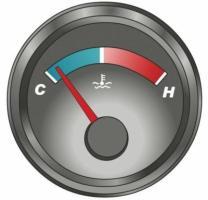
A. water temperature meter
B. fuel meter
C. ammeter
D. pressure meter
Answer: A
3. When a motorized vehicle crosses a non-motorized vehicle on a narrow road or a narrow bridge at night, the motorized vehicle should use the high beam light.
A. Right
B. Wrong
Answer: B
4. When the motor vehicle installed ABS system applys emergency braking, the driver can depress the brake pedal heavily.
A. Right
B. Wrong
Answer: A
5. What is the max speed on a road covered by ice and snow
A. 50km/hr
B. 40km/hr
C. 30km/hr
D. 20km/hr
Answer: C
6. When running on an expressway, the driver should ____ if he has missed the exit.
A. Reverse to the original place
B. Continue to go ahead and find the next exit
C. Immediately stop
D. Make a U turn from where he is
Answer: B
7. This sign reminds there is a ferry ahead for vehicles.
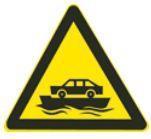
A. Right
B. Wrong
Answer: A
8. When crossing each other on a narrow road, the driver should slow down, yield and stop first.
A. Right
B. Wrong
Answer: A
9. Which behavior a person had in 3 years is not allowed to apply for a motorized vehicle driving license?
A. insulin injections
B. drunken experience
C. smoking addiction
D. drug injections
Answer: D
10. Stopping the vehicle temporarily in the crosswalk is the act of violation of the law.
A. Right
B. Wrong
Answer: A
11. Whats the meaning of this sign?
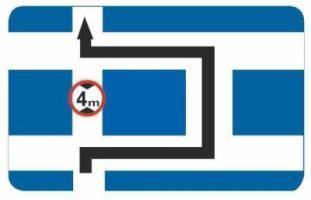
A. no left turn
B. dead-end road
C. no passing
D. bypass if overheight
Answer: D
12. Whats the meaning of this sign?
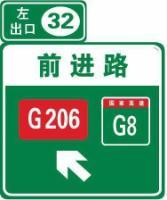
A. expressway next exit ahead
B. expressway right exit ahead
C. expressway left exit ahead
D. expressway destination indication
Answer: C
13. A front tire blowout is very dangerous. The vehicle will immediately turn to the side where the tire is blown out and have a direct impact on the drivers control of the steering wheel.
A. Right
B. Wrong
Answer: A
14. When encountering a vehicle coming in the opposite direction on a mountain road, the driver should ______ when crossing each other.
A. Not reduce speed
B. Stick to the center of the road
C. Speed up
D. Reduce speed or stop to yield
Answer: D
15. Whats the meaning of this sign?
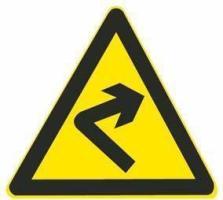
A. sharp right curve
B. bypass from right side
C. continuous curves
D. sharp left curve
Answer: A
16. The red car can run in this lane.
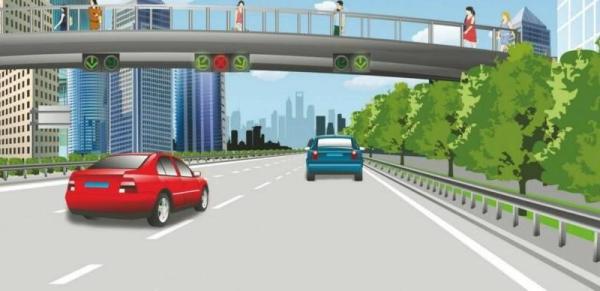
A. Right
B. Wrong
Answer: B
17. Whats the meaning of this sign?

A. special lane for large buses
B. special lane for public buses
C. special lane for Bus Rapid Transit System
D. special lane for multi-passenger vehicles
Answer: B
18. When overtaking a vehicle stopping on the right side, the driver should ________ in case that vehicle starts up suddenly or opens the door.
A. Speed up and pass
B. Keep honking
C. Maintain the normal speed
D. Keep a safe horizontal distance from that vehicle, reduce speed and pass
Answer: D
19. When driving in a snowy day, the driver should drive along the vehicle tracks if there are any.
A. Right
B. Wrong
Answer: A
20. The penalty points will be _____ if violating the traffic lights.
A. 2-point penalty
B. 3-point penalty
C. 6-point penalty
D. 12-point penalty
Answer: C