

1. The sign in front indicates a one-kilometer distance from the next left exit.
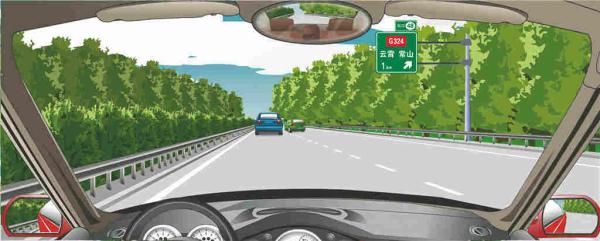
A. Right
B. Wrong
Answer: B
2. The white solid line on the right side of the road indicates the boundary of a driving lane and crosswalk.
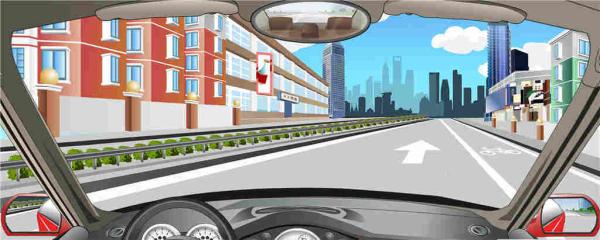
A. Right
B. Wrong
Answer: B
3. As shown in the flash, the motor vehicle chooses a correct way to pass through the level crossing.

A. Right
B. Wrong
Answer: A
4. Motor vehicle drivers are allowed to overtake on this road section.
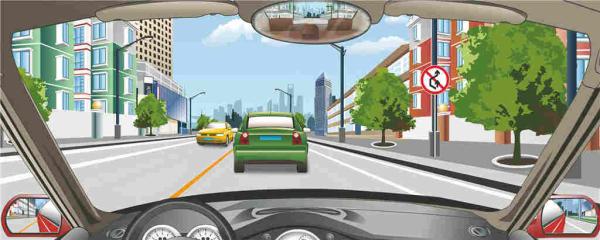
A. Right
B. Wrong
Answer: B
5. When a motor vehicle turns at an excessively high speed, it can easily slide sideways.
A. Right
B. Wrong
Answer: A
6. After speeding up to more than 60 km/hour, a motor vehicle driver may drive onto the driving lane directly.
A. Right
B. Wrong
Answer: B
7. After entering the acceleration lane of an expressway, the driver should increase the speed to how many kilometers per hour?
A. More than 30 km/hour
B. More than 40 km/hour
C. More than 50 km/hour
D. More than 60 km/hour
Answer: D
8. The sign on the left warns that there are vehicles converging into the intersection on the left.
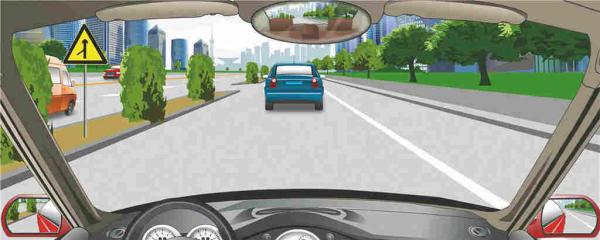
A. Right
B. Wrong
Answer: A
9. What should motor vehicle drivers do when going straight and passing through the intersection ahead?
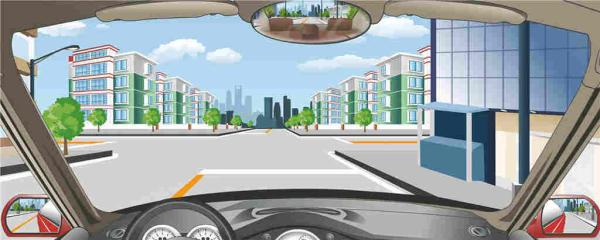
A. Reduce speed when approaching the intersection
B. Reduce speed after entering the intersection
C. May pass through the intersection without speed reduction
D. Accelerate in advance to pass through the intersection
Answer: A
10. When steering failure happens to a fast moving motor vehicle, what should the driver do?
A. Apply emergency braking
B. Immediately change to a low gear
C. Reasonably use the driving brake and the stopping brake and refrain from applying emergency braking
D. Turn on the hazard lamps
Answer: BCD
11. The sign in the red circle indicates that the left road is only for small vehicles.
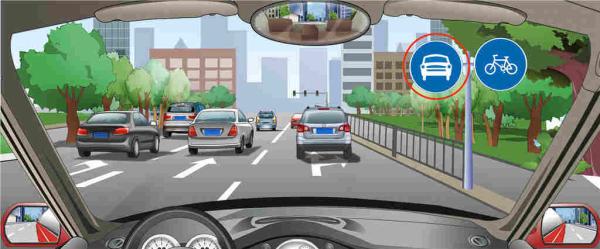
A. Right
B. Wrong
Answer: B
12. When driving a vehicle equipped with power steering what should the driver do upon finding that steering is difficult?
A. Stop and identify the cause
B. Control the steering and drive slowly
C. Drive at a lower speed
D. Keep the vehicle going straight
Answer: A
13. Under such circumstances, the motor vehicle driver should voluntarily reduce speed and let the vehicle behind overtake.
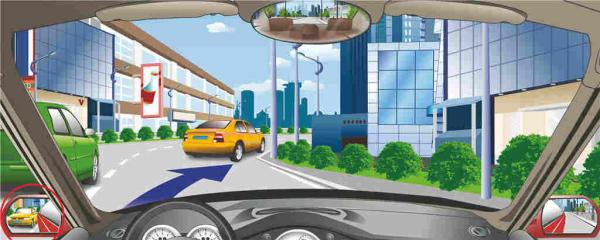
A. Right
B. Wrong
Answer: A
14. The sign on the right indicates that drivers should choose their lanes in accordance withthe directions indicated by arrows.
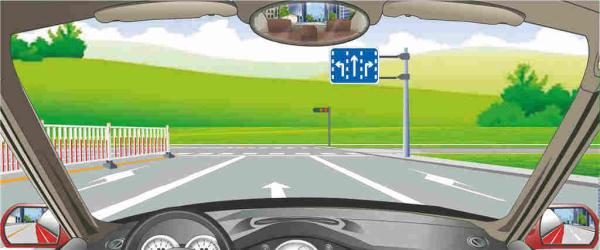
A. Right
B. Wrong
Answer: A
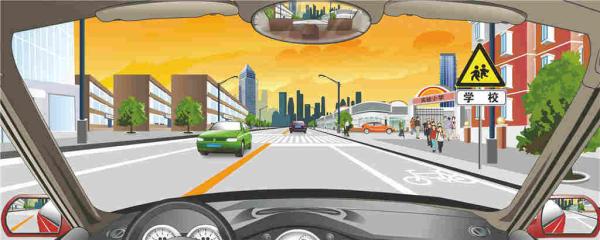
15. When encountering this situation at the gate of a school, the driver should prepare to stop.
A. Right
B. Wrong
Answer: A
16. When a motor vehicle accidentally hits a guardrail of a highway, the driver should stabilize and adjust the steering wheel properly, and refrain from turning the steering wheel drastically.
A. Right
B. Wrong
Answer: A
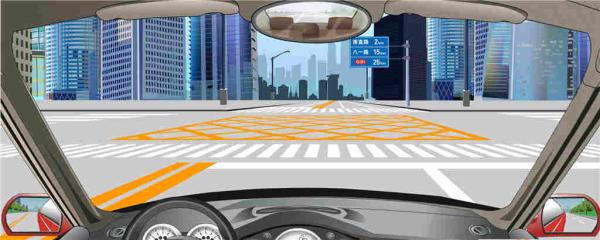
17. The sign in front is an advance announcement of famous places and distances en route.
A. Right
B. Wrong
Answer: A
18. When the tire pressure is too low, what can happen when driving at a high speed?
A. Tire pressure will be unstable
B. Tire pressure will increase
C. Driving resistance will decrease
D. The tire will burst
Answer: D
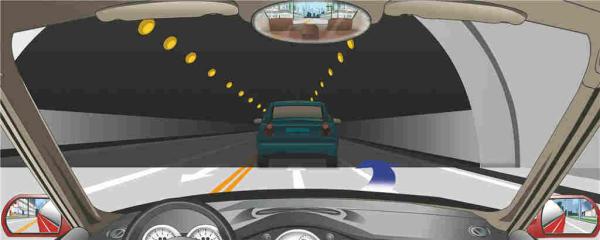
19. Under such circumstances, the motor vehicle is allowed to overtake.
A. Right
B. Wrong
Answer: B
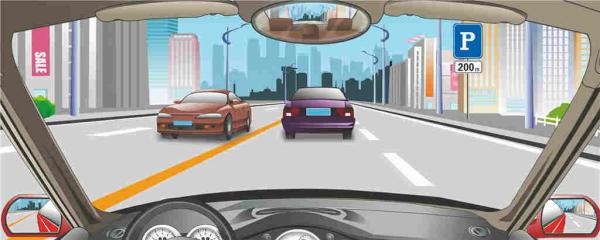
20. The sign in front indicates an open-air parking lot with rest area is 200 meters ahead.
A. Right
B. Wrong
Answer: A