

1. No U turn at this section.

A. Right
B. Wrong
Answer: B
2. A motorized vehicle is not allowed to stop in the section 50 meters to the bridge, steep slope or tunnel.
A. Right
B. Wrong
Answer: A
3. The rear windshield defroster starts to work after pressing this switch.

A. Right
B. Wrong
Answer: B
4. This sign warns a sharp left curve ahead.
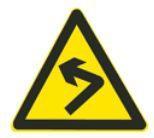
A. Right
B. Wrong
Answer: A
5. How often should a driver who is more than 60 years old present the certificate of physical conditions?
A. every 3 years
B. every 2 years
C. every 6 months
D. every 1 year
Answer: D
6. Turn on the right-turn signal and return immediately to the original lane afterovertaking.
A. Right
B. Wrong
Answer: B
7. When driving in thick fog causing poor visibility on the expressway, the driver should apply emergency braking to stop at once.
A. Right
B. Wrong
Answer: B
8. In which situation that a driver will not allowed to drive?
A. penalty points reach 10 points
B. penalty points reach 6 points
C. driving license lost or destroyed
D. driving license is nearly expired
Answer: C
9. Full penalty points of a scoring cycle because of violating the traffic regulations is 12 points.
A. Right
B. Wrong
Answer: A
10. It lights to indicate that engine oil may be insufficient.

A. Right
B. Wrong
Answer: A
11. It lights if left door is not closed.

A. Right
B. Wrong
Answer: B
12. Whats the meaning of these white rectangle markings?

A. long time parking
B. time limited parking
C. free parking
D. special parking
Answer: B
13. Whats the meaning of this sign?
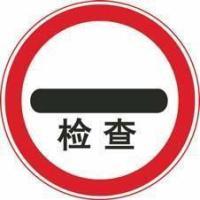
A. customs inspection
B. stop-for-inspection
C. frontier inspection
D. no passing
Answer: B
14. What marking is the white semicircle in the circle?

A. driving at reduced speed
B. ascertaining the vehicles speed
C. reducing the speed at the intersection
D. ascertaining the distance between the vehicles
Answer: D
15. Whats the meaning of this sign?

A. bypass from right side
B. one-way passing
C. watch for danger
D. bypass from left side
Answer: A
16. Whats the meaning of the marking in the red circle?
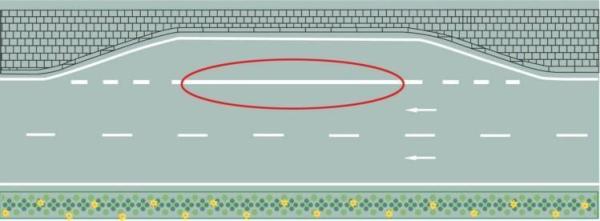
A. temporary stopping
B. bay-stopping
C. emergency stopping
D. public bus station
Answer: B
17. What kind of violation does the vehicle have while temporarily stopping by the roadside?
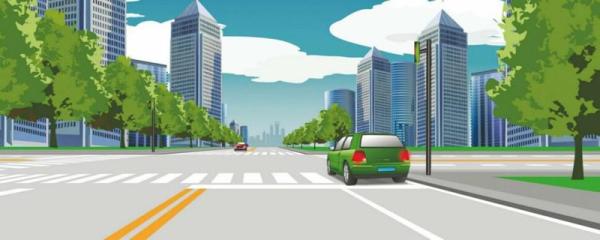
A. stop in the crosswalk
B. stop more than 30cm from the roadside
C. stop in the section with no stopping marking
D. stop occupying the lane for non-motorized vehicles
Answer: A
18. A motorized vehicle runs on the road without a label of insurance, the traffic police can detain the vehicle license according to law.
A. Right
B. Wrong
Answer: B
19. The front safety bags play a fully protective role when used in conjunction with ______
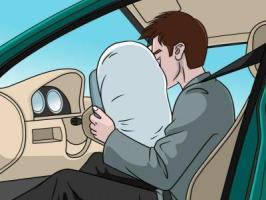
A. ABS system
B. seat belt
C. safety pillow of the chair
D. safety glasses
Answer: B
20. It lights to indicate that ______

A. the head fog light is turned on
B. the low beam light is turned on
C. the high beam light is turned on
D. the tail fog light is turned on
Answer: C