

1. Whats the meaning of this sign?
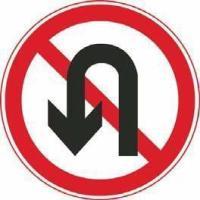
A. no changing lane
B. no left turn
C. no going straight
D. no U turn
Answer: D
2. It lights to remind that engine needs to add oil.

A. Right
B. Wrong
Answer: B
3. Whats the meaning of this sign?
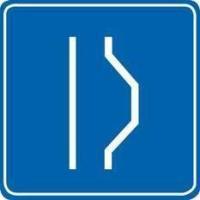
A. uncovered car park
B. emergency stopping
C. parking space
D. passing bay
Answer: D
4. Which of the following vehicle in front in the same lane is not allowed to be overtaken?
A. large bus or large truck
B. fire engine on duty
C. public bus
D. taxis
Answer: B
5. Which part of the driver can be protected by the safety pillow when there is a rear-end collision?
A. waist
B. chest
C. head
D. neck
Answer: D
6. What is the max speed on the expressway when the visibility is lower than 200m?
A. less than 100km/hr
B. less than 90km/hr
C. less than 60km/hr
D. less than 80km/hr
Answer: C
7. When encountering stopping and waiting in turn or slow-moving vehicles in front, the motorized vehicle may _________.
A. borrow road to overtake
B. occupy the opposite lane
C. follow the vehicles in front
D. cut in the waiting vehicles
Answer: C
8. As the road is wet and slippery after rain, brake application when driving can easily ___.
A. Cause sideways slide and traffic accident
B. Cause collision due to poor visibility
C. Be ignored by the drivers of other vehicles
D. Cause engine kill
Answer: A
9. Whats the meaning of this sign?
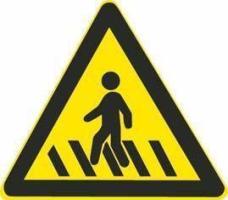
A. watch for pedestrians
B. watch for children
C. school area
D. crosswalk
Answer: A
10. Whats the meaning of this sign?
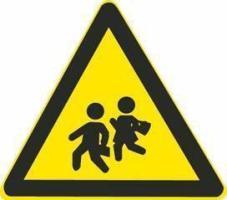
A. school area
B. watch for children
C. crosswalk
D. watch for pedestrians
Answer: B
11. Whats the meaning of the white broken lines area on the far left side?
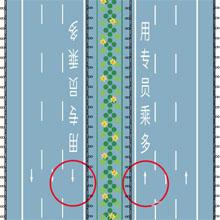
A. special lane for multi-passenger vehicles
B. special lane for small buses
C. special lane for taxis with no passenger
D. special lane for large buses
Answer: A
12. The validity of the driving license which is initially applied for is 4 years.
A. Right
B. Wrong
Answer: B
13. A Social vehicle is not allowed to stop in the section 30 meters to the fire hydrant or the fire brigade (station).
A. Right
B. Wrong
Answer: A
14. If a person escapes after causing a traffic accident and constitutes a crime, his driving license should be revoked and he is banned _____ from re-obtaining a driving license.
A. within 5 years
B. within 10 years
C. within 20 years
D. for lifetime
Answer: D
15. When a motorized vehicle runs on an expressway, it ________.
A. May stop on the road shoulder to let passengers on and off
B. May stop in the emergency lane to load and unload cargos
C. May overtake or stop in the acceleration or deceleration lane
D. Is not allowed to drive or stop in the emergency lane in a non-emergency case
Answer: D
16. Whats the meaning of this sign?
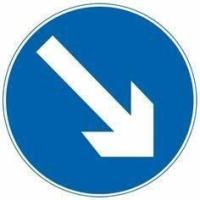
A. downhill section on right side
B. driving by the right side of the road
C. stopping by the right side of the road
D. right turn only
Answer: B
17. Whats the meaning of this sign?
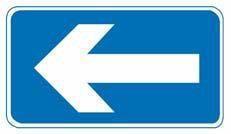
A. yield if going to turn left
B. straight one-way road
C. right one-way road
D. left one-way road
Answer: D
18. If a motorized vehicle driver drives on the road after getting drunk is subject to a prison term of more than 3 years.
A. Right
B. Wrong
Answer: B
19. A driver should stop on the expressway at once to have a rest when he feel tired.
A. Right
B. Wrong
Answer: B
20. Whats the meaning of this sign?
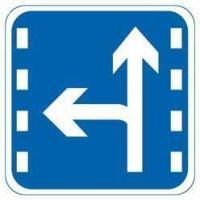
A. lane for both going straight and U turn
B. lane for both going straight and left turn
C. lane for going straight and right turn
D. lanes for going in different directions
Answer: B