

1. What is the max speed limit on this road?
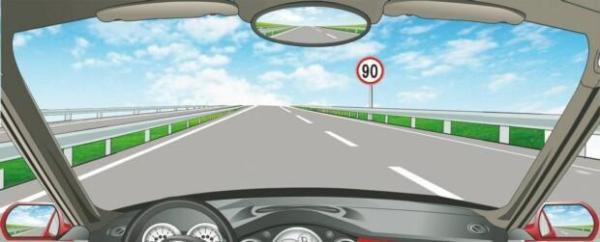
A. 100 km/hr
B. 90 km/hr
C. 120 km/hr
D. 110 km/hr
Answer: B
2. You can overtake from both sides in this case.
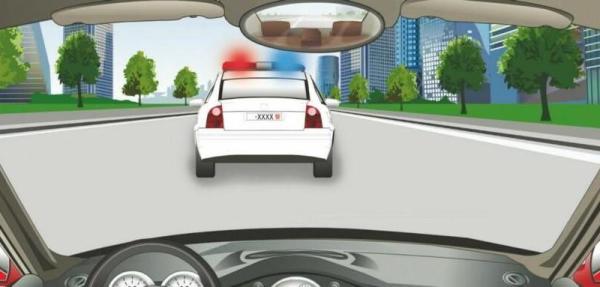
A. Right
B. Wrong
Answer: B
3. It lights to indicate that ______

A. the floor and the front fans work
B. air internal circulation
C. air external circulation
D. the side and the floor fans work
Answer: A
4. Whats the meaning of this sign?
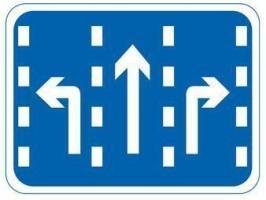
A. left-turn lane
B. straight-going lane
C. right-turn lane
D. lanes for going in different directions
Answer: D
5. When a motorized vehicle causes a minor traffic accident and obstructs traffic flow, it does not need to move.
A. Right
B. Wrong
Answer: B
6. An unregistered motorized vehicle should have _________ if it has to run on the road temporarily.
A. certificate of legal origin
B. license plate for temporary moving
C. borrowed license plate
D. certificate of legal unit
Answer: B
7. What does this symbol indicate?

A. luggage compartment is opened
B. door of one side is opened
C. engine compartment is opened
D. cover of fuel tank is opened
Answer: A
8. Whats the meaning of this sign?

A. tunnel entry
B. observatory
C. mind side wind
D. wind vane
Answer: C
9. Which should be carried onboard?
A. insurance policy
B. vehicle license
C. certificate of ex-factory inspection
D. vehicle registration papers
Answer: B
10. The child in the motorized vehicle does not need to buckle up when the vehicle runs.
A. Right
B. Wrong
Answer: B
11. Driving a motorized vehicle shall not overtake in tunnels, steep slopes and other special sections.
A. Right
B. Wrong
Answer: A
12. Whats the meaning of this sign?
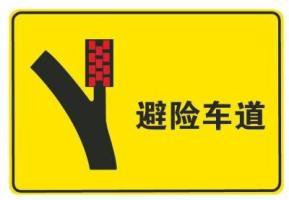
A. danger-avoiding lane
B. emergency lane
C. road shoulder
D. sharp curve
Answer: A
13. A vehicle is not allowed to reverse on the ramp of an expressway.
A. Right
B. Wrong
Answer: A
14. Whats the meaning of this sign?
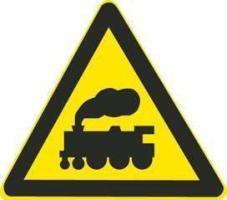
A. watch for long time honking
B. an unmanned level crossing
C. a manned level crossing
D. multi-crossing of railway and road
Answer: B
15. When a motorized vehicle crosses a non-motorized vehicle on a narrow road or a narrow bridge at night, the motorized vehicle should use the high beam light.
A. Right
B. Wrong
Answer: B
16. It lights to indicate that ______

A. not buckled up
B. safety belt malfunction
C. the safety belts are too loose
D. buckled up already
Answer: A
17. When encountering a vehicle coming in the opposite direction on a mountain road, the driver should ______ when crossing each other.
A. Not reduce speed
B. Stick to the center of the road
C. Speed up
D. Reduce speed or stop to yield
Answer: D
18. Emergency braking on a road covered by ice and snow can easily cause side skidding. The driver should use the engine braking to reduce speed.
A. Right
B. Wrong
Answer: A
19. How to do in this intersection?
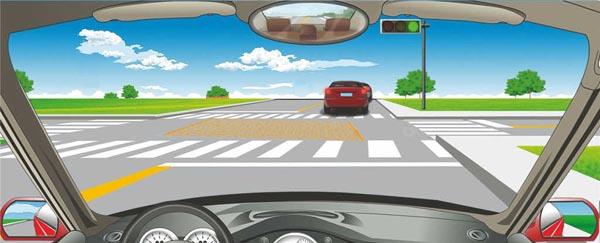
A. wait in the cross-hatched marking area
B. stop and wait outside the intersection
C. follow the vehicle in front and pass
D. wait inside the intersection
Answer: B
20. If a driving license is obtained by deception, bribery or other illegal means, the driving license should be revoked and the applicant is not allowed to re-apply for it _____ .
A. within 3 years
B. the whole life
C. within 1 year
D. within 5 years
Answer: A