

1. When a wounded person suffering burns is thirsty, he should only drink plain boiled water.
A. Right
B. Wrong
Answer: B
2. What should driver do when students crossing the road in line?
A. Speed up and pass in the front of the students
B. Sound the horn to warn the students to yield
C. Slow down and pass
D. Stop and wait until the students pass
Answer: D
3. How should lamps be used when motor vehicle drivers pass through a two-way tunnel?
A. Turn on the hazard lamps
B. Turn on the high-beam
C. Turn on the fog lamp
D. Turn on the low-beam
Answer: D
4. What is the meaning of this sign?
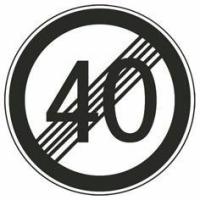
A. Driving at reduced speed in the section of 40 meters
B. Minimum speed is 40km/hr
C. Maximum speed is 40km/hr
D. 40km/hr speed limit ban is lifted
Answer: D
5. When driving a motor vehicle into a traffic flow, drivers should not hold up other vehicles.
A. Right
B. Wrong
Answer: A
6. When use the brake of a motorcycle, use the front-wheel brake first, then use the back-wheel brake.
A. Right
B. Wrong
Answer: B
7. When rescuing a wounded person in an emergency, it is necessary to firstly stop the bleeding by compression before other methods are taken according to the conditions of bleeding.
A. Right
B. Wrong
Answer: A
8. When a motor vehicle encounters a burning phenomenon, it should leave the vehicle quickly so as not to cause injury or asphyxia to the respiratory tract.
A. Right
B. Wrong
Answer: A
9. Serious wave will appear when the front tire blows out; the driver should release the accelerator, firmly hold the steering wheel with both hands, quickly gradually break down, and stop to yield.
A. Right
B. Wrong
Answer: A
10. When such circumstances happen suddenly, drivers should reduce speed in a timely fashion or stop to yield.
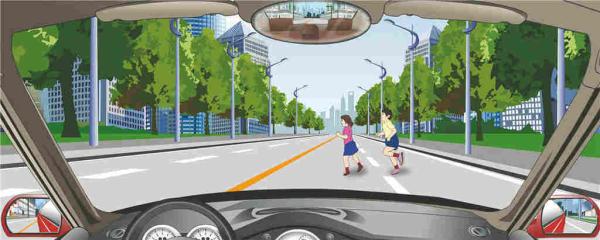
A. Right
B. Wrong
Answer: A
11. What is the meaning of this sign?
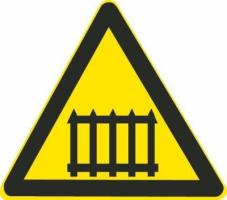
A. A manned level crossing
B. Multi-crossing of railway and road
C. Grade separation level crossing
D. An unmanned level crossing
Answer: A
12. When a tire blowout on the road, the driver should swiftly depress the brake pedal to reduce speed and stop the vehicle.
A. Right
B. Wrong
Answer: B
13. What is the meaning of this sign?
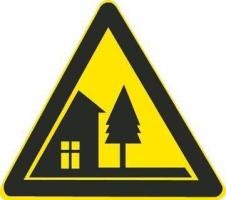
A. Watch for pedestrians
B. Crosswalk
C. Village or town
D. Primary school
Answer: C
14. When driving in icy and snowy weather, because of the reduction of the stability, it is easy for the wheels to race or slip when rapidly speeding up.
A. Right
B. Wrong
Answer: A
15. What should the driver pay attention to when the motor vehicle passes a school?
A. Observe the traffic signs and markings
B. Slow down and pass slowly
C. Prohibited from sounding the horn
D. Pass rapidly
Answer: ABC
16. What is the meaning of this sign?
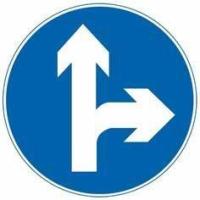
A. Going straight and left turn
B. Going straight and right turn
C. No going straight and no right turn
D. Left turn and right turn only
Answer: B
17. Where can not park?
A. Parking lot
B. Parking spaces on roads
C. Landslide and debris flow in Mountainous Areas
D. Crosswalk
Answer: CD
18. When a wounded person suffering burns is thirsty, he may drink a small quantity of slightly salty water.
A. Right
B. Wrong
Answer: A
19. Which of the following is a safe way for motor vehicles to pass the intersection marked with this sign?
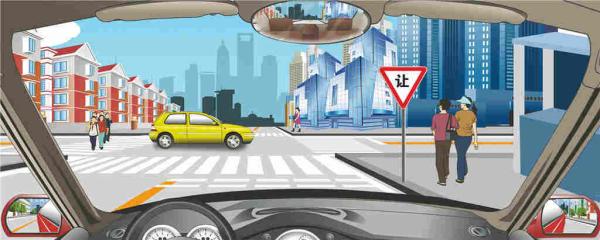
A. Stop and observe the traffic situation around the intersection
B. Approach the intersection by speeding up
C. Observe the traffic situation on the left rear side
D. Approach the intersection at a reduced speed
Answer: D
20. Which measures is correct when a motor vehicle intends to overtake
A. After overtaking, turn on the right turning light and drive back to the original lane after the necessary safe distance has been pulled away by overtaking.
B. Overtaking from the left side of the previous car
C. After overtaking, turn on the right turn light and drive back to the original Lane immediately.
D. Overtake on the right side
Answer: AB