

1. If a motorized vehicle driver has caused a major traffic accident in violation of the traffic regulations which has caused human death due to his escaping, the driver is subject to a prison term of 3 years ~ 7 years.
A. Right
B. Wrong
Answer: B
2. A motorized vehicle driver who uses falsified and altered vehicle license is subject to a ________.
A. 6-point penalty
B. 3-point penalty
C. 2-point penalty
D. 12-point penalty
Answer: D
3. What marking is it?
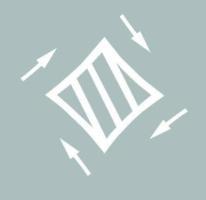
A. A cross-hatched marking
B. prohibitive area
C. guide line
D. central circle
Answer: D
4. A motorized vehicle driver who does not hang the license plate is subject to a ________.
A. 6-point penalty
B. 12-point penalty
C. 2-point penalty
D. 3-point penalty
Answer: B
5. Whats the meaning of this sign?
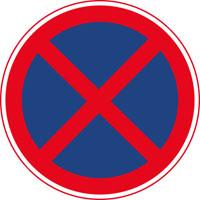
A. stopping temporarily is allowed
B. long stopping is allowed
C. no long stopping
D. no stopping
Answer: D
6. When encountering an ambulance rushing in the same lane in the opposite direction, the driver should ________.
A. Move to the road side, reduce speed or stop to yield
B. Drive on by using another lane
C. Speed up and change lane to avoid
D. Continue to go in the original lane
Answer: A
7. When running on an expressway that has four lanes in the same direction, the vehicles whose speed is higher than 110 kilometers per hour should run ______.
A. The far left lane
B. The second left lane
C. The far right lane
D. The third left lane
Answer: A
8. It lights to remind that engine oil needs to be filled.

A. Right
B. Wrong
Answer: B
9. The double yellow solid lines in the middle of the road are used to separate the traffic flow in opposite directions, crossing the lines to overtake or make a turn is allowed if it is safe.
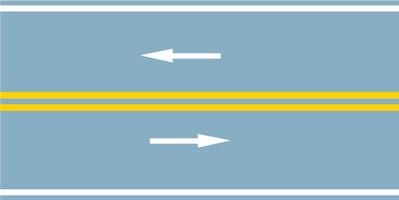
A. Right
B. Wrong
Answer: B
10. Whats the meaning of this sign?
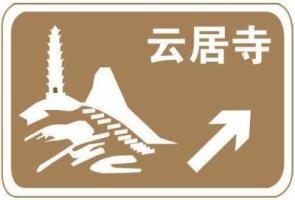
A. distance to a tourist area
B. category of a tourist area
C. direction of a tourist area
D. symbol of a tourist area
Answer: C
11. When discovering a vehicle behind wanting to overtake while driving, the driver should _______.
A. Maintain the original speed
B. Reduce speed, observe and run by the right side to yield
C. Speed up and go ahead by the right side
D. Not yield
Answer: B
12. A person who has the expired driving license can drive motorized vehicle within 1 year.
A. Right
B. Wrong
Answer: B
13. Whats the meaning of this sign?
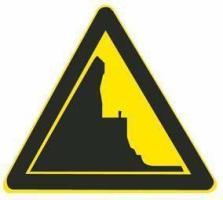
A. embankment road
B. dangerous hillside road
C. rock-falling road
D. cliffside road
Answer: B
14. The method of this small passenger vehicle to leave the expressway lane is correct.
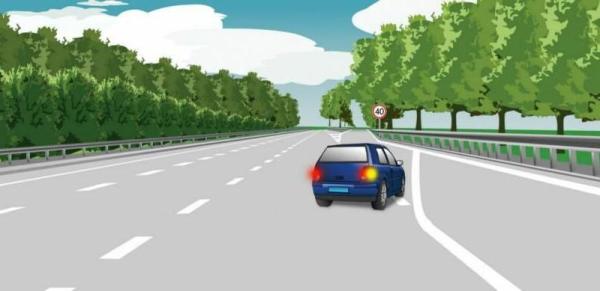
A. Right
B. Wrong
Answer: A
15. The vehicles should run by the right shoulder of an expressway.
A. Right
B. Wrong
Answer: B
16. When driving at night, the driver should go at a lower speed because his field of vision is limited and he can hardly observe the traffic conditions beyond the area covered by his vehicle light.
A. Right
B. Wrong
Answer: A
17. The reason that a road destroyed by flood affects safe driving and smooth passage is __.
A. The road grip becomes stronger
B. It is impossible to see the hidden holes and bumps in road surface
C. The visibility become lower and blurs the field of vision
D. The sunshine reflection blurs the view
Answer: B
18. Which is subject to a 6-point penalty?
A. violate the traffic lights
B. drive school bus without qualification
C. drive the vehicle which permission is different
D. drive after drink
Answer: A
19. When a vehicle runs on an expressway at the speed of 100 kilometers per hour, its safe distance from the vehicle in front is not less than 100 meters.
A. Right
B. Wrong
Answer: A
20. After starting the engine, it lights to indicate that ______

A. engine main oil way blockage
B. engine oil pressure is too low
C. engine crankshaft box leaks
D. engine oil pressure is too high
Answer: B