

1. This set of the hand signals of the traffic police indicates that the vehicles should ____ .
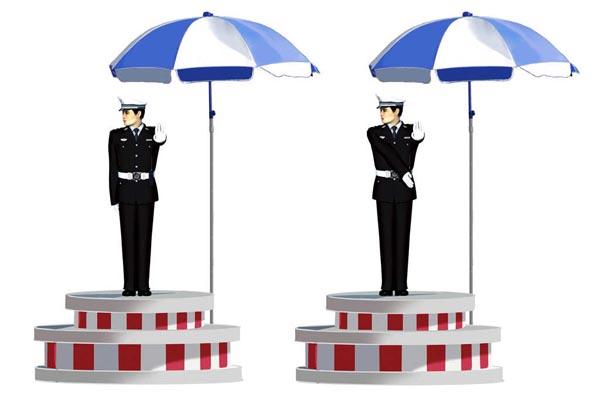
A. reduce speed and pass slowly
B. pull over
C. stop
D. turn right
Answer: D
2. Driving a motorized vehicle on the road should be required to be with a license plate.
A. Right
B. Wrong
Answer: A
3. A motorized vehicle driver who does not hang the license plate is subject to a ________.
A. 6-point penalty
B. 12-point penalty
C. 2-point penalty
D. 3-point penalty
Answer: B
4. How to run if this traffic light continuously flashes?
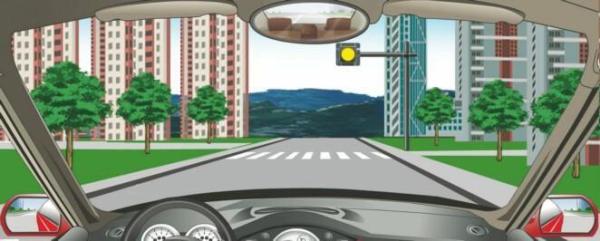
A. speed up and pass as soon as possible
B. stop by the side to wait
C. look and make sure it is safe to pass
D. apply emergency braking
Answer: C
5. How to do when encountering slow-moving vehicles in front?
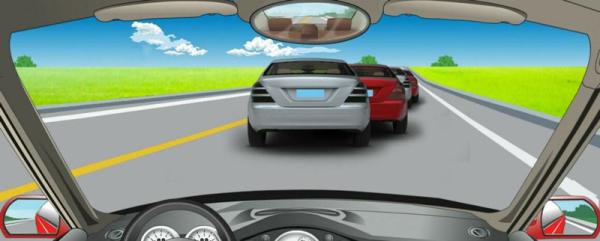
A. follow the vehicles in front
B. occupy the opposite lane to overtake
C. borrow the lane from right side to overtake
D. overtake from both sides as will
Answer: A
6. A person who has the expired driving license can drive motorized vehicle within 1 year.
A. Right
B. Wrong
Answer: B
7. How to run at this position when leaving the expressway?
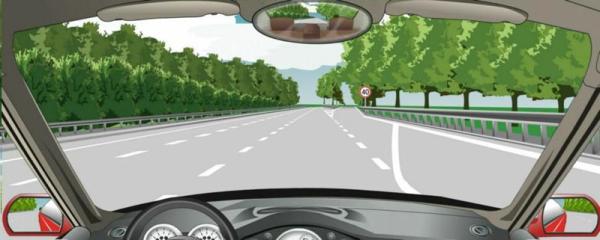
A. enter the deceleration lane
B. keep running forward
C. keep the speed at 100km/hr
D. reduce the speed to less than 40km/hr
Answer: A
8. When a vehicle coming in the opposite direction suddenly overtakes and occupies your lane, the correct way to deal with this situation is to __________.
A. Obstruct the way of that vehicle
B. Maintain the original speed
C. Reduce speed and avoid as much as possible, till stop
D. Speed up and go forward
Answer: C
9. At night, the drivers observation is markedly poorer than in the daytime and the range of visibility range is _______.
A. Unchanged
B. Irregular
C. Longer
D. Shorter
Answer: D
10. Whats the meaning of the area between two yellow broken lines in the circle?
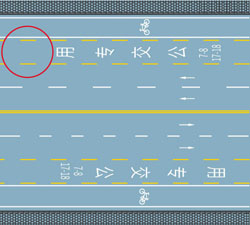
A. special lane for operating buses
B. special lane for large buses
C. special lane for taxis
D. special lane for public buses
Answer: D
11. ABS system can maximize the braking efficiency when conducting _______
A. braking intermittently
B. braking continuously
C. applying emergency braking
D. gently depressing the brake pedal
Answer: C
12. How to do in this situation?

A. stop and yield to the pedestrians
B. bypass from the front of the pedestrians
C. honk to remind the pedestrians
D. bypass from the rear of the pedestrians
Answer: A
13. In a vehicle that has safety belts, the driver should request the passengers to buckle up.
A. Right
B. Wrong
Answer: A
14. It lights when turning on the front high beam lights.

A. Right
B. Wrong
Answer: B
15. Whats the meaning of the marking in the red circle?
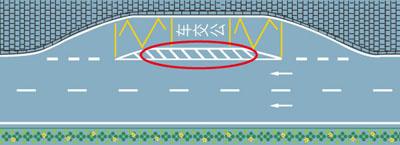
A. temporary stopping
B. large bus stopping
C. bus station
D. emergency stopping
Answer: C
16. For a driver who drives a commercial motor vehicle after drinking, besides revoking his/her driving license, how long will he/she be banned from re-obtaining a motor vehicle driving license?
A. 1 year
B. 2 year
C. 5 year
D. 10 year
Answer: C
17. Whats the meaning of this sign?
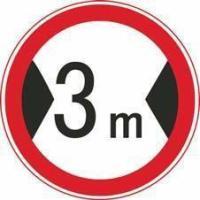
A. 3m width limit ahead
B. 3m width limit
C. the 3m width limit ban is lifted
D. 3m height limit
Answer: B
18. Whats the meaning of this sign?
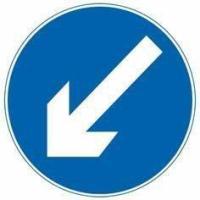
A. stop by the left side of the road
B. downhill section left
C. left turn only
D. run by the left side of the road
Answer: D
19. Whats the meaning of this sign?
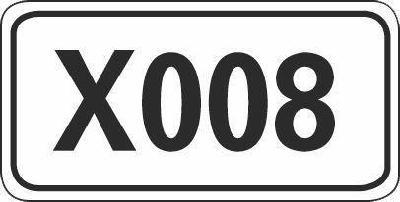
A. provincial highway No.
B. national highway No.
C. county road No.
D. township road No.
Answer: C
20. A motorized vehicle driver who illegally occupies the emergency lane on the expressway is subject to a 6-point penalty.
A. Right
B. Wrong
Answer: A