

1. A motorized vehicle driver who uses falsified or altered driving license is subject to a 12-point penalty.
A. Right
B. Wrong
Answer: A
2. What is the max speed on this city road?
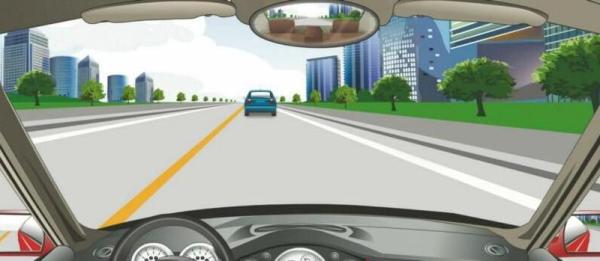
A. 30km/hr
B. 40km/hr
C. 50km/hr
D. 70km/hr
Answer: C
3. If a motorized vehicle driver escapes after causing a major traffic accident which has caused human death, the driver is subject to a prison term of ________.
A. more than 7 years
B. less than 3 years
C. 3 ~ 7 years
D. more than 10 years
Answer: C
4. When a vehicle passes a crosswalk, the driver should yield to the pedestrians.
A. Right
B. Wrong
Answer: A
5. The driver who drives after drunk is subject to ______
A. a criminal restriction and a fine
B. a prison term of more than 2 years
C. a criminal detention and a fine
D. a prison term of less than 2 years
Answer: C
6. Whats the meaning of this sign?
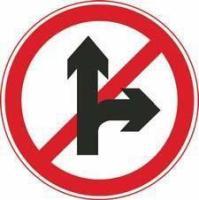
A. no going straight and no changing to left lane
B. no going straight and no left turn
C. allowed to go straight and change to left lane
D. no going straight and no right turn
Answer: D
7. A person who has falsified or altered the motorized vehicle driving license and if his act constitutes a crime, he should be held for criminal liabilities according to law.
A. Right
B. Wrong
Answer: A
8. May throw items to the road while driving.
A. Right
B. Wrong
Answer: B
9. What device does the switch of this symbol control?
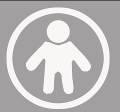
A. child safety lock
B. window glasses of both sides
C. electric door
D. door unlock
Answer: A
10. Whats the meaning of this sign?
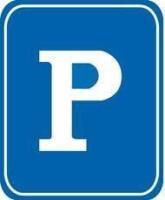
A. internal car park
B. special car park
C. uncovered car park
D. indoor car park
Answer: C
11. How to drive in sand, hail, rain, fog, ice and other weather conditions?
A. run as normal
B. maintain the speed
C. speed up properly
D. reduce the speed
Answer: D
12. The passenger in the front seat does not need to buckle up when a motorized vehicle runs.
A. Right
B. Wrong
Answer: B
13. A rear tire blowout can sway the tail of the vehicle. The driver should firmly hold the steering wheel with both hands to ensure the vehicle go straight, reduce speed and then stop.
A. Right
B. Wrong
Answer: A
14. When driving in icy and snowy weather, light reflection from the accumulated snow can easily make a driver feel dizzy and have an illusion.
A. Right
B. Wrong
Answer: A
15. Traffic Police can detain the vehicle according to law if the driver does not carry the IDcard.
A. Right
B. Wrong
Answer: B
16. Whats the meaning of the white rectangle marking?
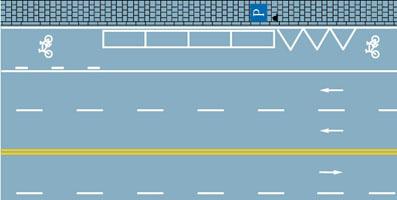
A. special space for taxicabs to take and drop passengers
B. horizontal parking space
C. inclined parking space
D. vertical parking space
Answer: B
17. How to do when encountering slow-moving vehicles in front?
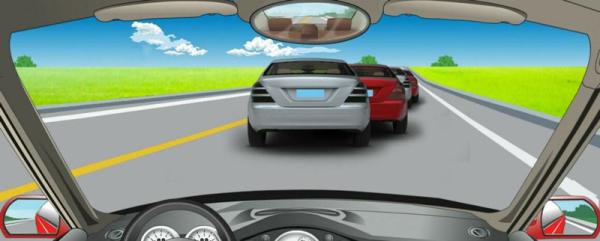
A. follow the vehicles in front
B. occupy the opposite lane to overtake
C. borrow the lane from right side to overtake
D. overtake from both sides as will
Answer: A
18. This set of the hand signals of the traffic police indicates that the vehicles should ___ .

A. turn left
B. wait to turn left
C. reduce speed and pass slowly
D. turn right
Answer: B
19. Whats the meaning of this sign?
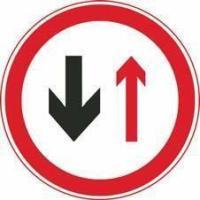
A. stop and yield the right side vehicle while crossing each other
B. no passing on the right side road
C. two-way lane section ahead
D. stop and yield the opposite vehicle while crossing each other
Answer: D
20. A motorized vehicle driver who violates of traffic lights is subject to a 6-point penalty.
A. Right
B. Wrong
Answer: A