

1. Whats the meaning of this sign?
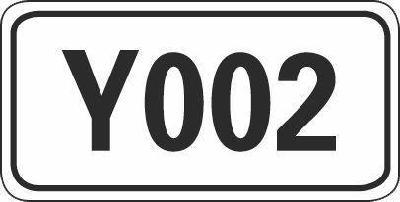
A. provincial highway No.
B. county road No.
C. township road No.
D. national highway No.
Answer: C
2. It lights to indicate that ______

A. ABS system malfunction
B. handbrake is released
C. braking system malfunction
D. safety bags malfunction
Answer: A
3. What marking is it?
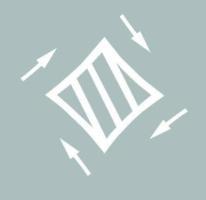
A. A cross-hatched marking
B. prohibitive area
C. guide line
D. central circle
Answer: D
4. Whats the meaning of this sign?
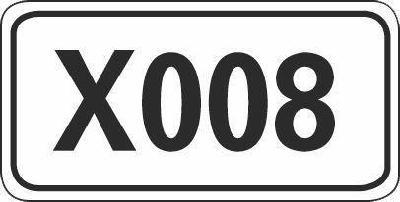
A. provincial highway No.
B. national highway No.
C. county road No.
D. township road No.
Answer: C
5. If the vehicle license of a motorized vehicle are lost, the vehicle owner should apply to the vehicle management station at the registration place for reissuing.
A. Right
B. Wrong
Answer: A
6. If the registration paper, license plate and vehicle license of a motorized vehicle are lost or destroyed, the vehicle owner should apply for reissuing or replacing them to the _______________.
A. traffic police detachment vehicle management station at the residential place
B. vehicle management station at the issuing place of the driving license
C. vehicle management station at the registration place
D. local police station
Answer: C
7. The main impact of mountain roads on safe driving is _______.
A. The traffic conditions are boring
B. The slopes are long, the curves are sharp and visibility range is shorter.
C. The traffic flow is heavy
D. The road signs are fewer
Answer: B
8. Speeding up to go though the intersection before the light turns to red in this case.
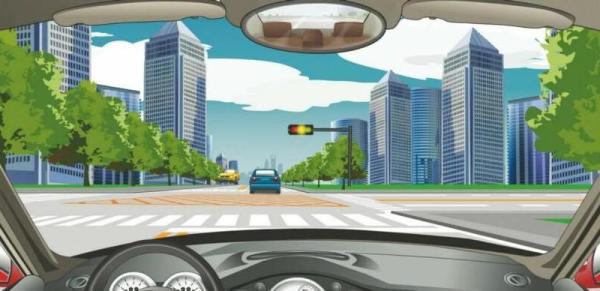
A. Right
B. Wrong
Answer: B
9. When braking on a muddy road, the tires can easily spin or drift and cause traffic accidents.
A. Right
B. Wrong
Answer: A
10. When a motorized vehicle makes a U turn, turns around or goes down a slope, the maximum speed should not exceed 40 kilometers per hour.
A. Right
B. Wrong
Answer: B
11. Whats the meaning of this sign?
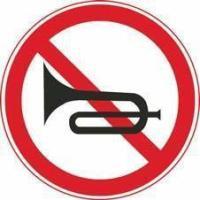
A. no long time honking
B. honk discontinuously
C. reduce speed and honk
D. no honking
Answer: D
12. When driving a vehicle through an inundated road with non-motorized vehicles on both sides, the driver should _________.
A. Reduce speed and go slowly
B. Go forward normally
C. Speed up and pass
D. Continuously honk
Answer: A
13. When a driver suddenly encounters a vehicle in the opposite direction that forces its way by overtaking and occupying his lane, the driver may refuse to avoid it and force it to yieldto you.
A. Right
B. Wrong
Answer: B
14. Whats the meaning of this sign?
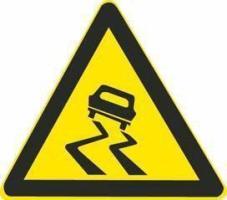
A. slippery section
B. sharp curve
C. test driving section
D. curve section
Answer: A
15. When a vehicles turns, it should do so on the right side and refrain from occupying the lane of the other party. The left turn should be gentle and the right turn should be sharp.
A. Right
B. Wrong
Answer: A
16. This sign reminds bump road ahead which may causes bump phenomenon.
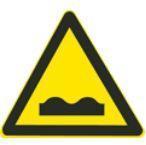
A. Right
B. Wrong
Answer: A
17. Whats the meaning of the double white solid lines in far front of the intersection?
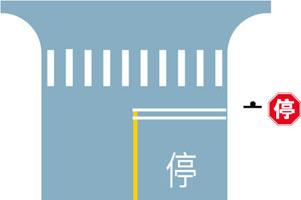
A. stopping and yield line
B. slowdown and yield line
C. left-turn waiting line
D. waiting to run line
Answer: A
18. Whats the meaning of this sign?
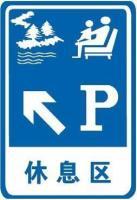
A. rest area
B. service area
C. car park
D. observation deck
Answer: A
19. The rear windshield defroster starts to work after pressing this switch.

A. Right
B. Wrong
Answer: B
20. Whats the meaning of this guide arrow?
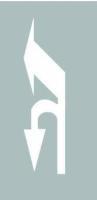
A. going straight and U turn are allowed ahead
B. left turn and U turn are allowed ahead
C. going straight and changing to left lane are allowed ahead
D. going straight and left turn are allowed ahead
Answer: B