

1. ABS system can keep the steering capability of the front wheels while providing maximum braking force when the vehicle conduct an emergency braking.
A. Right
B. Wrong
Answer: A
2. What is this instrument?
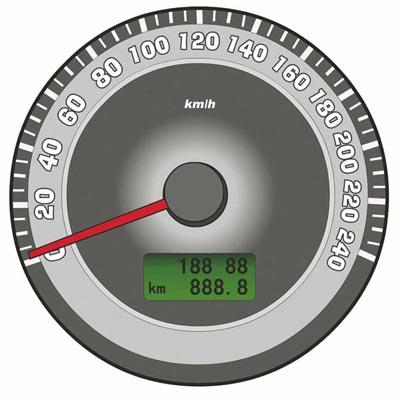
A. speed and mileage meter
B. engine tachometer
C. top speed meter
D. fuel consumption / 100 km
Answer: A
3. Whats the meaning of the white broken lines area on the far left side?
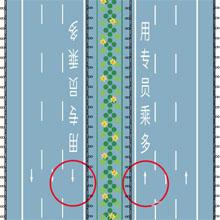
A. special lane for multi-passenger vehicles
B. special lane for small buses
C. special lane for taxis with no passenger
D. special lane for large buses
Answer: A
4. This sign indicates one-way section ahead.
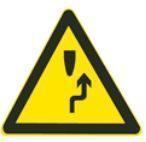
A. Right
B. Wrong
Answer: B
5. In which situation that a driver cannot drive?
A. after drinking coffee
B. after drinking milk
C. after drinking
D. after drinking tea
Answer: C
6. This sign reminds the width of the bridge narrows ahead.
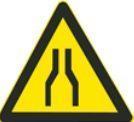
A. Right
B. Wrong
Answer: B
7. How to do while entering this intersection?

A. shift the high and low beam lights alternately to remind the cars already in the intersection to yield
B. quickly cut in the cars already in the intersection
C. let the cars already in the intersection go first
D. honk and enter directly
Answer: C
8. In the course of making a U turn, the driver should strictly control the speed, carefully observe the road conditions before and behind the vehicle, and may advance or reverse only if it is safe to do so.
A. Right
B. Wrong
Answer: A
9. Does not affect normal driving when it lights

A. Right
B. Wrong
Answer: B
10. What is this traffic sign?
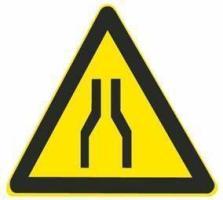
A. Road narrows on both sides
B. Road narrows on the right side
C. Road narrows on the left side
D. Bridge narrows
Answer: A
11. A motorized vehicle driver who violates of traffic lights is subject to a 6-point penalty.
A. Right
B. Wrong
Answer: A
12. How the front vehicle to run in this situation?
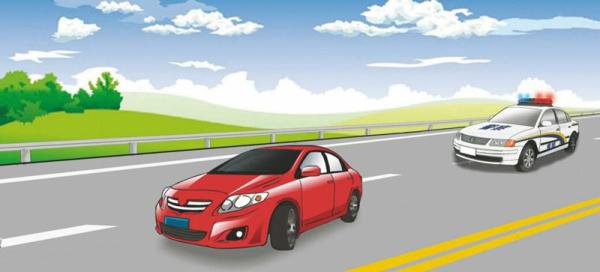
A. run as normal
B. yield
C. turn on the hazard lights
D. should not change lane
Answer: B
13. When a vehicle approaches a bus stopping at a bus stop, the driver should ______ in case the bus starts up suddenly or pedestrians cross in front of the bus.
A. Reduce speed, keep a sufficient distance and be ready to stop anytime
B. Maintain the normal speed
C. Honk to remind, speed up and pass
D. Be ready to apply emergency braking
Answer: A
14. When a vehicle is being overtaken by another vehicle, and there is a vehicle following behind, the driver should _____.
A. continue to speed up and run
B. turn slightly to the right side, keep a safe horizontal distance
C. run by road center
D. speed up to the right side to yield
Answer: B
15. The police can detain the vehicle if one drives a vehicle without ______
A. driving license
B. ID card
C. pass paper
D. qualification certificate
Answer: A
16. This sign indicates obstacle ahead and bypassing from left side.
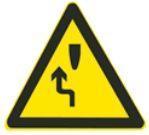
A. Right
B. Wrong
Answer: A
17. Must reduce the frequency of honking in this section.

A. Right
B. Wrong
Answer: B
18. If the license plate of a motorized vehicle has been destroyed, the owner of the vehicle should apply for reissuing or changing to the vehicle management station at the registration place.
A. Right
B. Wrong
Answer: A
19. A motorized vehicle is not allowed to stop in the section 50 meters to the narrow road less than 4 meters width.
A. Right
B. Wrong
Answer: A
20. When driving a motor vehicle after drinking, a prison term of more than 3 years will be imposed.
A. Right
B. Wrong
Answer: B