

1. When finding a tire burst on the road, the driver should gently depress the brake pedal, reduce speed and stop the vehicle slowly.
A. Right
B. Wrong
Answer: A
2. When causing a road accident involving property damage, the parties to the accident have no dispute over the fact and cause, they should take photos of the scene or mark the vehicles’ location when they move the vehicles.
A. Right
B. Wrong
Answer: A
3. In which situation that a driver cannot drive?
A. after drinking coffee
B. after drinking milk
C. after drinking
D. after drinking tea
Answer: C
4. When a motorized vehicle runs in a foggy weather, the driver should turn on the fog light and the hazard lights.
A. Right
B. Wrong
Answer: A
5. A person whose driving license has been destroyed cannot drive a motorized vehicle.
A. Right
B. Wrong
Answer: A
6. When encountering a vehicle in front ascending on a mountainous road covered with ice and snow, what should the motor vehicle driver do?
A. Ascend after the vehicle in front passes the slope
B. Overtake the vehicle in front swiftly and drive on
C. Overtake the vehicle in front with a slow speed and drive on
D. Follow the vehicle in front closely
Answer: A
7. The wrong measure to ride a motorcycle in summer is to __________.
A. Drive at a high speed for a long time
B. Control the speed by the accelerator
C. Avoid using the brake
D. Avoid loading people or cargoes
Answer: A
8. People who take a two-wheeled motorcycle should ride it by side way.
A. Right
B. Wrong
Answer: B
9. The penalty points wil be _____ if violating the traffic lights.
A. 2-point penalty
B. 3-point penalty
C. 6-point penalty
D. 12-point penalty
Answer: C
10. What is the meaning of this sign?
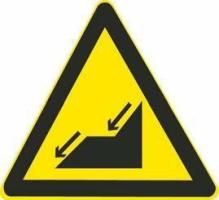
A. continuous down slopes
B. steep downhill road
C. steep uphill road
D. continuous up slopes
Answer: A
11. A person who has taken the state-controlled psychiatric substances can drive motorized vehicle in short distance.
A. Right
B. Wrong
Answer: B
12. A person who has not obtained driving license drives a motorized vehicle, he will be held for legal liability.
A. Right
B. Wrong
Answer: A
13. It is not a bad habit for a driver to frequently change lanes.
A. Right
B. Wrong
Answer: B
14. When a rear tire of a motorcycle blows out, the driver should ________.
A. Swiftly turn the steering handlebar to adjust
B. Firmly hold the steering handlebar with both hands
C. Swiftly turn the steering handlebar to the opposite direction
D. Swiftly take braking measures
Answer: B
15. One who runs away after causing a traffic accident and constitute a crime can not apply for motorized vehicle driving license.
A. Right
B. Wrong
Answer: A
16. When two vehicles approach each other on a foggy day, what is the best method of safe driving?
A. Turn on the high-beam
B. Slowdown and maintain a large safety distance
C. Turn on the low-beam
D. Turn on the fog lamp
Answer: B
17. When a motor vehicle stops temporarily in a rainy day,which lamp should be turned on?
A. Front and rear fog lamps
B. Hazard lamps
C. Headlamps
D. Reverse lamps
Answer: B
18. A person who has falsified or altered the motorized vehicle driving license and if his act constitutes a crime, he should be held for criminal liabilities according to law.
A. Right
B. Wrong
Answer: A
19. Traffic Police can detain the driver according to law, if the driver drives a motorized vehicle which is suspected of reaching the write-off standard.
A. Right
B. Wrong
Answer: B
20. When a motorized vehicle breaks down on the road and is difficult to move, the driver should place a warning sign within 50 meters behind the vehicle.
A. Right
B. Wrong
Answer: B