

1. What is the meaning of this sign?
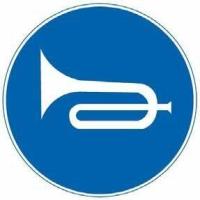
A. no honking the tweeter
B. no honking the woofer
C. should honk
D. no honking
Answer: C
2. If a motorized vehicle driver has caused a major accident in violation of the traffic regulations which has caused heavy loss to public or private property, the driver is subject to a prison term of less than 3 years or a criminal detention.
A. Right
B. Wrong
Answer: A
3. When a motorcycle reaches a muddy or burst-and-muddy section, the driver should stop, observe and select the level and solid section or the section with vehicle tracks.
A. Right
B. Wrong
Answer: A
4. When a bicycle borrows the motor vehicle lane, the motor vehicle may sound the horn hurriedly to warn the bicycle to yield.
A. Right
B. Wrong
Answer: B
5. What is the meaning of this sign?
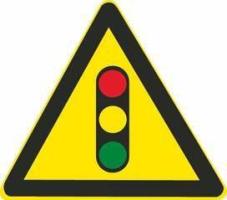
A. crosswalk lights
B. watch for pedestrians
C. attention to traffic lights
D. intersection
Answer: C
6. Traffic Police can detain the vehicle according to law if the driver does not carry the ID card.
A. Right
B. Wrong
Answer: B
7. When a tire blowout on the road, the driver should swiftly depress the brake pedal to reduce speed, do all his can to control the steering wheel and stop the vehicle as soon as possible.
A. Right
B. Wrong
Answer: B
8. You can not drive a motorized vehicle into the lane where the red X-shaped light or the red arrow light is on.
A. Right
B. Wrong
Answer: A
9. Which of the following vehicle in front in the same lane is not allowed to be overtaken?
A. police car on duty
B. large bus or large truck
C. taxis
D. public bus
Answer: A
10. What is the meaning of this sign?
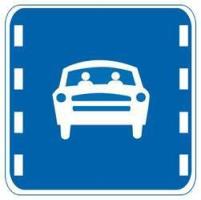
A. special lane for small vehicles
B. special lane for motorized vehicles
C. special lane for taxis
D. special lane for multi-passenger vehicles
Answer: D
11. What is the meaning of this sign?

A. no right turn
B. no U turn
C. no going straight
D. no left turn
Answer: C
12. In which situation the traffic police may detain the vehicle?
A. no lable of inspection
B. no ID card
C. no lable of environmental protection
D. no vehicle registration papers
Answer: A
13. What should a motorized vehicle has while running on the road?
A. a label of keeping distance
B. a label of reminding danger
C. a label of inspection
D. a label of product qualification
Answer: C
14. A motorized vehicle is not allowed to stop in the section 50 meters to the narrow road less than 4 meters width.
A. Right
B. Wrong
Answer: A
15. What is the meaning of this sign?
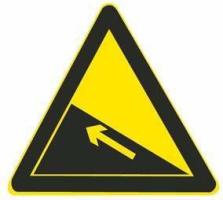
A. steep downhill road
B. continuous up slopes
C. steep uphill road
D. embankment road
Answer: C
16. It is not safe for a female driver to wear high heels to drive a vehicle.
A. Right
B. Wrong
Answer: A
17. When causing a road accident involving property damage, the parties to the accident may leave the scene if they have no dispute over the fact and cause.
A. Right
B. Wrong
Answer: A
18. When driving on a road covered with ice and snow, the motor vehicle may spin or slide when increasing the speed urgently, due to the loss of vehicle stability.
A. Right
B. Wrong
Answer: A
19. The motorcycles should be inspected once every year when it exceeds ____ as from the date of registration.
A. 1 year
B. 2 years
C. 3 years
D. 4 years
Answer: D
20. If a driver finds there is no vehicle behind, he/she may change lanes without turning on the indicator.
A. Right
B. Wrong
Answer: B