

1. When a tire bursts suddenly on the road, the driver should refrain from violently depressing the brake pedal in panic. Instead, he should try his best to change to a low gear and use engine braking to reduce the speed of the vehicle.
A. Right
B. Wrong
Answer: A
2. The driver should speed up to 40 kilometers per hour when he sees this traffic sign.
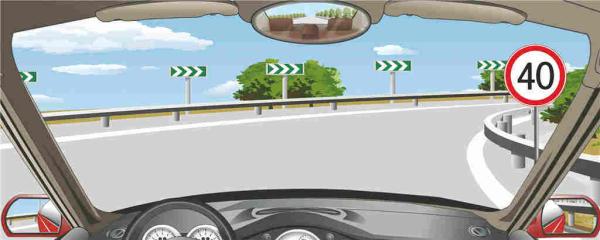
A. Right
B. Wrong
Answer: B
3. Mr. Wu drove a large bus with 33 passengers (capacity 22 people). At the spot of 7 kilometers mark by 300 meters on the No 163 County Road, the bus lost control and fell into a ravine. As a result of the accident, 10 people were killed and 21 injured. In accordance with the alcohol test after the accident the blood alcohol content of Mr. Wu was 26 milligram per milliliter. What is the main illegal act committed by Mr. Wu?
A. Speeding
B. Carrying more passengers than permitted
C. Fatigued driving
D. Driving after drinking
Answer: BD
4. The sign in front indicates an open-air parking lot with rest area is 200 meters ahead.
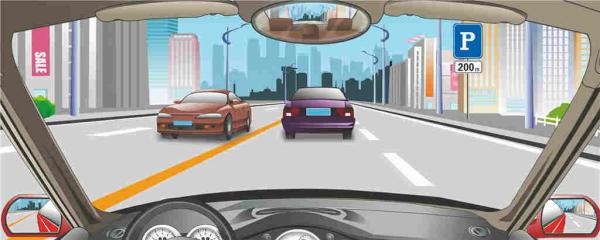
A. Right
B. Wrong
Answer: A
5. Which of the following is a bad driving habit when the vehicle in front is moving slowly in a queue?
A. Cutting in and rushing to pass
B. Not overtaking other vehicles forcefully
C. Stop or pass alternatively
D. Do not occupy on a non-motor vehicle lane
Answer: A
6. When braking, the steering will become impossible if the front wheels are blocked
A. Right
B. Wrong
Answer: A
7. When rescuing a wounded person suffering from spinal fracture, which of the following measures should be taken?
A. Prevent heat loss
B. Rescue the wounded person with a soft stretcher
C. Keep the wounded part in position with a sling
D. Help the wounded person when walking
Answer: C
8. The sign on the left indicates vehicles are allowed to drive on the section ahead.
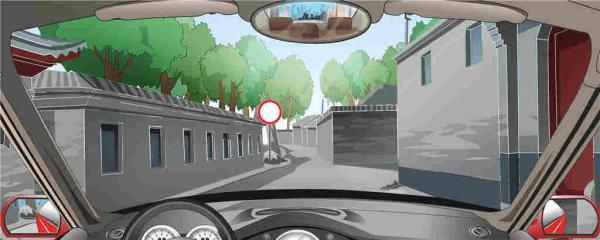
A. Right
B. Wrong
Answer: B
9. The sign on the right indicates a one-kilometer distance from ETC toll station ahead.
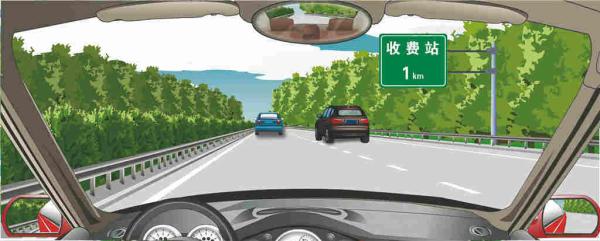
A. Right
B. Wrong
Answer: B
10. Which of the following acts are prohibited when passing through a tunnel?
A. Overtaking
B. Stopping
C. Making a U-turn
D. Reversing
Answer: ABCD
11. The sign on the right warns for children on the section ahead.
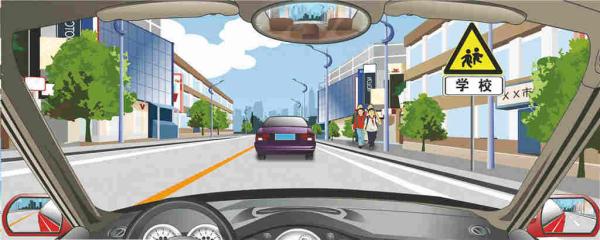
A. Right
B. Wrong
Answer: A
12. The guide arrow on the road surface of this lane indicates that only left turns are permitted at the intersection ahead.
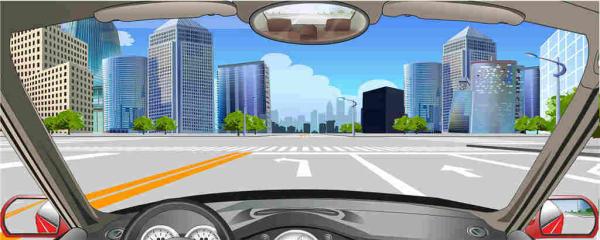
A. Right
B. Wrong
Answer: A
13. The sign on the right indicates the road width ahead is limited to 3 meters.
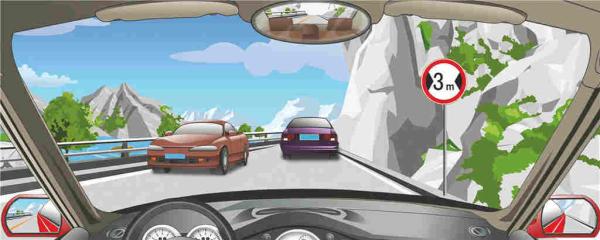
A. Right
B. Wrong
Answer: A
14. When a motor vehicle encounters thick fog on an expressway and the visibility is poor, the driver should immediately brake and stop.
A. Right
B. Wrong
Answer: B
15. Which of the following is a basic requirement for rescuing the injured at the scene of a traffic accident?
A. Treat wounds first and safe life later
B. Save life first and treat wounds later
C. Help lightly wounded persons first
D. Help seriously wounded persons later
Answer: B
16. How to pass the intersection when running straight
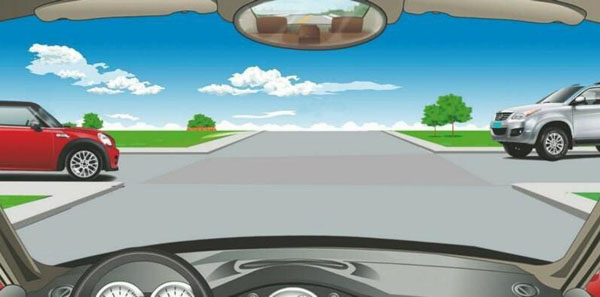
A. turn on the hazard lights and pass
B. directly speed up and pass straight
C. yield to the vehicle from the right road
D. yield to the vehicle from the left road
Answer: C
17. When driving on this dangerous mountainside road, motor vehicles should drive along the right side of the road.
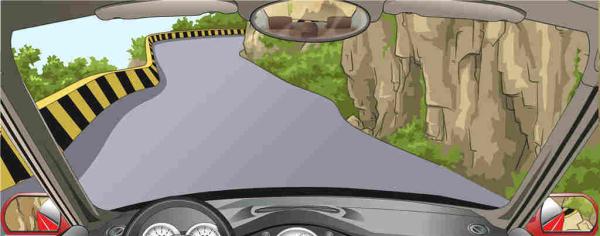
A. Right
B. Wrong
Answer: A
18. Which one of the following measures is correct when a motor vehicle encounters this situation at night?
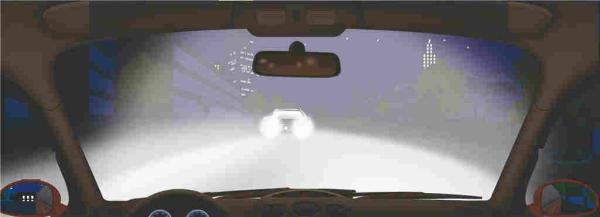
A. Keep driving at a normal speed
B. Drive at an increased speed to avoid light
C. Cut speed or stop to yield
D. Turn on high-beam to reject
Answer: C
19. Motor vehicles should stop and yield rapidly when encountering this situation at a bus station.
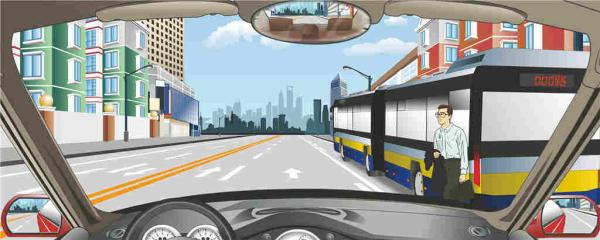
A. Right
B. Wrong
Answer: A
20. How should lamps be used by the motor vehicle driver who follows a vehicle on a road section where the street light condition is good?
A. Turn off the headlamp
B. Use high-beam
C. Turn off all lamps
D. Use low-beam
Answer: D