

1. Driving a motorized vehicle on the road in this condition, the maximum speed can not exceed 50 kilometers per hour.

A. Right
B. Wrong
Answer: B
2. If the driver finds there is no vehicle following, he can change lanes without turning on the turn signal.
A. Right
B. Wrong
Answer: B
3. Whats the meaning of this sign?
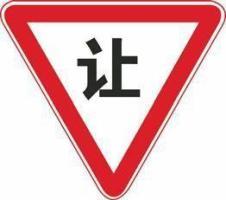
A. no yielding
B. yield while crossing each other
C. reduce speed and yield
D. stop to yield
Answer: C
4. What should a motorized vehicle has while running on the road?
A. a label of keeping distance
B. a label of reminding danger
C. a label of inspection
D. a label of product qualification
Answer: C
5. Whats the meaning of this guide arrow?

A. change to left lane
B. going straight ahead
C. U turn ahead
D. right turn ahead
Answer: C
6. A driver may drive a motorized vehicle after the driving license has been lost within 3 months.
A. Right
B. Wrong
Answer: B
7. Driving on the expressway with full signs and marking, the driver should run in the lane and at the speed according to _________.
A. Signs and markings
B. Rules on road traffic safety
C. Vehicle manual
D. Local regulations
Answer: A
8. What pedal is it?
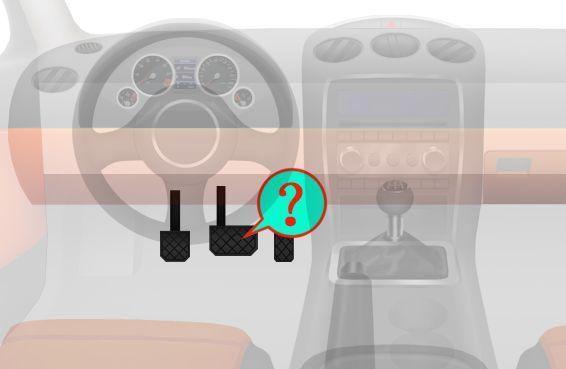
A. clutch pedal
B. accelerator pedal
C. brake pedal
D. handbrake
Answer: C
9. When driving in thick or extremely thick fog, the driver should ____ due to low visibility.
A. Turn on the head light and keep driving
B. Turn on the contour light, fog light and drive along the right side
C. Turn on the hazard lights and keep driving
D. Turn on the hazard lights, fog light, and stop at a safe place
Answer: D
10. When the green arrow for a lane is on and there are still pedestrians in the crosswalk before the vehicle, the driver should ___________.
A. Directly start up and pass
B. Start up and bypass the pedestrians from behind
C. Start up and bypass before the pedestrians
D. Start up after the pedestrians have passed
Answer: D
11. The three principles for careful driving are concentration, careful observation and early prevention.
A. Right
B. Wrong
Answer: A
12. When a vehicle stops for a long time, the driver should select a car park to do so.
A. Right
B. Wrong
Answer: A
13. It lights to remind that engine coolant may be insufficient.

A. Right
B. Wrong
Answer: A
14. When discovering the persons injured in a traffic accident need rescue while driving, the driver should _________.
A. Send the injured persons to hospital in a timely manner or make emergency calls
B. Dodge as much as possible
C. Go ahead by bypassing the scene
D. Find an excuse to dodge the scene
Answer: A
15. What marking is the white polylines in the circle?
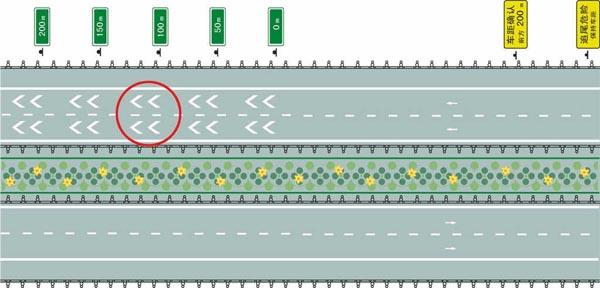
A. ascertaining the distance between the vehicles
B. driving at reduced speed
C. ascertaining the speed of the vehicles
D. reducing the speed at the intersection
Answer: A
16. Whats the meaning of this sign?
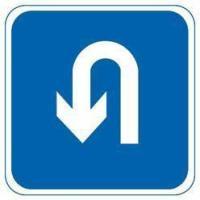
A. U turn
B. reversing
C. left turn
D. bypassing
Answer: A
17. If the drivers accumulated penalty points reach the stipulated limit, he will be _______ by the traffic control department of the public security organ.
A. detained for less than 15 days
B. banned for lifetime from driving
C. educated on the law and regulations and take the exam again
D. held for criminal liabilities according to law
Answer: C
18. When a vehicle goes downhill, the driver should properly control the speed and fully use the engine to brake.
A. Right
B. Wrong
Answer: A
19. You should speed up to change lane in front of the red car.
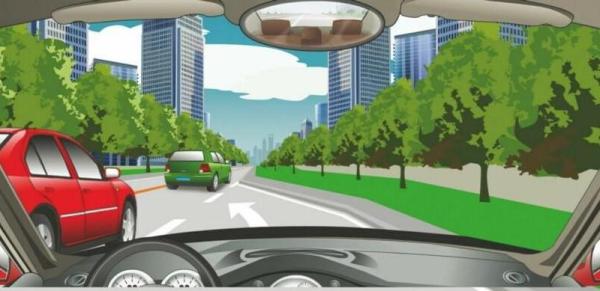
A. Right
B. Wrong
Answer: B
20. May turn right when encountering this traffic light at the intersection.
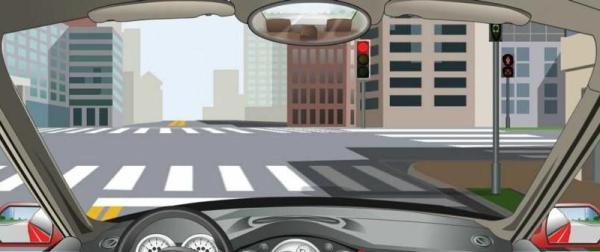
A. Right
B. Wrong
Answer: A